Dollar General
Apparel industry financial guide — Retail Company Stocks.
Dollar General Corporation is the largest discount retailer in the United States by number of stores, selling everyday consumables, seasonal goods, home products and apparel basics from small-format stores concentrated in the South, Southwest, Midwest and East. Founded in 1955 in Scottsville, Kentucky, and headquartered in Goodlettsville, Tennessee, the company trades on the New York Stock Exchange under the symbol DG. Its February 2019 summary notes more than 75 years of delivering value — a claim rooted in its founders' liquidation business.
Company Snapshot
Status: Operating
Type: Public — NYSE: DG
Headquarters: Goodlettsville, Tennessee, United States
Founded: 1955
Visit the Official Dollar General Website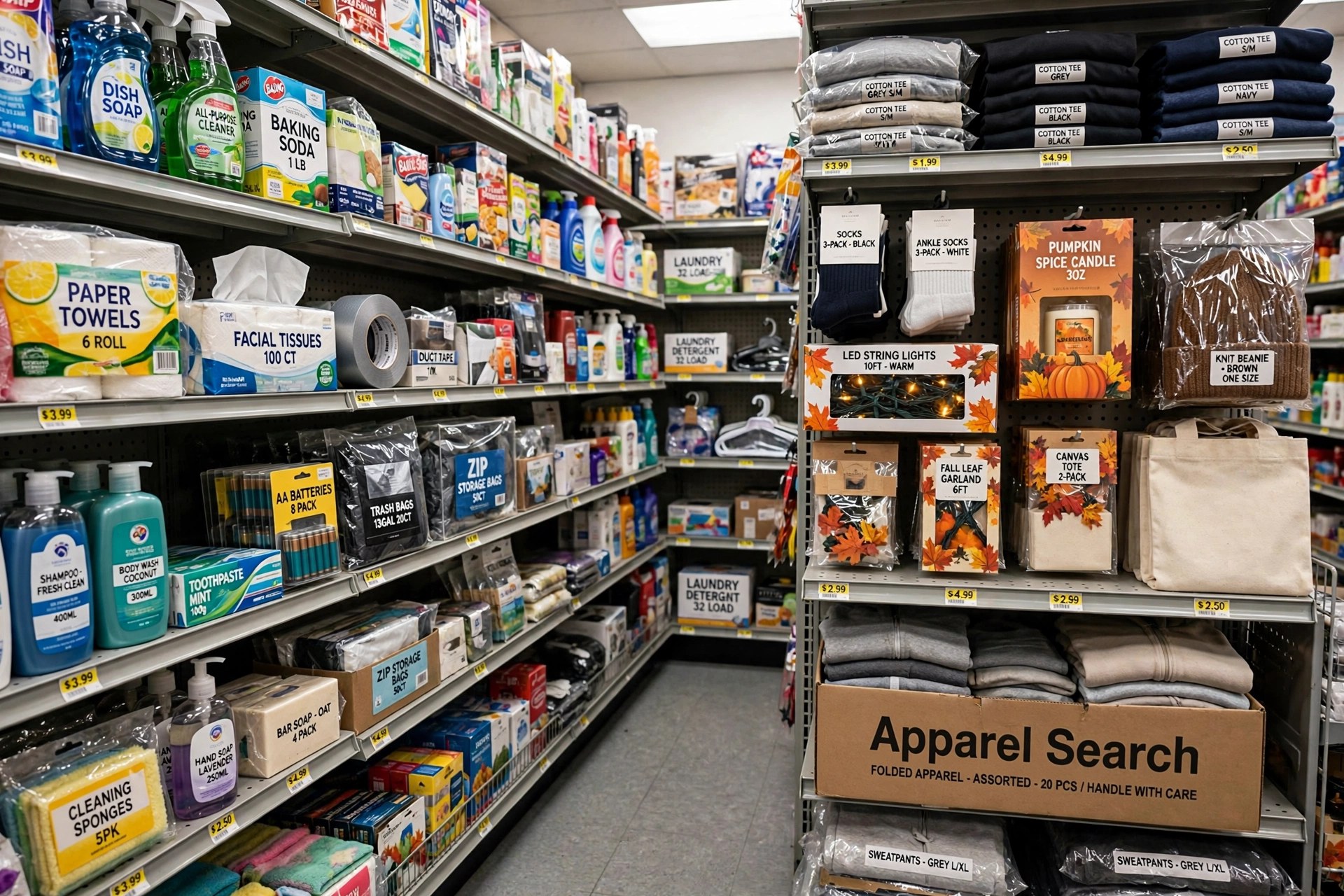
Company Profile
The 2012 summary in the record fixes the scale at that date: 9,961 stores in 39 states as of March 2, 2012, primarily in southern, southwestern, midwestern and eastern communities, many of them rural towns too small for a Walmart. The model is proximity and price: a limited assortment of frequently used products, in a small store a short drive away, at everyday low prices.
Apparel is a supporting category rather than the headline — basic clothing and footwear for the whole family sit alongside food, health and beauty, cleaning and seasonal lines. For the fashion industry, Dollar General matters as distribution: it is one of the largest sellers of basic apparel in America by store count, reaching customers few clothing chains serve directly.
The range behind the name is consumables, seasonal and home products and basic apparel and footwear. Its customers are value shoppers, many in small towns and neighbourhoods underserved by larger stores. That combination — what is sold, and to whom — is the simplest way to place Dollar General in the industry: it explains the company's costs, its competitors and the kind of news that moved its shares when it had them. A change in either half of the combination, a new product category or a new customer, is usually the first sign that the business described in the older summaries is turning into something different.
Scale should be read from the dated summaries with their dates attached. Store counts, sales descriptions and market positions quoted there were the company's own account of itself in that year, and they are the right basis for comparing Dollar General with the other companies in this section — a component supplier against a retailer, or a catalogue house against a mall chain — as long as each figure is compared with figures from roughly the same period.
For current dealings, the snapshot at the top of this page is the place to start: it gives the company's present status — Operating — and links to the official website, which is where current product ranges, store information and investor or corporate contacts are maintained. Anything in the dated summaries that conflicts with the snapshot should be read as the older position: summaries describe the year they are dated, and the snapshot describes the company as it stands now.
For anyone researching the fashion industry's public-company era, Dollar General is a useful case: a small-format discounter whose store count makes it a major seller of basic apparel by reach alone. The summaries in this section were compiled while the story was still unfolding, which is exactly what makes them worth keeping — they preserve what the company said about itself at the time, before the outcome was known.
Dollar General History & Historical Profile →Financial Information
Current market and regulatory information for Dollar General is available from these sources.
Common Questions
Is Dollar General a public company?
Yes. It trades on the New York Stock Exchange under the symbol DG.
When was Dollar General founded?
In 1955, in Scottsville, Kentucky, by J.L. Turner and his son Cal Turner.
Does Dollar General sell clothing?
Yes — basic apparel and footwear for the family are part of its assortment, alongside consumables, seasonal and home products.
References & Further Reading
Company details such as leadership, ownership, store counts and web addresses can change. For the most current information, check the company's official website: https://www.dollargeneral.com/.