Lakeland Industries
Apparel industry financial guide — Wholesale Company Stocks.
Lakeland Industries, Inc. is the Huntsville, Alabama manufacturer of industrial protective clothing founded in 1982, whose garments are worn where the clothing is the safety equipment: chemical protective suits, firefighting and heat-protective apparel, disposable coveralls and laboratory wear, reusable woven garments, high-visibility clothing and industrial gloves and sleeves. Lakeland trades on Nasdaq under the symbol LAKE and sells through a network of safety and industrial-supply distributors to oil, chemical, steel, glass, construction, pharmaceutical and electronics manufacturers, and to fire services, law enforcement, the Department of Defense, Homeland Security and the Centers for Disease Control.
Company Snapshot
Status: Operating
Type: Public — Nasdaq: LAKE
Headquarters: Huntsville, Alabama, United States
Founded: 1982
Visit the Official Lakeland Industries Website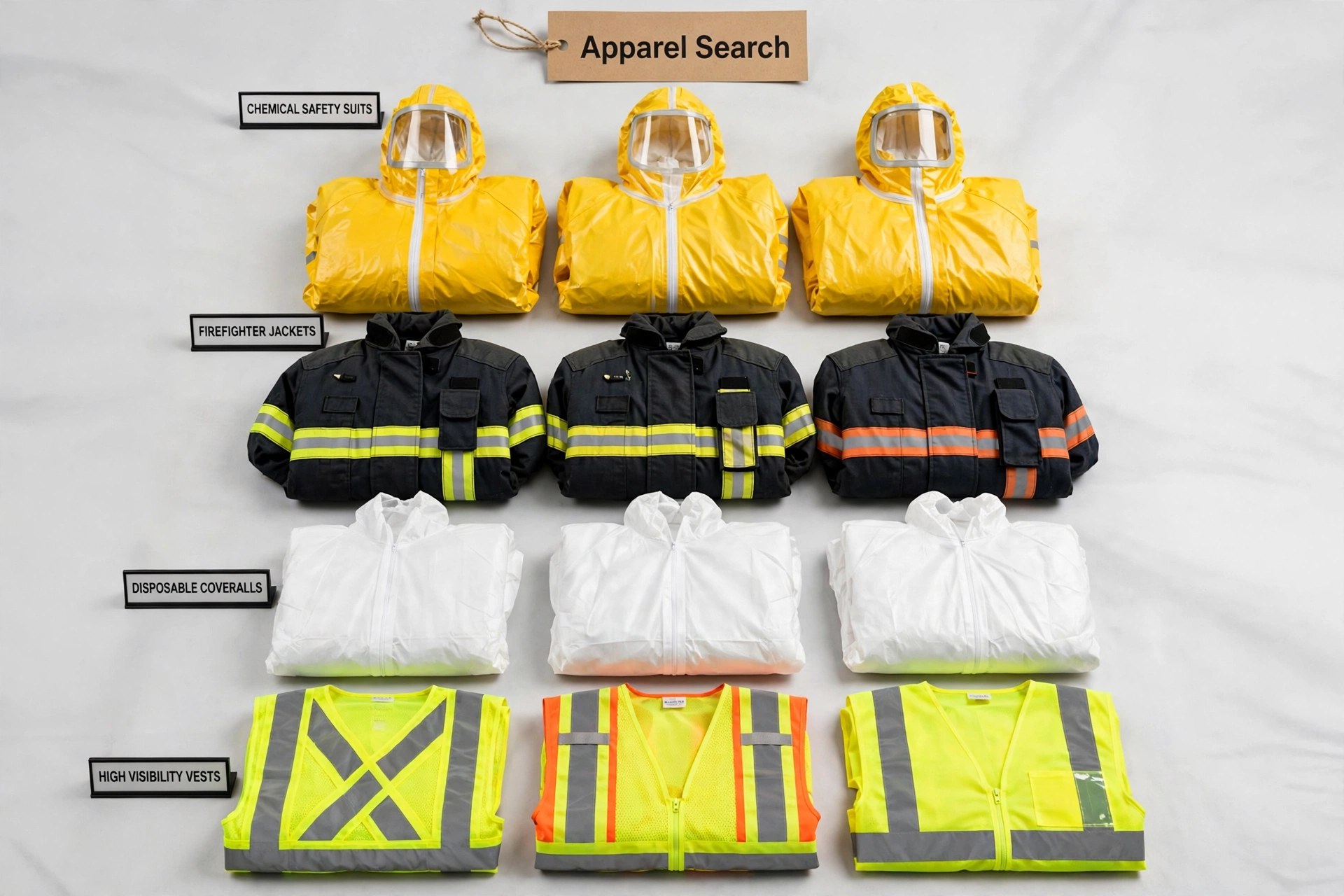
Company Profile
Protective clothing inverts the usual fashion economics in this guide: the buyer is an employer with a legal duty, the specification is written by a safety standard, and a garment's failure is an injury rather than a returned purchase. That is why Lakeland's categories are organised by hazard — chemical, thermal, biological, particulate — rather than by garment type or season, and why its catalogue reads like an index of industrial risk.
The company's manufacturing footprint follows the work: production in the United States, Mexico, China, Vietnam and India supplies both the disposable-garment volume business and the higher-specification fire and chemical lines, and demand spikes — epidemics, industrial accidents, government stockpiling — arrive as surges in exactly the disposable categories the factories can scale fastest.
The range behind the name is disposable and chemical protective clothing, firefighting apparel, woven work garments, high-visibility clothing and gloves. Its customers are industrial employers, distributors and government agencies in the United States and internationally. That combination — what is sold, and to whom — is the simplest way to place Lakeland Industries in the industry: it explains the company's costs, its competitors and the kind of news that moved its shares when it had them. A change in either half of the combination, a new product category or a new customer, is usually the first sign that the business described in the older summaries is turning into something different.
Scale should be read from the dated summaries with their dates attached. Store counts, sales descriptions and market positions quoted there were the company's own account of itself in that year, and they are the right basis for comparing Lakeland Industries with the other companies in this section — a component supplier against a retailer, or a catalogue house against a mall chain — as long as each figure is compared with figures from roughly the same period.
For current dealings, the snapshot at the top of this page is the place to start: it gives the company's present status — Operating — and links to the official website, which is where current product ranges, store information and investor or corporate contacts are maintained. Anything in the dated summaries that conflicts with the snapshot should be read as the older position: summaries describe the year they are dated, and the snapshot describes the company as it stands now.
The stock record matters because Lakeland Industries sat at a point where fashion meets the public markets: investors following the shares were really following spending by employers and agencies on protective clothing. The dated company summaries gathered in this section were written for that audience, recording store counts, sales descriptions and company statements as they stood at the time. Read together with the current status above, they show both halves of the story — the business as it presented itself in its listed years, and what became of it afterwards.
History in Brief
The October 2013 summary gives the full category and customer record in one text: limited-use and disposable protective clothing, chemical protective suits, firefighting and heat-protective apparel, reusable woven garments, high-visibility clothing and gloves and sleeves, sold to integrated oil, chemical and petrochemical companies, utilities, automobile, steel, glass, construction, smelting and munitions plants, janitorial and pharmaceutical firms, mortuaries and high-technology electronics manufacturers, scientific and medical laboratories, and federal, state and local agencies including fire and law-enforcement services, airport crash-rescue units, the Department of Defense, the Department of Homeland Security and the Centers for Disease Control.
Financial Information
Current market and regulatory information for Lakeland Industries is available from these sources.
Common Questions
Is Lakeland Industries a public company?
Yes. Lakeland Industries, Inc. trades on Nasdaq under the symbol LAKE.
Where is Lakeland headquartered?
In Huntsville, Alabama. The company was founded in 1982.
What does Lakeland make?
Industrial protective clothing: chemical suits, firefighting apparel, disposable coveralls, woven work garments, high-visibility clothing and gloves.
References & Further Reading
Company details such as leadership, ownership, store counts and web addresses can change. For the most current information, check the company's official website: https://www.lakeland.com/.