Mother of Pearl Earrings
Iridescent nacre shell, in studs, drops and carvings
Mother of pearl earrings are made from nacre, the iridescent inner layer of certain mollusk shells, cut into cabochons, discs and carved shapes and set most often in gold or silver. The material's appeal is its soft color play: white and cream surfaces that shift with pink, green and blue overtones as the light moves, giving earrings a glow rather than a sparkle. Studs, drops, hoops inlaid with shell, and floral carvings are the main forms, and the luminous white palette makes mother of pearl a natural bridal choice. This guide covers how nacre forms and why it shimmers, carving and inlay work, the material's fragility, and care for shell earrings.
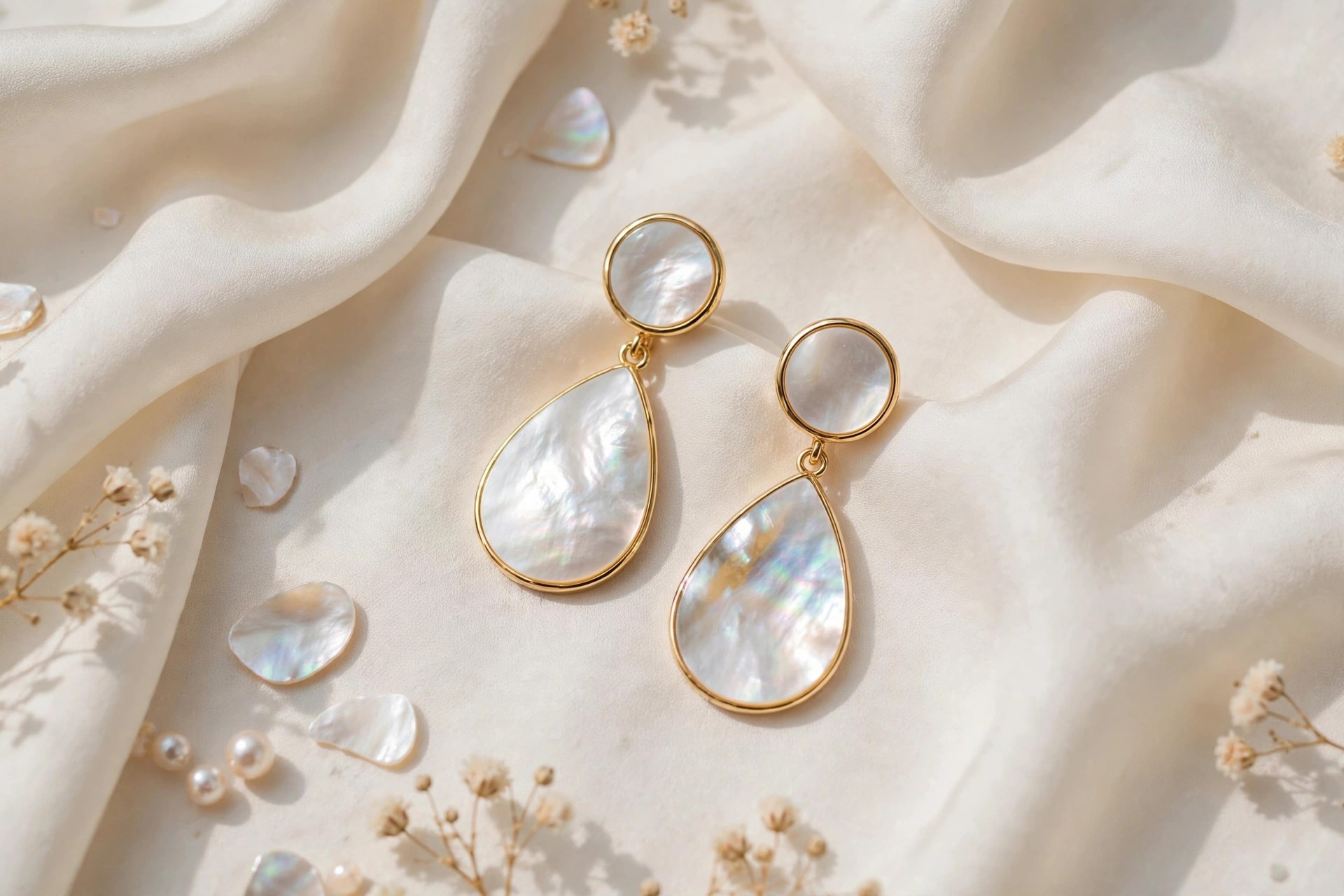
Mother of Pearl Earrings: Nature's Elegance
Mother of pearl earrings are a captivating and timeless choice in the world of jewelry. These exquisite pieces of adornment feature the iridescent inner layer of mollusk shells, known as mother of pearl, which showcases a shimmering play of colors and a natural elegance. Let's explore the beauty, significance, and versatility of mother of pearl earrings.
Formation of Mother of Pearl:
Mother of pearl, also known as nacre, is the inner layer of certain mollusk shells, including those of oysters, abalones, and freshwater mussels. It is created by the mollusk as a protective layer to shield its delicate tissues from irritants. Over time, layers of calcium carbonate and organic material are deposited, resulting in the lustrous, multi-layered substance known as mother of pearl.
Elegance and Iridescence:
The unique charm of mother of pearl earrings lies in their captivating iridescence. The material displays a stunning array of colors, often including shades of white, cream, pink, blue, green, and silver. This iridescence is created as light interacts with the layers of nacre, producing a play of colors that is both mesmerizing and elegant.
Styles of Mother of Pearl Earrings:
Mother of pearl earrings come in a variety of styles to suit different tastes and occasions:
Studs: Mother of pearl stud earrings are understated and versatile. They feature small, round or oval mother of pearl pieces set in various metals, such as silver, gold, or platinum.
Dangle Earrings: Dangle mother of pearl earrings incorporate larger, often teardrop-shaped, pieces of mother of pearl that hang from the earlobes. They can have simple designs or include additional accents like diamonds or other gemstones.
Hoop Earrings: Mother of pearl hoop earrings combine the classic elegance of hoops with the natural beauty of mother of pearl, offering a unique and stylish look.
Cluster Earrings: Cluster earrings feature multiple smaller pieces of mother of pearl arranged in an intricate design, creating a captivating and artistic effect.
Carved or Inlay Designs: Some mother of pearl earrings showcase intricately carved or inlaid designs, showcasing the artisanal craftsmanship that highlights the natural beauty of the material.
Symbolism and Significance:
Mother of pearl has symbolic meanings in various cultures. It is often associated with purity, protection, and motherhood due to its nurturing and protective qualities. In some traditions, mother of pearl is believed to bring calmness and tranquility to the wearer, making it a meaningful gift for loved ones.
Caring for Mother of Pearl Earrings:
- To maintain the beauty and longevity of your mother of pearl earrings:
- Clean them gently with a soft, damp cloth to remove dirt and oils.
- Store them in a jewelry box or pouch to prevent scratching and protect them from exposure to direct sunlight and extreme temperatures.
- Avoid exposing them to harsh chemicals, perfumes, and excessive moisture, as these can damage the mother of pearl's delicate layers.
Working with mother of pearl to create earrings or other jewelry pieces requires skill and attention to detail, but it is not inherently difficult for experienced jewelry designers. Here are some factors to consider when working with mother of pearl:
Challenges:
Fragility: Mother of pearl is a delicate material, and it can be brittle. Care must be taken when cutting, shaping, and setting it to prevent cracks or damage.
Thickness and Consistency: Mother of pearl can vary in thickness and consistency, which can affect how it is cut and used in jewelry designs. Designers need to choose the right pieces to ensure uniformity and stability.
Iridescence: The iridescence of mother of pearl is one of its most attractive features, but it can also make it challenging to work with because the colors change depending on the angle of light. Designers need to consider this when planning the layout of the material.
Techniques and Considerations:
Cutting and Shaping: Jewelry designers use specialized tools and techniques to cut and shape mother of pearl into the desired forms. Precision is crucial to achieve the desired look and ensure a secure fit in the setting.
Setting: Mother of pearl can be set in various metals, such as gold, silver, or platinum. Designers must create secure settings that hold the mother of pearl firmly in place while allowing its natural beauty to shine.
Carving and Inlay: Some jewelry designs involve intricate carving or inlay work with mother of pearl. These techniques require a high level of craftsmanship and attention to detail.
Matching and Grading: When using mother of pearl in earrings or other jewelry pieces, designers must carefully select pieces that match in terms of color and iridescence to create a harmonious and balanced look.
Careful Handling: Mother of pearl should be handled with care to avoid damage during the design and crafting process. Designers typically wear gloves to prevent fingerprints and oils from affecting the material.
Finishing: After setting mother of pearl, designers often use polishing and finishing techniques to enhance its luster and ensure a smooth, even surface.
Experience Matters:
Experienced jewelry designers have a deep understanding of the characteristics of mother of pearl and have honed their skills over time. They know how to work with the material effectively, mitigate challenges, and create stunning jewelry pieces that showcase the natural beauty of mother of pearl.
In conclusion, while working with mother of pearl presents some challenges, skilled jewelry designers have the expertise and techniques needed to create earrings and other jewelry pieces that highlight the material's elegance and iridescence. Proper training, precision, and attention to detail are essential for crafting beautiful and durable mother of pearl jewelry.
Mother of pearl earrings are a testament to the beauty of nature's artistry. Their iridescence and elegance make them a cherished addition to any jewelry collection, and their versatility allows wearers to express their style and appreciation for the natural world. Whether worn for formal occasions or as everyday accessories, mother of pearl earrings radiate a timeless charm that transcends fashion trends.
You may also want to learn about mother of pearl bracelets, mother of pearl rings and mother of pearl necklaces.
Carving Tests a Delicate Material
Flat nacre discs and cabochons are forgiving; carved mother of pearl is the material pushed to its limit. Flowers, leaves and cameo-style profiles are carved into shell thick enough to hold relief, and the iridescence plays across the carving's curves, lighting a petal differently from its neighbour. Thin points and undercut edges are where carvings chip, so well-made carved earrings keep the relief shallow, the edges slightly rounded, and the setting protective around the shell rather than gripping it at exposed points.
Bridal wear suits mother of pearl for practical as well as visual reasons. The soft white tones sit naturally with ivory and white dresses, pearl necklaces and lace, the earrings are light even at drop length for a long day, and the glow photographs gently beside the face. A bride choosing shell drops should simply plan around its care rules from the start: earrings on last, after hairspray and perfume, off first at night, and stored in their own soft pouch so the other honeymoon jewellery in the same case does not scratch their nacre surfaces.
Common Questions
What is mother of pearl in earrings?
Mother of pearl is nacre, the smooth iridescent lining secreted inside the shells of pearl oysters and some other mollusks, the same substance that coats a pearl. For earrings it is cut into flat or domed pieces, often backed for strength, and set like a gemstone. White mother of pearl is most common; golden and darker shell varieties also occur.
Why does mother of pearl change color in the light?
Nacre is built from microscopic layered platelets, and light reflecting between those layers interferes and separates into soft shifting colors, an effect called iridescence or orient. It is a surface-and-light effect rather than a fixed pigment, so the same earring can look creamy white in one light and pink or green tinted in another.
How fragile are mother of pearl earrings, and how should they be cared for?
Nacre is relatively soft and can scratch, chip at thin carved edges, and dull if exposed to perfume, hairspray, acids or ultrasonic cleaning. Wipe earrings with a soft, slightly damp cloth, put them on after cosmetics, store them separately from harder jewelry, and keep carved pieces from knocks. Earrings are a safer place for shell than rings, since ears take fewer blows.