Pearl Rings
A single cultured pearl, set to protect soft nacre
A pearl ring centers a single cultured pearl, or occasionally a small cluster, grown inside a mollusk around an implanted nucleus or tissue and coated in layers of nacre, the same material as mother of pearl shell. The main cultured types differ in source and look: Akoya pearls from saltwater oysters are prized for sharp, mirror-like luster in white and cream, freshwater pearls offer the widest range of shapes and pastel colors at accessible prices, South Sea pearls grow larger in white and golden tones, and Tahitian pearls bring natural dark grey, green and peacock overtones. In a ring, size is commonly about 6 to 10 millimeters for a single pearl. Pearl is soft, at 2.5 to 4.5 on the Mohs scale, and vulnerable to scratches, acids, perfume and heat, so ring design and habits matter more than with harder gems. This guide covers pearl types, luster and surface, settings and careful wear.
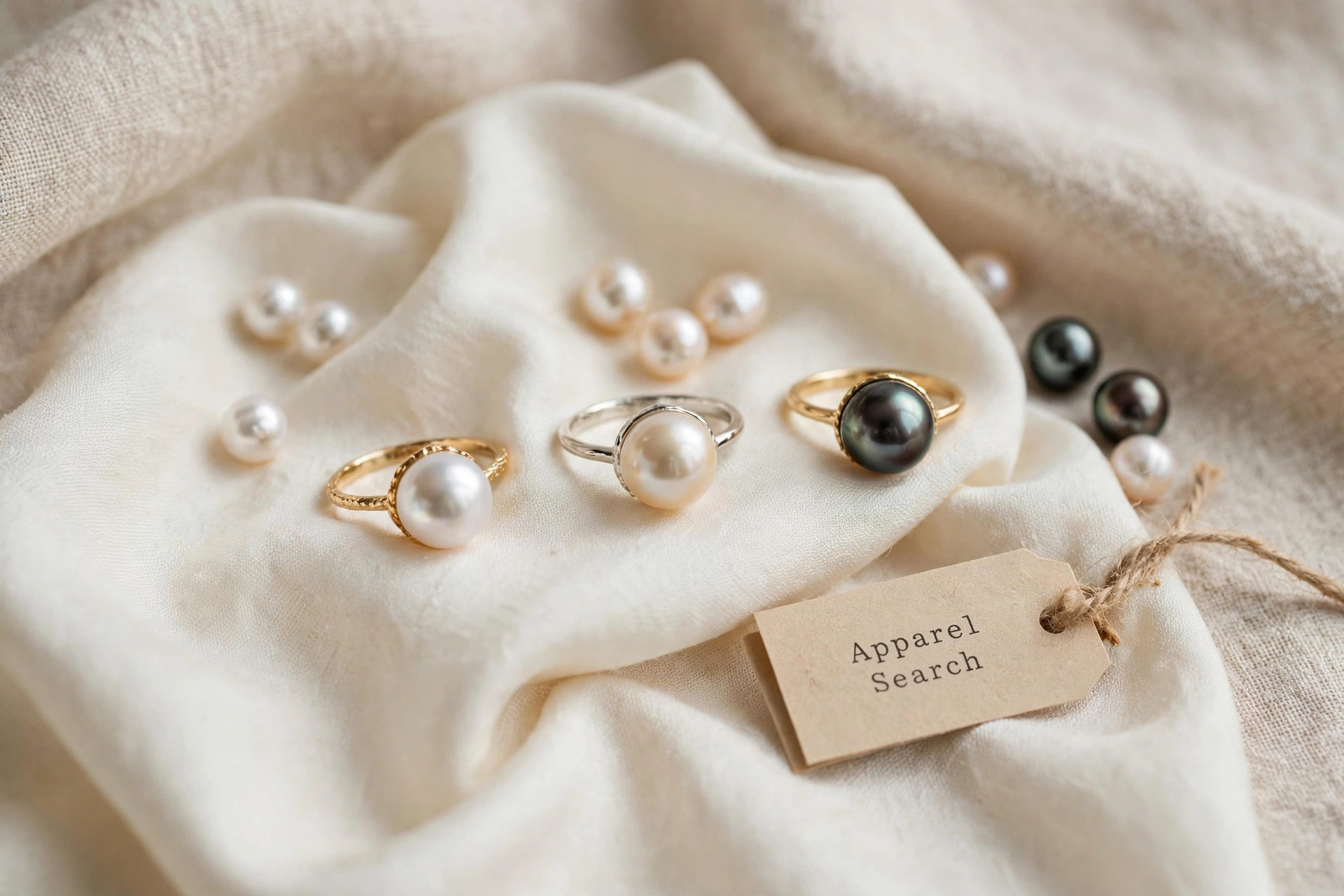
Pearl Rings: Timeless Elegance and Classic Beauty
Pearls: A Brief Overview:
Pearls are unique gemstones that are formed within the shells of oysters, mussels, and other mollusks. They are distinct in that they do not require cutting or polishing; they are naturally lustrous and come in a variety of shapes, sizes, and colors. The creation of pearls is a result of the mollusk's defense mechanism when an irritant, like a grain of sand, infiltrates its shell.
Pearl Qualities:
Luster: The luster of a pearl refers to its surface shine and brilliance. High-quality pearls have a deep, mirror-like luster that reflects light beautifully.
Color: Pearls come in various colors, including white, cream, black, gray, gold, pink, and more. The color can be natural or enhanced through treatments.
Shape: Pearls can be round, oval, button, drop, or baroque (irregular) in shape. Round pearls are the most valuable and sought after.
Size: Pearl size varies based on the type of mollusk and growing conditions. Larger pearls are generally more rare and valuable.
Surface: The surface of a pearl should ideally be smooth, with minimal blemishes or imperfections. Flawless pearls are exceptionally valuable.
Styles of Pearl Rings:
Solitaire Pearl Rings: A single pearl set on a ring, usually in a prong or bezel setting, highlighting the beauty and simplicity of the pearl.
Cluster Pearl Rings: Multiple small pearls arranged in a cluster, creating a visually appealing design that can be intricate or symmetrical.
Halo Pearl Rings: A central pearl surrounded by a halo of smaller gemstones, enhancing the pearl's presence and adding sparkle to the ring.
Pearl and Diamond Rings: Combining the elegance of pearls with the brilliance of diamonds, creating a luxurious and timeless look.
Vintage Pearl Rings: Designs inspired by different eras, incorporating ornate settings and intricate details, providing a vintage aesthetic.
Historical Use of Pearls in Rings:
Ancient Civilizations: Pearls have been prized since ancient times. In ancient Rome, they were a symbol of wealth and status. In ancient China, pearls were associated with immortality and were often used to adorn imperial garments.
Renaissance Period: During the Renaissance, pearls were highly sought after and widely used in jewelry, including rings. They were a symbol of love and purity, making them a popular choice for engagement and wedding rings.
Victorian Era: Queen Victoria's love for pearls influenced their popularity during the Victorian era. Intricate pearl rings, often adorned with diamonds or other gemstones, were fashionable among the elite.
Famous Pearl Rings: A Glimpse of Elegance and Royalty
1. Princess Diana's Engagement Ring:
Princess Diana's engagement ring, now worn by Kate Middleton, features a sapphire surrounded by a halo of diamonds. However, she often adorned a pearl and diamond ring that became iconic. This pearl ring, sometimes referred to as her "Swan Lake" ring, showcased her fondness for pearls.
2. Queen Elizabeth II's Pearl Ring:
Queen Elizabeth II, known for her affinity for pearls, often wore a simple yet elegant pearl ring. Her collection of pearls is vast, and this ring reflects her classic and timeless style.
3. Elizabeth Taylor's La Peregrina Pearl Ring:
The La Peregrina Pearl, one of the most famous pearls in the world, was part of Elizabeth Taylor's extensive jewelry collection. It was a large, pear-shaped pearl that had been owned by various European royals before Taylor acquired it.
4. Jackie Kennedy's Pearl Ring:
Jackie Kennedy, renowned for her grace and style, often wore a beautiful pearl and emerald ring. This iconic piece was part of her signature fashion.
Popular Pearl Jewelry Designers and Brands:
Mikimoto: Renowned as a pioneer in cultured pearls, Mikimoto is one of the most prestigious and recognized pearl jewelry brands globally. They are known for their exquisite pearl rings featuring Akoya, South Sea, and freshwater pearls.
Tiffany & Co.: Tiffany is a renowned luxury brand that offers a wide range of pearl jewelry, including rings. Their designs often incorporate pearls with diamonds, creating timeless and elegant pieces.
David Yurman: David Yurman is celebrated for his fusion of classic and contemporary designs. The brand offers a range of pearl rings that showcase the beauty of pearls in unique and modern settings.
Elsa Peretti: A celebrated designer for Tiffany & Co., Elsa Peretti's designs often feature pearls in minimalist and elegant styles, appealing to those who appreciate simplicity and sophistication.
Cartier: Cartier, a prestigious jewelry brand, occasionally incorporates pearls in their high-end collections, offering exquisite pearl rings that epitomize luxury and opulence.
Pearl rings have always been cherished by royalty and celebrities for their timeless elegance and understated beauty. From the classic and traditional designs favored by royals to modern interpretations crafted by famous jewelry designers, pearls continue to be a symbol of sophistication and grace in the world of jewelry.
The Enigmatic Beauty and Rarity of Black Pearls
Black pearls, often referred to as Tahitian pearls, are prized for their mysterious and captivating allure. Here's a look at what makes them beautiful and rare:
Unique Color and Iridescence:
Natural Hues: Black pearls are renowned for their deep, dark hues, ranging from black, charcoal, and peacock green to shades of blue, silver, and aubergine. These colors are entirely natural and vary within the same pearl, creating a captivating play of colors and tones.
Iridescence: When exposed to light, black pearls exhibit a unique iridescence or overtone, a shimmering effect that adds depth and dimension to their appearance. This iridescence is often seen in shades of green, pink, blue, or purple, enhancing their beauty.
Rare and Cultivated in Pristine Environments:
Tahitian Origin: Black pearls, also known as Tahitian pearls, are primarily cultivated in the lagoons and atolls of French Polynesia, specifically around the islands of Tahiti. The environment's purity and ideal conditions contribute to their rarity and quality.
Natural Formation: Black pearls are relatively rare in nature. The black-lipped oyster (Pinctada margaritifera) produces these pearls, and the process of pearl formation is intricate, making them a natural wonder.
Exquisite Size and Shape:
Size: Black pearls are often larger in size compared to other types of pearls. They can range from 8mm to over 18mm, showcasing a bold and impactful appearance when used in jewelry.
Shape: Black pearls can be round, semi-round, oval, baroque, or drop-shaped. Round black pearls are highly valued due to their symmetry and rarity.
Versatile and Unique in Jewelry:
Versatility in Designs: Black pearls are incredibly versatile and can be incorporated into a wide array of jewelry designs, ranging from classic and elegant to modern and edgy. They complement various metals and gemstones, allowing for diverse and creative jewelry pieces.
Cultural and Modern Appeal: Black pearls hold a special place in Polynesian and Tahitian culture, symbolizing luxury and prosperity. In contemporary times, they have gained popularity and are highly sought after by jewelry enthusiasts and collectors worldwide.
Intrigue and Exclusivity:
Popularity in the Market: Black pearls have gained significant popularity, but their rarity ensures they remain exclusive and hold a certain allure. The demand often surpasses the supply, contributing to their exclusivity in the market.
Collectibility and Investment Value: Given their scarcity and enduring appeal, black pearls are not only admired for their beauty but also recognized as investments in the world of high-quality gemstones and fine jewelry.
In conclusion, black pearls are a natural wonder, coveted for their unique and mysterious beauty. Their rarity, diverse color palette, large sizes, and cultural significance contribute to their desirability, making them a symbol of elegance and luxury in the realm of jewelry.
Pearl rings have remained a symbol of elegance, purity, and timeless beauty throughout history. Their versatility in design, combined with their unique qualities, continues to make them a cherished choice for jewelry enthusiasts, celebrating the natural allure of this remarkable gemstone.
Learn about pearl necklaces, pearl bracelets and pearl earrings to go along with your newly found knowledge about pearl rings.
Judging Luster, Surface and Setting
Luster is the most important quality in a pearl: a high-luster pearl shows bright, sharp reflections and a sense of depth in its nacre, while a dull, chalky surface will not improve with setting or cleaning. Next check surface quality for spots, bumps and wrinkles, shape for roundness if a round pearl is claimed, and color and overtone in daylight. Grading terms such as AAA are not standardized across sellers, so compare pearls by eye and by the seller's stated type, size in millimeters and nacre source rather than by letter grades alone.
Most pearl rings glue the pearl onto a metal post set into a drilled hole, often backed by a cup or low prongs, so inspect that the pearl sits straight and firm with no wobble. A protective design keeps the pearl from standing too high and may curve metal partly around its sides. If a pearl ever feels loose, stop wearing the ring and have the post and adhesive renewed, since a lost pearl is rarely recovered.
Common Questions
Which type of pearl is best for a ring?
Akoya is the classic ring choice for its bright, reflective luster and round shape, while a larger South Sea pearl makes a bolder single-pearl ring and Tahitian suits wearers who want natural dark color. Freshwater pearls give the most choice of shape and color for the price. For any type, prioritize strong luster and a clean surface over the largest size, and choose a setting that shelters the pearl, since all pearls are soft.
How durable is a pearl ring for daily wear?
A pearl ring is best treated as a careful-wear piece rather than a never-take-it-off ring. Nacre scratches against harder materials, and acids in perfume, hairspray, sweat and household cleaners can dull or damage the surface over time. Put the ring on last, after cosmetics, take it off for washing, cleaning, swimming and exercise, and store it separately. With those habits a pearl ring can be worn often and last for years.
How should I clean and store a pearl ring?
Wipe the pearl after wear with a soft, slightly damp cloth to remove skin oils and cosmetics, and wash only occasionally in lukewarm water with a trace of mild soap, drying it thoroughly. Never use ultrasonic or steam cleaners, vinegar, lemon, ammonia or abrasive jewelry dips. Store the ring separately in a soft pouch or lined box, away from harder gems that scratch nacre and away from sealed plastic or heat that can dry it.