Antique Watches
Timepieces over a century old
An antique watch is a timepiece more than 100 years old, valued for the craftsmanship, design and technology of the era that made it as much as for telling time. Timekeeping began with sundials and water clocks, but the portable mechanical watch emerged in the 16th century, and the centuries that followed moved the watch from pocket to wrist: the 19th and early 20th centuries brought mass production, and wristwatches spread during World War I, when soldiers needed the time at a glance. Antique watches therefore divide into pocket watches, the dominant form for most of the period, and the earliest wristwatches, including trench watches and early ladies' and gentlemen's models from rising makers. Buyers find them in antique stores and boutiques with curated stock, on online marketplaces such as eBay, 1stdibs and Chrono24, and at auction houses including Christie's, Sotheby's and Bonhams, which regularly sell important pieces. Value turns on brand, rarity, condition, materials and historical significance: vintage Patek Philippe pieces with complications, rare early Rolex models such as the Daytona and Submariner lines in their early forms, early Audemars Piguet and Longines are among the most sought after. This guide covers dating and types, value factors and careful buying.
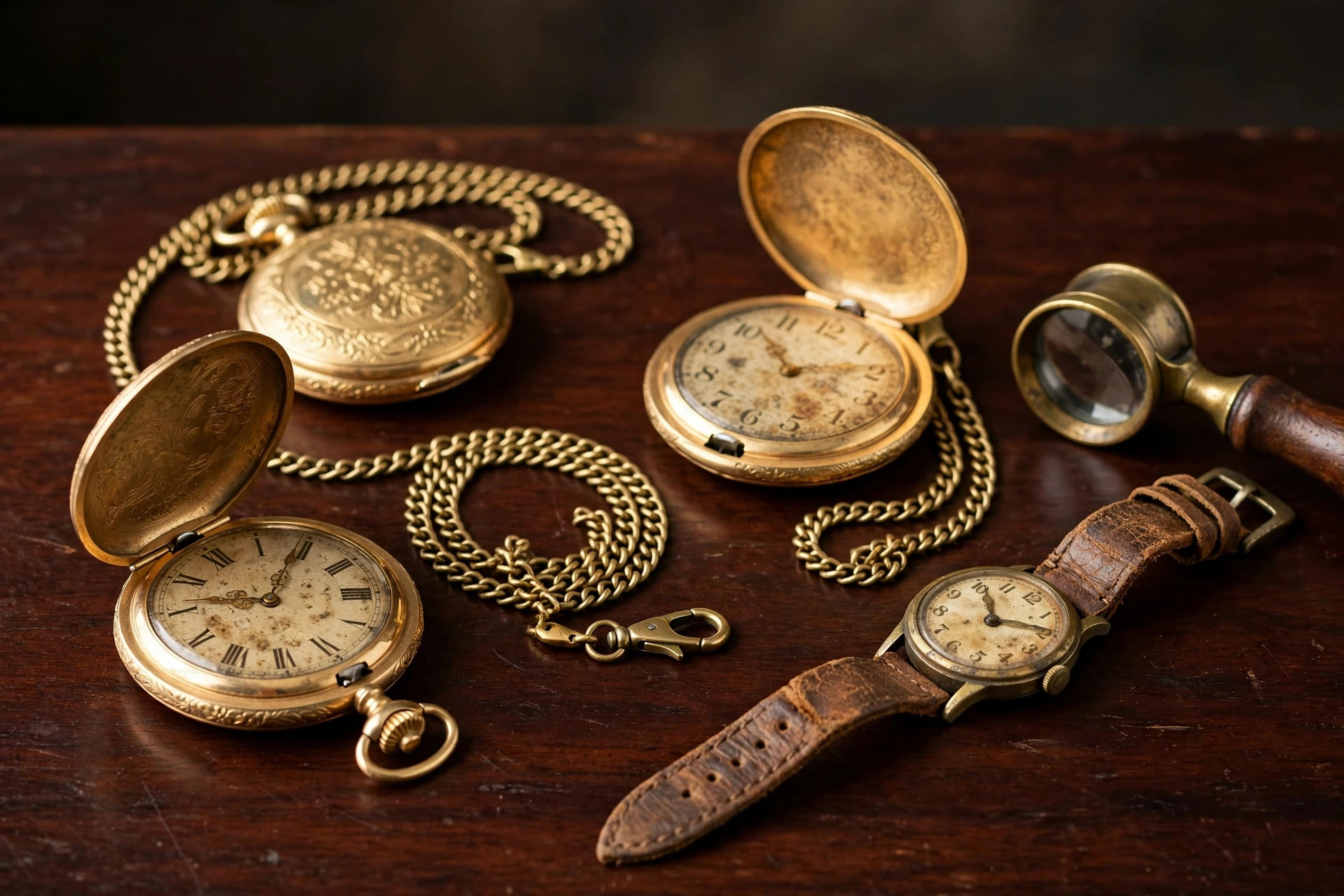
Antique Watches: A Glimpse into Time's Past
What Makes Watches Antique?
An antique watch is typically defined as a timepiece that is over 100 years old. The age and historical significance of antique watches contribute to their value and desirability among collectors and enthusiasts. These watches often exhibit craftsmanship, design, and technology representative of the era in which they were created. Each antique watch tells a story of the past, making it a coveted piece of history.
History of Watches:
The history of timekeeping devices can be traced back to ancient civilizations, where sundials and water clocks were used. However, the portable mechanical watch, as we know it today, emerged in the 16th century. Over the centuries, watches evolved from pocket watches to wristwatches. The 19th and early 20th centuries saw significant advancements in watchmaking, including the mass production of watches, the introduction of wristwatches during World War I, and the rise of iconic watch manufacturers.
Where can we Shop for Antique Watches?
Consumers interested in purchasing antique watches have several options:
Antique Stores and Boutiques: Local antique stores often have a curated collection of antique watches for sale.
Online Marketplaces: Websites like eBay, 1stdibs, and Chrono24 host a wide range of antique watches, allowing users to browse and purchase from a diverse selection.
Auction Houses: Auction houses like Christie's, Sotheby's, and Bonhams frequently hold auctions featuring antique watches, providing opportunities to bid on unique timepieces.
Most Valuable Types of Antique Watches:
The value of an antique watch can vary based on factors such as brand, rarity, condition, materials, and historical significance. Some of the most valuable types of antique watches include:
Patek Philippe Watches: Patek Philippe is renowned for producing high-quality, intricate watches. Vintage Patek Philippe watches, especially those with unique complications or limited editions, are highly valuable.
Rolex Watches: Vintage Rolex watches, particularly rare models like the Rolex Daytona or Submariner, can command high prices at auctions and among collectors.
Audemars Piguet Watches: Audemars Piguet is known for its luxury watches, and vintage Audemars Piguet timepieces, especially those from the early 20th century, are highly sought after.
Longines Watches: Longines has a rich heritage, and vintage Longines watches, particularly from the early to mid-20th century, are valued for their quality and design.
History of Antique Pocket Watches: A Journey through Timekeeping
Origins and Early Development:
The history of pocket watches dates back to the 16th century. The first portable timekeeping devices were small spring-powered clocks that were carried in pockets or worn as pendants. These early timepieces were relatively imprecise, but they set the foundation for the development of more accurate and compact pocket watches.
17th to 19th Centuries:
During the 17th century, advancements in horology led to the production of more precise and reliable pocket watches. Innovations like the balance spring and the introduction of jewel bearings significantly improved accuracy. By the 18th century, pocket watches became more common, and they were considered a symbol of status and sophistication, especially in European high society.
19th Century: The Golden Age of Pocket Watches:
The 19th century is often referred to as the golden age of pocket watches. During this period, Swiss and American watchmakers gained significant prominence for their craftsmanship and innovation. Elaborate designs, high-quality movements, and intricate engravings made pocket watches highly desirable.
Early 20th Century: Transition to Wristwatches:
The popularity of pocket watches began to wane during the early 20th century with the advent of wristwatches. Wristwatches, especially for men, gained traction during World War I due to their practicality and convenience in military operations. The transition was further accelerated by the ease of glancing at the wrist for the time.
Late 20th Century and Beyond:
Pocket watches continued to be produced and used but primarily as accessories or collectibles. They hold a sense of nostalgia and antique charm in the modern era. Some contemporary watchmakers still craft pocket watches, often in limited editions, catering to collectors and enthusiasts.
Pocket Watch Collectors Market:
The market for antique pocket watches remains vibrant, attracting both seasoned collectors and newcomers. Key aspects of the pocket watch collectors market include:
Antique Auctions and Events: Antique pocket watches are often featured in auctions and specialized events dedicated to horology and timepieces. Collectors have the opportunity to bid on unique and rare pieces.
Collectors' Communities: There are various online and offline communities and forums where pocket watch collectors can discuss, share, and trade timepieces. These communities provide valuable insights, expertise, and a sense of camaraderie among collectors.
Value Determinants: The value of an antique pocket watch is influenced by factors such as age, brand, rarity, condition, materials, complications, and historical significance. Watches from renowned makers, with unique complications or in pristine condition, are highly sought after and command higher prices.
Restoration and Preservation: Collectors often engage in the restoration and preservation of antique pocket watches to maintain their value and historical integrity. Restored watches that retain their original features and mechanisms are particularly prized.
In summary, antique pocket watches offer a captivating glimpse into the evolution of timekeeping technology and design. While wristwatches eventually eclipsed their popularity, antique pocket watches continue to hold a special place in the hearts of collectors and enthusiasts, preserving the timeless beauty and historical significance of these exquisite timepieces.
Antique watches are not only timekeeping devices but also cherished artifacts that embody the craftsmanship and design of their eras. Collectors and enthusiasts appreciate these timeless pieces for their historical significance and enduring beauty, making antique watches a captivating realm for both collectors and history enthusiasts alike.
You may also want to learn about vintage watches.
Pocket Watches and the First Wristwatches
Most antique watches are pocket watches, in open-face and hunter-case forms, driven by movements that progressed from fusee and verge designs to the lever escapements still used today. Cases in gold, silver and base metal, enamel dials, and decorative engraving make them collectible as objects even apart from their movements. Key makers' names, serial numbers and hallmarks let a buyer date a pocket watch closely, and records survive for many Swiss, English and American manufacturers.
The earliest wristwatches are the frontier of the category: converted ladies' pocket watch movements on wire lugs, officers' trench watches from the First World War, and the first purpose-made men's wristwatches from makers who would define the next century. Condition questions multiply with age, so budget for a service by a specialist, and treat a non-running antique as a project priced accordingly rather than as a bargain.
Common Questions
What makes a watch antique rather than vintage?
Age alone: an antique watch is over 100 years old, while a vintage watch is an older piece under that threshold, generally at least 20 years old. The distinction changes what buyers look for. Antique watches are collected as historical objects, where original dials, hands and cases matter enormously and sympathetic restoration is debated, while vintage watches are more often bought to wear. A watch made in the early 1920s now crosses the antique line, so the earliest wristwatches are entering the antique category.
What factors decide an antique watch's value?
Brand and maker first, then rarity, condition, materials and significance. A complicated watch from a great house, a model made in small numbers, a case in gold or platinum, a dial that remains original and untouched, and a documented place in watchmaking history, such as an early wristwatch or a watch with notable ownership, all raise value. Over-restoration lowers it: a redialed or heavily polished antique usually sells for less than an honest, worn example with its original surfaces intact.
What should be checked before buying an antique watch?
Originality and working order. Ask whether the dial, hands, case and movement belong together and match the watch's period and serial records, whether the movement runs and keeps reasonable time, and what servicing it has had, since parts for century-old movements can be scarce and expensive. Buy from a seller who describes condition and originality specifically, offers clear photographs of the movement as well as the case, and allows a return, and have important purchases inspected by a watchmaker experienced with antique pieces.