Fashion University
Apparel Search fashion summary — a short guide to fashion university.
A university is an educational institution designed for instruction, examination, or both, of students in many branches of advanced learning, conferring degrees in various faculties and often embodying colleges and similar institutions. A fashion university is a university that offers courses or a degree in fashion-related topics — the degree-level home of fashion education.
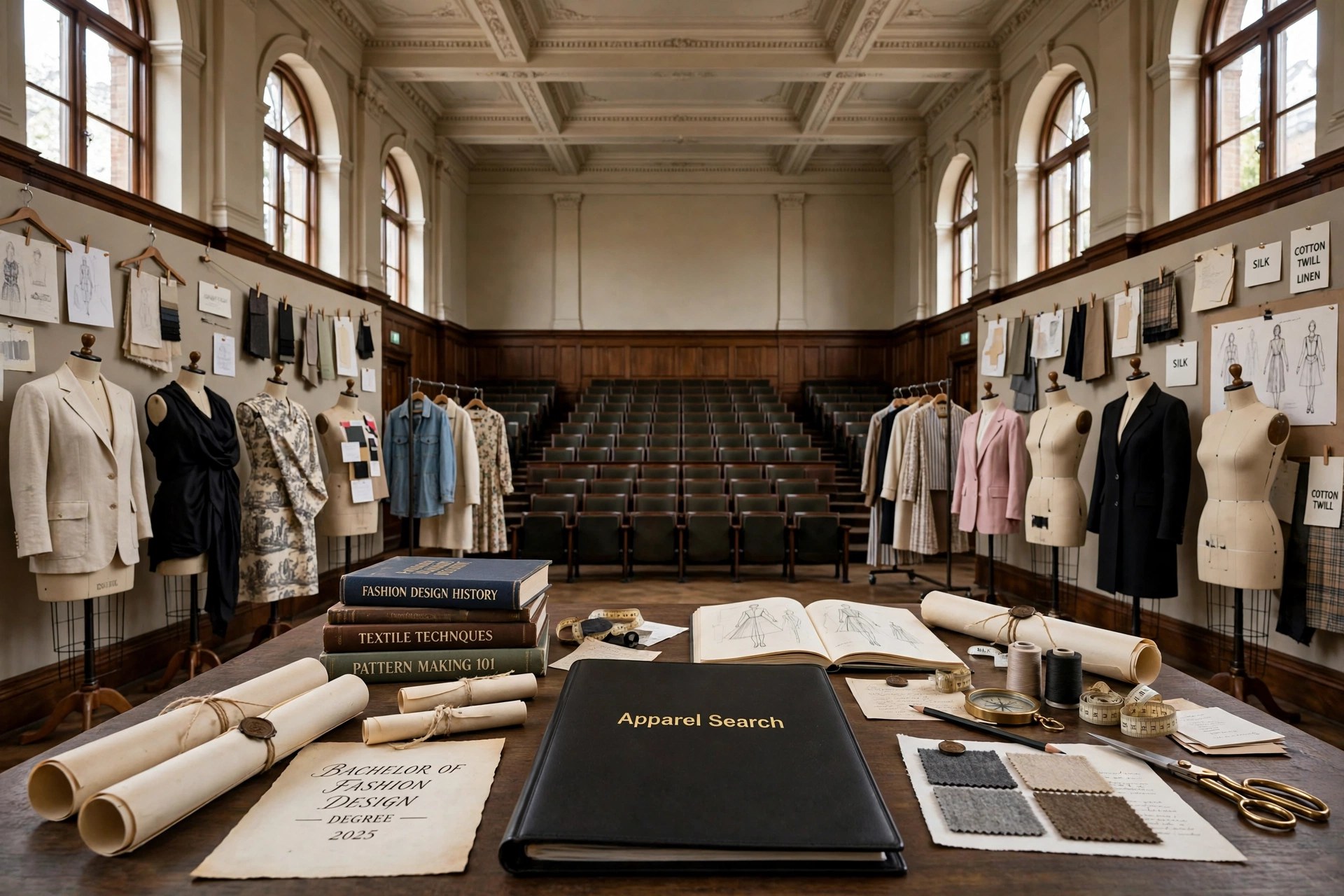
Fashion University — Explore & Resources
University, College and Fashion School
The difference between a college and a university is that generally a college offers a set of degrees in one specific area, whereas a university has a collection of colleges. When someone goes to a university, they graduate from one of its colleges — such as a business college or an engineering college — and a fashion student likewise graduates from the university's design, business or textiles college.
A fashion university therefore sits at the top of the structure the fashion schools summary describes: fashion schools of any type are a good way to get a fashion education, but the university route adds the breadth of a multi-faculty institution — fashion studied alongside business, technology, art history and marketing under one degree-granting roof.
Choosing the University Route
The university choice suits students who want a fashion degree with academic depth: research, theory and neighbouring disciplines beside studio practice. It also suits the industry's analysts, marketers and technologists, whose work draws on faculties a specialist single-subject college may not house.
The fashion schools summary linked from this page is the practical next step: it sets out levels of study, the subjects fashion schools teach, and the location question — California and New York included — that decides where a degree happens. Get a fashion education at a college or university, and the choice between them becomes a question about the shape of the education, not its quality.
What a Fashion Degree Signals
Employers read a fashion university degree as evidence of stamina and structure as much as of subject knowledge: a graduate has completed long projects to deadlines, defended choices in critiques, and worked in teams across specialisms — the daily texture of industry jobs. The signal strengthens when the degree includes the experiences universities are best placed to arrange: placements, live briefs from companies, and exhibition or show opportunities that put student work in front of the trade before graduation. Applicants weighing the university route against a specialist college should compare those arrangements directly, course by course, because they vary more between individual institutions than between the two types. The fashion schools summary linked from this page organises that comparison, from levels and subjects to the location summaries for California and New York. Whichever route is chosen, the degree is the beginning of the education rather than its certificate of completion — the industry's technologies, markets and tastes keep moving, and a university's real gift is teaching its students how to keep learning at that speed.
Common Questions
What is a fashion university?
A university — an institution conferring degrees in various faculties — that offers courses or a degree in fashion-related topics.
What is the difference between a college and a university?
Generally, a college offers degrees in one specific area, while a university is a collection of colleges; a student graduates from one of the university's colleges.
Where can you compare fashion schools and universities?
The fashion schools summary linked from this page covers levels, subjects and locations for fashion education, including the California and New York City summaries.