Augmented Reality in the Fashion Industry
See it on you before you buy it — how AR try-on and product visualization are changing fashion ecommerce
Augmented reality is important to the fashion industry in regard to ecommerce. Online, a shopper cannot touch a fabric, hold a shoe up to the light, or watch how a dress moves — but augmented reality closes part of that gap by placing the product itself into the shopper's own world, on their own body, at full scale, before any money changes hands.
This page explains what augmented reality is, the three features that define an AR system, how AR try-on works for clothing, shoes, jewelry and beauty products, and how augmented reality differs from virtual reality — a distinction the fashion industry itself often blurs, even though the two technologies ask completely different things of the shopper.
Fashion Technology & Shopping
What Augmented Reality Is
Augmented reality is essentially a technology that superimposes a computer-generated image on a user's view of the real world, thus providing a composite view. A composite view is a view that is an aggregate of multiple subviews — a defined way of displaying attribute information that represents a more complete picture of an object. In fashion terms: the room, the mirror and the shopper are real; the garment laid over them is digital, and the combined picture tells the shopper more than either view could alone.
Augmented reality — also referenced as AR — can be defined as a system that incorporates three basic features: a combination of real and virtual worlds, real-time interaction, and accurate 3D registration of virtual and real objects. Each feature does real work in a fashion application. The combination of worlds is what puts a handbag on the shopper's own table; real-time interaction is what lets the virtual shoe turn as the foot turns; and accurate 3D registration is what keeps the sunglasses sitting on the bridge of the nose rather than floating somewhere near it. When any one of the three fails, the illusion — and the shopper's trust in it — fails with it.
How AR Try-On Works for Fashion
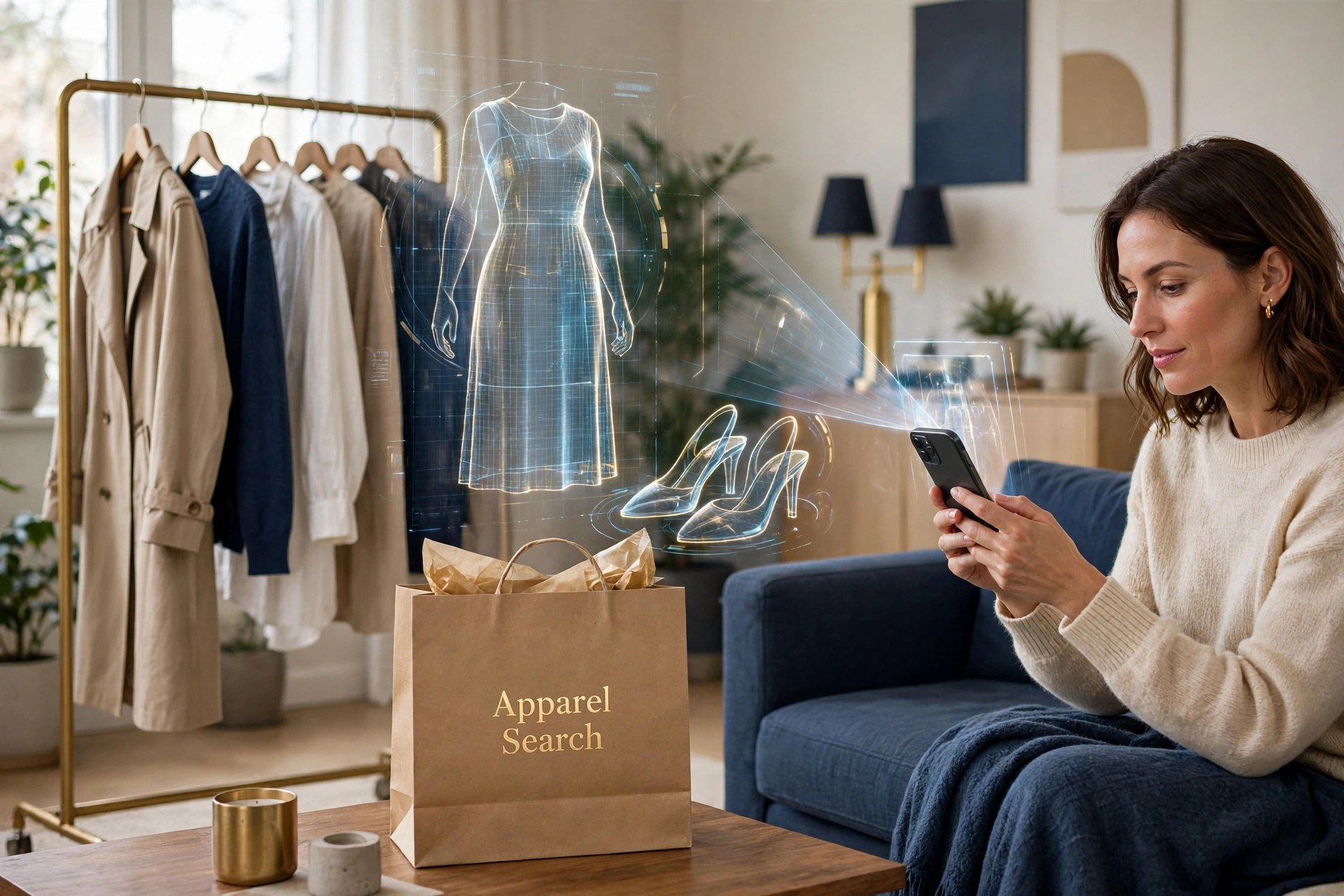
AR is transforming the way clothing companies engage with customers. This technology enables consumers to experience products such as shirts, dresses, pants, shoes, etc., from the comfort of their own homes, and it gives people the ability to visualize fashion, jewelry and beauty products in real time. See what clothes look like on you before you purchase them — obviously a great tool. A shopper can try on a pair of new sunglasses without having to leave the house.
Through augmented reality, products are automatically personalized to the individual shopper, overlaid on their face, their body, or their world. A lipstick shade is rendered on the shopper's own face, a watch on their own wrist, a sofa-scale product — or a full outfit — in their own room, at true size. That is why AR try-on fashion and product visualization is exciting for online retailers: the product stops being a flat photograph of somebody else wearing it and becomes a preview of the shopper's own purchase.
Augmented Reality Is Different from Virtual Reality
Virtual reality is the computer-generated simulation of a three-dimensional image or environment that can be interacted with in a seemingly real or physical way by a person using special electronic equipment, such as a helmet with a screen inside or gloves fitted with sensors. The major difference between AR and VR is the world you experience. With VR, you immerse yourself in a virtual world; whereas in augmented reality, you experience the “real world” — your room, your face and your body stay in the picture, and only the product is added.
Applications of virtual reality include entertainment (particularly video games), education (such as medical or military training) and business (such as virtual meetings). Other distinct types of VR-style technology include augmented reality and mixed reality, sometimes referred to as extended reality or XR. For fashion, the practical dividing line is the shopping moment: VR can build a virtual store or a runway show a shopper steps into, while AR answers the more everyday question — what will this look like on me, here, now?
Why AR Matters for Online Fashion Retailers
Fashion ecommerce has always sold from photographs, and photographs leave the most important questions unanswered: How will this sit on my shoulders? How big is that bag against my body? Does that shade suit my skin? AR try-on and product visualization attack exactly those questions, letting shoppers visualize fashion, jewelry and beauty products in real time, on themselves, in their own surroundings — the closest an online store can come to handing the customer the product.
That is also why the technology's fashion uses cluster where fit, scale and shade matter most: footwear and eyewear that must sit correctly on a face or foot, watches and jewelry worn against the skin, makeup shades that change with the wearer, and garments whose drape and proportion are the whole purchase decision. As phone cameras and body-tracking improve, the registration gets more accurate and the composite view more convincing — and each improvement makes the at-home try-on feel less like a novelty and more like the fitting room it is standing in for.
Common Questions
What is augmented reality in the fashion industry?
Augmented reality (AR) superimposes a computer-generated image on a user's view of the real world, providing a composite view. In fashion, that means a garment, shoe or accessory rendered over the shopper's own body, face or room — so they can experience shirts, dresses, pants, shoes, jewelry and beauty products from home before buying.
How is augmented reality different from virtual reality?
The major difference is the world you experience. Virtual reality immerses you in a fully virtual world, usually through special equipment such as a helmet with a screen inside or gloves fitted with sensors. Augmented reality keeps you in the real world and adds virtual objects to it, registered accurately in 3D and interactive in real time.
What can shoppers try on with augmented reality?
Clothing such as shirts, dresses and pants, plus shoes, sunglasses, watches, jewelry and beauty products such as makeup shades. Through AR, products are automatically personalized to the individual shopper, overlaid on their face, their body, or their world.