Romper

Fashion Terms — the Apparel Search fashion terminology directory

A romper, also known as a onesie in children's wear, is a one-piece garment that combines shorts and a shirt — loose fitting, usually with shorter legs that may be gathered at the end, with puffed pants particularly associated with the style. Rompers appeared in the United States in the early 1900s as children's playwear, peaked in popularity in the 1950s for children and for women's leisure and beachwear, and have enjoyed a renaissance as a fashionable garment for women since 2006.

Rompers are not just for babies.

A romper, also known as a onesie, is a one-piece garment worn by children. However, the romper style is not only for infants and toddlers.

Somewhat similar to a coverall, it is loose fitting and usually has shorter legs that may be gathered at the end. Puffed pants are particularly associated with rompers.

Rompers usually are meant as a combination of shorts and a shirt, though the term can include jumpers, one-piece bathing suits, overalls, and clubwear fashions to name a few.

Since 2006 rompers have enjoyed a minor renaissance as a fashionable garment for women. Several designers have presented collections including romper suits and they are offered by many retailers.

View more about the romper being worn on our fashion blog.

Historical reference to rompers:

Rompers appeared in the United States of America in the early 1900s.  They were very popular as playwear for younger children because people thought they were ideal for movement.  Rompers were in many ways the first modern casual clothes for children. They were light and loose fitting, a major change from the much more restrictive clothing children wore during the 19th Century Victorian era. Styles and conventions varied from country to country. In France they were, for many years, only for boys.  While primarily a play garment, we note French children wearing dressy rompers. Their popularity peaked in the 1950s when they were used by children as playwear and by women as leisure- and beachwear. Thereafter the garment has continued to be used by infants and toddlers; however, it has become less common among older girls and women, although never disappearing entirely.

Examples: Christening Rompers & Baptism Romper and Valentine's Day Onesies for Adults.
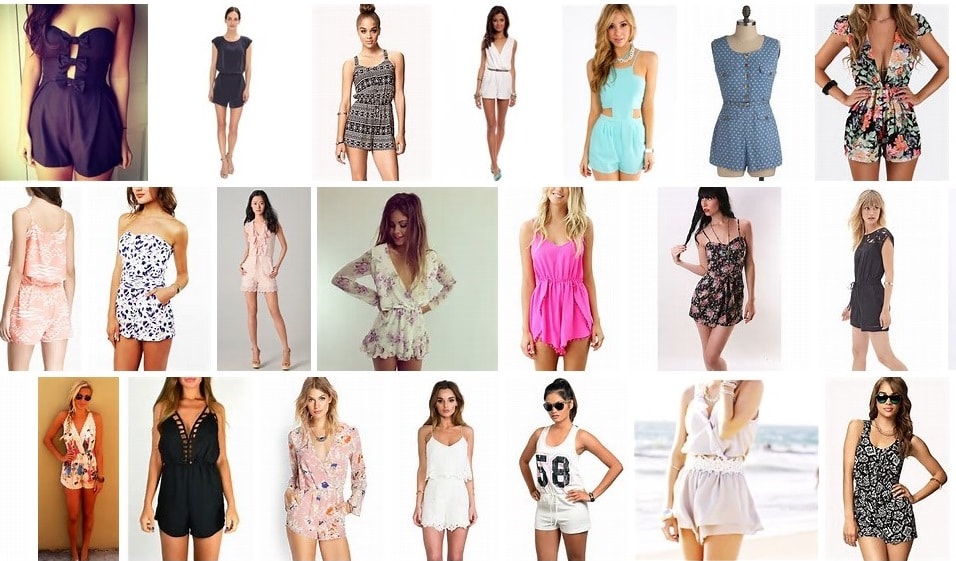
women's rompers

Thank you for using the Apparel Search website.


Apparel Search   Add Your Company   Contact Us   About Us   Advertise   News Letter   Legal   Help
Copyright © 1999-2026 Apparel Search Company.  All Rights Reserved. 

The Romper: Play Clothes That Grew Up

The romper's original selling point was freedom of movement. Victorian children's clothing was restrictive — layered, structured and miniature-adult — and the romper answered with a single loose garment a child could run, climb and play in, easy to put on and easy to wash. That practicality made it a symbol of a new idea: that children should have clothes designed for childhood rather than for ceremony. Conventions varied by country — in France rompers were for many years worn only by boys, yet French children also appeared in dressy rompers — and the formal branch of the family survives in christening and baptism rompers, garments that keep the one-piece playwear cut for ceremonial use.

The women's romper follows from the same virtues. At the style's 1950s peak, women wore rompers as leisure and beachwear — a one-piece that needed no coordinating and moved easily between sand and street. The modern revival, running since 2006 with designer collections and wide retail availability, uses the garment the same way: an instant outfit, a warm-weather alternative to a dress, and a natural piece of resortwear, since it packs flat and dresses a vacation day in one step. Its close relatives clarify its edges: a coverall is the long-legged, workwear branch of the one-piece idea, while the romper keeps the legs short and the purpose recreational.

Construction details to check when buying are the ones the definition implies. Because top and bottom are one piece, fit must work in both at once — the torso length decides whether the shorts sit comfortably, so it is the measurement that matters most and the one most likely to disappoint if ignored. Gathered leg openings and puffed pants are the classic children's styling; women's versions more often use a defined waist to give the loose cut its shape. Judged either way, the romper remains what it was in 1905: the garment you choose when the day calls for moving first and dressing up second.

Common Questions

What is a romper?

A romper is a one-piece garment that combines a shirt top with shorts — loose fitting, usually with shorter legs that may be gathered at the end. The term can also extend to jumpers, one-piece bathing suits, overalls and similar one-piece styles, and in children's wear it is also known as a onesie.

Why were rompers revolutionary for children?

Rompers appeared in the early 1900s as playwear and were in many ways the first modern casual clothes for children: light and loose fitting, they allowed free movement — a major change from the much more restrictive clothing children wore in the 19th-century Victorian era.

Are rompers only for children?

No. Rompers began as children's playwear, were also used by women as leisure and beachwear at their 1950s peak, and since 2006 have returned as a fashionable garment for women, presented by several designers and offered by many retailers — while remaining a staple for infants and toddlers.

More to Explore

More from Apparel Search: Fashion Terms  |  Fashion Terms Directory  |  Fashion Terms by Category  |  Fashion Terms R  |  Apparel Search Home