Gown
Clothing Definitions — definitions of garments and clothing terms from Apparel Search
A gown or evening gown is a woman's evening wear, corresponding to men's formal wear for white tie and black tie events. Gowns are worn for formal evening weddings, by members of the wedding party, for diplomatic events such as state dinners, and other formal events including debutante balls, proms, charity balls and many awards ceremonies. A gown is a long, sometimes loose, flowing garment, a type of dress usually full-length and made of a luxury fabric such as velvet, brocade or silk. This page explains the ball gown, the lengths correct for white tie and for black tie, and the other garments that share the gown name.
What it is
A long, sometimes loose, flowing garment, the gown is a type of dress, usually full-length and made of a luxury fabric such as velvet, brocade, or silk.
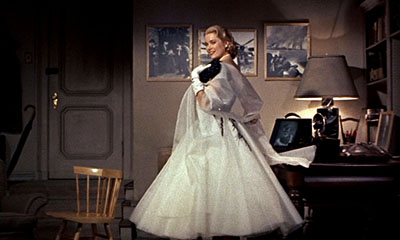
The ball gown is a gown with a full skirt (for dancing), possibly with open back and low neck line. Elbow-length gloves are correct with a ball gown..
When it is worn
White tie occasions
For events where a man wears white tie, the lady traditionally wears a ball gown.
A debutante wears a white ballgown for her debut.
To accompany a gentleman wearing a formal kilt, a lady wears a white gown with a tartan sash. A less formal variant is a longer kilted skirt, with jacket. The sash or kilted skirt may be the tartan of the woman's own clan (if she is entitled to wear one), of her husband's clan, or any of the district tartans approved for general wear.
Black Tie occasions
A gown for a black tie event may be full length, or ballet or tea (mid-calf to ankle) length. A cocktail gown, with a skirt the length of current day wear, may also be acceptable for some black tie events.
Alternatives to the gown
A ball skirt is a fashion introduced in the 1990s, consisting of a full, long skirt, to be worn with a cashmere sweater, lace camisole, or other top.
Other types of gown
See also: nightgown, wedding gown, bedgown, hospital gown.
Learn the difference between a gown & dress.
| The above article is licensed under the GNU Free Documentation License. From Wikipedia, the free encyclopedia (https://en.wikipedia.org/wiki/gown). 8/5/05 |
Photos
Beyond the Ball Gown: Alternatives and Other Gowns
The full ball gown is not the only way to meet a formal dress code. A ball skirt is a fashion introduced in the 1990s, consisting of a full, long skirt to be worn with a cashmere sweater, lace camisole or other top — evening dressing assembled from separates rather than a single dress. Scottish formal dress has its own gown conventions: to accompany a gentleman wearing a formal kilt, a lady wears a white gown with a tartan sash, the sash in the tartan of her own clan if she is entitled to wear one, of her husband's clan, or any of the district tartans approved for general wear; a less formal variant is a longer kilted skirt with jacket.
The word gown also names garments far from the ballroom, and the definition pages keep them distinct. The wedding gown is the bride's formal dress; the nightgown is sleepwear; the hospital gown is the back-fastening patient garment defined on its own page; and historical forms such as the tea gown and the mandarin gown each belong to their own periods and purposes. What the evening gown shares with all of them is only the name and the long, full cut: in the evening sense, the gown is defined by occasion — it is the woman's counterpart to white tie and black tie — by length, and by luxury fabric.
Common Questions
What is a gown?
A gown is a long, sometimes loose, flowing garment, a type of dress, usually full-length and made of a luxury fabric such as velvet, brocade, or silk. The ball gown is a gown with a full skirt for dancing, possibly with open back and low neck line.
What gown is worn for white tie occasions?
For events where a man wears white tie, the lady traditionally wears a ball gown. A debutante wears a white ballgown for her debut, and elbow-length gloves are correct with a ball gown.
What lengths are acceptable for black tie?
A gown for a black tie event may be full length, or ballet or tea length, mid-calf to ankle. A cocktail gown, with a skirt the length of current day wear, may also be acceptable for some black tie events.
More to Explore
- formal wear
- white tie
- black tie
- dress
- velvet
- brocade
- silk
- ball gown
- gloves
- kilt
- tartan
- jacket
- cocktail gown
- nightgown
- wedding gown
- hospital gown
- difference between a gown & dress
- Tea Gown
- Mandarin Gown
- Hobble Skirt
- Artistic Dress Movement
- Frock
- Court Dress
- Pant Definition
- Trouser Definition
- Petticoat
- Clothing Definitions
- GNU Free Documentation License
- https://en.wikipedia.org/wiki/gown