Louisiana Fashion Jobs
Fashion careers in Louisiana — New Orleans costume and boutiques, capital retail and Gulf workwear
Louisiana fashion jobs have a flavor no other state offers: a costume economy. New Orleans dresses up — for Mardi Gras, festivals, parades, weddings and a social calendar that treats costume as civic duty — and that culture supports costume shops, formal and vintage retail, millinery and mask work, and a film wardrobe sector, layered over mainstream retail. Baton Rouge adds capital-city and university retail, and the Gulf Coast's energy, port and fishing industries add serious workwear and uniform demand.
This guide maps Louisiana's apparel work: New Orleans' boutiques, costume and film sectors and visitor retail; Baton Rouge and the regional cities' retail ladders; and the industrial clothing economy of the River Parishes, Acadiana and the coast. The Louisiana resources carried here connect to the role descriptions for those careers.
Find Current Fashion Job Listings in Louisiana
Apparel Search researches careers rather than posting openings, so the live listings sit with the job boards. These searches track current fashion job listings in Louisiana:
New Orleans: Costume, Film and Magazine Street
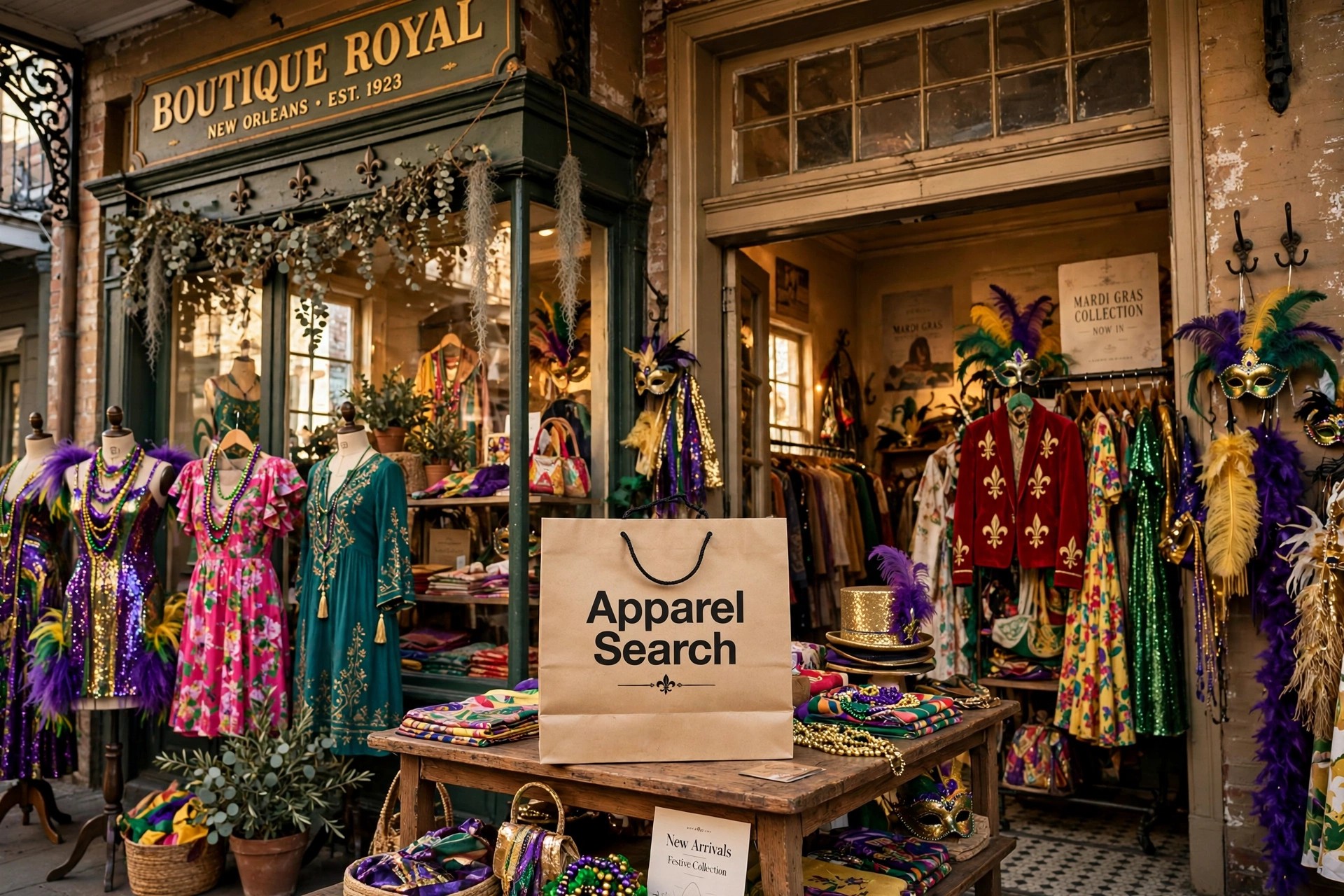
New Orleans fashion employment starts with celebration. Costume and vintage shops, formalwear and bridal, wig, mask and accessory specialists cluster around the French Quarter, Magazine Street and the Uptown corridors, hiring salespeople, stylists, seamstresses and makers whose year peaks at Carnival and runs through festival and wedding seasons. Magazine Street's boutiques and the Quarter's visitor retail employ the city's most fashion-forward sales and management staff, while the French Quarter's service economy adds uniform and hospitality clothing supply.
Film and television production — Louisiana has hosted major productions for decades, concentrated in New Orleans — employs costumers, wardrobe staff, shoppers and seamstresses on a project basis through production and union channels, in the same pattern as Atlanta's larger market. Together, costume retail and screen wardrobe make New Orleans one of the few American cities where costume skill itself is a hireable trade, and portfolios of Carnival, parade and production work are its currency.
Baton Rouge, the Regions and Gulf Workwear
Baton Rouge, capital and home to LSU and Southern University, runs the state's steadiest mainstream market: the Mall of Louisiana and Perkins Rowe retail, collegiate apparel around LSU's enormous fan culture, government and corporate professional retail, and petrochemical-corridor uniform demand. Lafayette anchors Acadiana's retail with Cajun-country boutiques and festival dressing of its own; Shreveport–Bossier adds casino-resort retail and northwest Louisiana's regional market; Lake Charles and Houma serve energy and port workforces.
That industrial base drives Louisiana's second apparel economy: flame-resistant clothing, safety footwear, rain and marine gear and uniform programs for refinery, rig, port and fishing workers, sold by specialist retailers and suppliers along the coast and river. These are knowledgeable B2B and retail jobs — standards, fits and durability — employing year-round with the energy cycle's steadiness rather than fashion's seasons.
How to Search the Louisiana Market
Search by sector: 'costume shop New Orleans', 'film wardrobe Louisiana', 'boutique Magazine Street', 'uniform Baton Rouge', 'FR clothing Lafayette'. Costume, boutique and vintage employers hire locally, by reputation and direct approach, building Carnival-season teams in the autumn; film wardrobe travels production and union networks; chains post corporately; industrial clothing suppliers hire through B2B channels.
Prepare with the role descriptions in this section, and if your craft is costume, bring proof — photographs and credits from Carnival, festivals or productions outrank almost any other credential in this city. Louisiana fashion employers hire people who love this state's particular joy in dressing up, and can also run a fitting, a register or a rental program on time.
Carnival Economics: The Season That Hires a City
Mardi Gras is an employment program as much as a festival. From Twelfth Night to Fat Tuesday, New Orleans' costume shops, formal stores, wig and mask makers, alteration tailors and rental businesses run at full stretch, staffed by seasonal hires recruited from autumn — many of them artists, theater people and film wardrobe staff between productions, for whom Carnival is a dependable annual season. The work builds rare skills: rapid fitting, costume construction under deadline, rental inventory discipline. Candidates who want into New Orleans' costume world should treat the Carnival build-up as the front door and present any making or theater experience as the qualification it genuinely is here.
Common Questions
Why does New Orleans have a costume job market?
Mardi Gras, festivals, parades and a year-round celebration culture make costume a civic industry: costume, vintage and formal shops, mask and millinery makers, plus film wardrobe productions, employ specialist staff.
Where else in Louisiana are fashion jobs?
Baton Rouge for capital, university and mainstream retail; Lafayette, Shreveport and Lake Charles for regional retail; and the Gulf and river corridor for industrial workwear, uniforms and safety clothing.
How seasonal is Louisiana fashion work?
New Orleans costume and festival retail peaks around Carnival and builds teams in autumn; film wardrobe is project-based; mainstream retail and industrial clothing supply run year-round.