Sterling Silver Earrings
The 925 alloy behind most silver earrings
Sterling silver earrings are made from sterling silver: 92.5 percent pure silver alloyed with 7.5 percent other metals, usually copper, to give the soft pure metal the strength jewelry needs. Sterling is the standard silver for earrings, stamped 925, and it carries the full range of styles: classic studs and hoops, chandelier and dangle designs, filigree, engraved and gemstone-set pieces. This guide covers the sterling composition and its stamp, how to tell sterling from silver-plated and nickel silver pieces that contain no silver at all, sterling's luster and tarnish behavior, the styles the alloy does best, and polishing and storage. Anyone buying silver earrings is, in practice, buying sterling, so this alloy is the one worth understanding in detail.
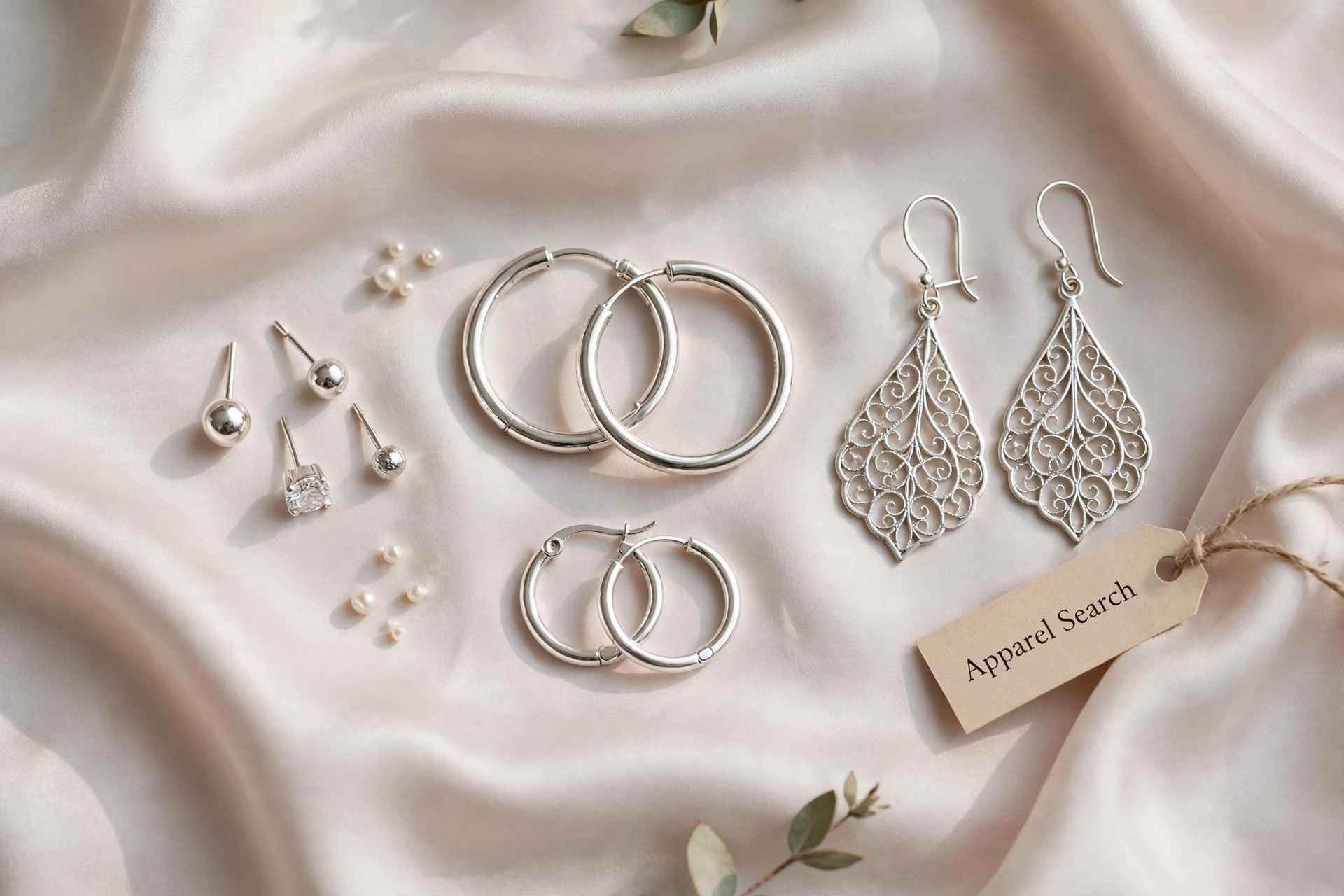
Sterling Silver Earrings: Timeless Beauty and Elegance
Sterling silver earrings are a beloved and enduring category of jewelry that has captivated wearers for generations. Known for their timeless beauty, versatility, and accessibility, these earrings hold a special place in the world of fashion and adornment. Whether chosen for their classic appeal, affordability, or meaningful designs, sterling silver earrings are cherished accessories that complement a wide range of styles and occasions.
Composition of Sterling Silver:
Sterling silver is an alloy composed primarily of silver (92.5%) and other metals, typically copper (7.5%). This combination of metals is what gives sterling silver its unique properties and durability. The presence of copper not only strengthens the silver but also prevents excessive tarnishing.
Properties of Sterling Silver:
Lustrous Shine: Sterling silver boasts a beautiful and lustrous shine that resembles white gold or platinum. This natural luster enhances the visual appeal of sterling silver earrings.
Durability: Sterling silver is durable and suitable for everyday wear. It is resistant to scratches and dings, making it a practical choice for earrings that can stand up to daily use.
Affordability: Sterling silver is more budget-friendly than other precious metals like gold or platinum, making it accessible to a wide range of consumers.
Hypoallergenic: High-quality sterling silver is generally hypoallergenic and well-tolerated by most people. It is less likely to cause skin reactions or allergies, making it a comfortable choice for those with sensitive skin.
Versatility: Sterling silver can be crafted into a diverse range of earring designs, from classic studs to intricate dangles and hoops. It is highly malleable, allowing for intricate and detailed styles.
Styles and Designs:
Sterling silver earrings offer a wealth of design possibilities to cater to various tastes and occasions:
Stud Earrings: These simple and timeless earrings feature a single sterling silver element, often adorned with gemstones or intricate detailing. They are perfect for everyday wear.
Hoop Earrings: Hoop earrings made of sterling silver come in various sizes and designs, adding versatility and a touch of elegance to any outfit.
Dangle Earrings: Dangle earrings showcase elements that hang gracefully from the earlobe, offering movement and sophistication. They come in a wide range of designs, from minimalist to artistic.
Chandelier Earrings: Chandelier earrings are characterized by their elaborate, multi-tiered designs. They are often chosen for special events and evenings out.
Gemstone and Sterling Silver Earrings: Sterling silver pairs beautifully with gemstones such as amethyst, turquoise, or garnet, adding color and depth to the designs.
Care and Maintenance:
- To maintain the beauty of sterling silver earrings:
- Clean them regularly with a soft cloth to remove tarnish and dirt.
- Store them in a dry, cool place, away from direct sunlight, to prevent tarnishing.
Sterling Silver Earrings vs. Other Silver Earrings: What Sets Them Apart
When shopping for silver earrings, it's important to understand that not all silver earrings are the same. The key distinction lies in the type of silver used. Sterling silver earrings, in particular, are the most popular and widely recognized, but there are other silver options as well. Here's a comparison:
1. Sterling Silver Earrings:
Composition:
Sterling silver earrings are made of an alloy composed of 92.5% pure silver and 7.5% other metals, typically copper. This combination of metals enhances the durability of the silver while maintaining its shine.
Properties:
Lustrous Shine: Sterling silver boasts a beautiful, lustrous shine, closely resembling the appearance of white gold or platinum.
Durability: Thanks to the addition of copper, sterling silver is more robust and resistant to tarnishing, scratches, and dents compared to pure silver.
Affordability: Sterling silver is more budget-friendly than precious metals like gold or platinum, making it accessible to a broad range of consumers.
Hypoallergenic: High-quality sterling silver is generally hypoallergenic, making it a suitable choice for those with sensitive skin or nickel allergies.
2. Fine Silver Earrings:
Composition:
Fine silver earrings are made from nearly pure silver, typically containing 99.9% silver. They are the closest to pure silver you can get in jewelry.
Properties:
Bright Shine: Fine silver has an even brighter shine than sterling silver, but it's less commonly used for jewelry due to its softness.
Softness: Fine silver is quite soft, making it less suitable for pieces that are subject to everyday wear and tear.
3. Silver-Plated Earrings:
Composition:
Silver-plated earrings consist of a base metal (e.g., copper, brass, or stainless steel) coated with a thin layer of silver.
Properties:
Cost-Effective: Silver-plated earrings are more affordable than solid silver options but may wear down over time, revealing the base metal underneath.
4. Other Silver Alloys (e.g., Mexican Silver, Tibetan Silver):
Composition:
These alloys can vary widely in composition and may not necessarily contain a high percentage of silver. They often include other base metals like zinc, nickel, or tin.
Properties:
The quality and characteristics of these alloys can vary significantly, and some may not be suitable for jewelry that comes into direct contact with the skin due to potential skin allergies or discoloration.
In summary, the primary difference between sterling silver earrings and other silver earrings lies in the composition and properties of the metal. Sterling silver combines the lustrous shine of silver with added durability and affordability, making it a popular choice for jewelry. Fine silver offers the brightest shine but is less commonly used due to its softness. Silver-plated and other silver alloys may be more budget-friendly but may lack the same level of durability and quality as sterling silver. When shopping for silver earrings, understanding these distinctions can help you make an informed choice based on your preferences and needs.
Sterling silver earrings are a testament to timeless elegance and versatility. Their classic appeal, affordability, and comfortable wear make them a treasured addition to any jewelry collection. Whether chosen for their aesthetic appeal or sentimental value, sterling silver earrings remain a beloved accessory for all occasions.
Learn about silver metal earrings.
You may also want to learn about sterling silver bracelets and sterling silver necklaces.
Learn more about precious metals.
If you are planning on purchasing silver earrings, Apparel Search strongly suggests that you learn more about tarnishing.
One Alloy, Centuries of Earrings
Sterling's balance of beauty, workability and price has made it the default silver for earrings across very different traditions: Mexican and Navajo silverwork, Scandinavian modernist designs, Balinese filigree and granulation, and the plain polished hoops and studs of everyday Western jewelry are all sterling. The alloy takes chasing, engraving, oxidation and stone setting equally well, so a sterling collection can run from a five-dollar stud to a jeweler's art piece without changing metals.
Value buying is straightforward: confirm the 925 stamp, check that posts are straight and backs fit snugly, and judge the finish, which should be even, with no flaking that would betray a plated substitute. The metals section's guides to tarnishing and precious metals give the background in full. Kept polished and stored dry, sterling silver earrings hold their luster and their value as silver, and they remain the easiest fine-metal earrings to buy, wear, gift and repair anywhere in the world.
Common Questions
What does the 925 stamp on earrings mean?
It means the metal is sterling silver: 925 parts per thousand pure silver, the standard alloy of 92.5 percent silver and 7.5 percent other metals, usually copper. The stamp may appear on the post, the back or the earring body. A piece marked only silver plated, EPNS or nickel silver is not sterling: plated pieces have a thin silver layer over a base metal, and nickel silver contains no silver despite its name.
Why is sterling silver used instead of pure silver for earrings?
Pure silver is too soft for earring posts, hooks and fine detail: it bends, wears and loses shape in normal use. Alloying with copper hardens the metal while keeping silver's bright white luster and workability, so jewelers can make thin posts, secure clasps and intricate filigree that hold up to daily wear. The small copper content is also why sterling tarnishes slightly faster than fine silver.
How should sterling silver earrings be cleaned and stored?
Wipe with a silver polishing cloth for light tarnish and wash in warm water with mild soap for grime, drying thoroughly. Store pairs in a dry, closed box or anti-tarnish pouch, away from rubber, wool and household chemicals that speed tarnish. Avoid dipping gemstone-set or oxidized sterling pieces in liquid silver cleaners, which can strip deliberate darkened detail and harm softer stones.