Pet Clothing Guide
Find pet clothes and pet fashion accessories for dogs, cats and horses
When it comes to our furry friends, pet owners want to make sure their pets are as comfortable and stylish as possible, and pet clothing is an easy and fun way to do just that. Whether you are looking for something to keep your pup warm in the cold winter months, or just want to add a bit of flair to your pet's wardrobe, this guide helps you find pet clothes and accessories for your pet — designer dog clothes, cat clothing, dog sweaters, dog beds, dog costumes, dog collars, pet accessories, dog clothes, dog carriers and more.
The welfare and happiness of our animals should always be our top priority. That is why this hub does two jobs: it routes you to the Apparel Search guides for dogs, cats and horses and to the pet clothing stores that sell their clothes, and it sets out the fit, material and safety checks to make before any garment goes on an animal. Start with the guide for your pet below, then read the safety section before you buy.
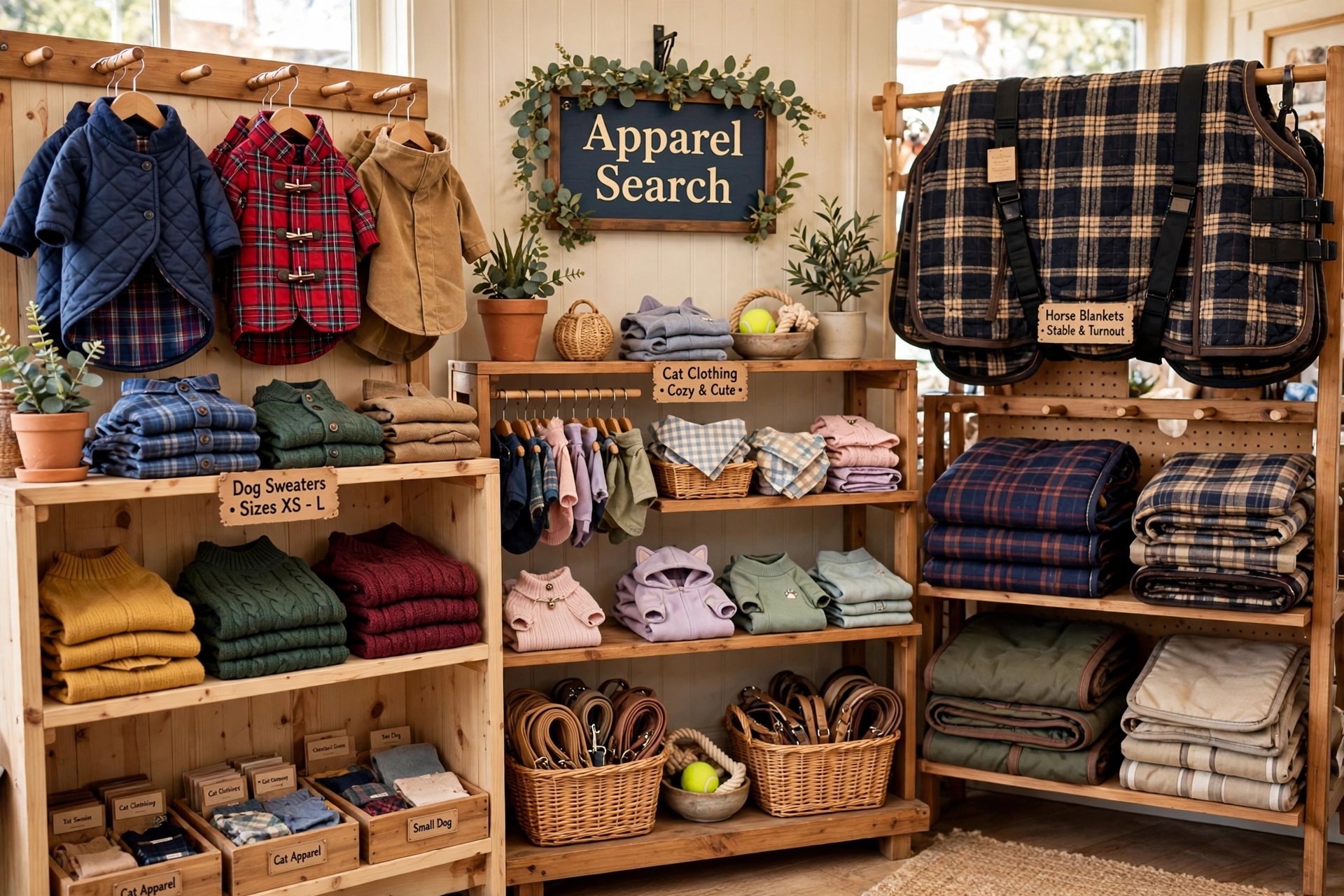
Search Apparel Search
Pet Clothing Guides and Stores
More Pet Guides
Shop Pet Clothing
Shop Pet Clothing on AmazonShop Pet Clothing on eBayThese links open the Apparel Search shopping guides for Amazon and eBay, where the product links are kept in one place.
What Pet Clothing Includes
Pet clothing comes in all shapes and sizes, from coats and sweaters to hats and boots. For smaller dogs and cats, sweaters can be a great way to keep them warm, while larger dogs may require a thicker coat to stay warm in the cold months. Hats can be fun for both cats and dogs and come in a variety of styles and colors. Boots are also a great option for a pup: not only do they keep paws warm, they also give the dog a fashionable look.
The wider range runs to dog and cat shirts, designer dresses, pet vests, holiday dog clothing, robes, coats and jackets, dog eyewear and Halloween costumes. On the pet clothing section here at Apparel Search you will find a fabulous selection of resources that manufacture, retail, or wholesale hand-made designer pet clothes for cats and dogs — some suppliers provide handmade clothes and others are factory produced. If you can't find dog clothes for your large dog, try another retailer that offers clothing for pets of all sizes, from tiny teacup to the size of a Great Dane.
Choosing the Right Fit
When it comes to pet clothing, it is important to make sure it fits your pet's size and body shape. If the clothing is too tight, it could be uncomfortable and even cause restriction of movement. On the other hand, if the clothing is too loose, it could be dangerous if your pet gets tangled up in it. Make sure to measure your pet and double-check the size before purchasing — the Pet Clothing Sizes and Measuring Guide linked above walks through the chest, neck and back-length measurements each garment type needs.
Fit is not a one-time check. Continuously monitor the animal while it is wearing clothing or footwear, and regularly check for signs of irritation, soreness, or any adverse reactions. A garment that fitted at the start of a walk can rub once the pet is moving, so build the check into every outing, not just the first fitting.
Materials: Natural Fibers and Synthetics
When buying pet clothing, it is also important to consider the material. Natural fibers are usually the best option, as they are breathable and very comfortable for your pet. Synthetic materials, such as polyester, can be a good option too, but make sure to check the label to see if it is suitable for your pet.
Match the material to the job as well as to the label: a warm knit for cold-weather warmth, a breathable layer that will not overheat the animal in mild weather, and an easy-clean fabric for costumes and everyday pieces that will be washed often. If you own pets, you may also wish to keep a lint roller at hand to keep your own clothes clean — pet fashion and human wardrobes have to live together.
Safety and Comfort Come First
When considering dressing animals in clothing or footwear, it is paramount to prioritize their safety, comfort, and overall well-being. Animals, unlike humans, may not comprehend the purpose or necessity of wearing such items and can find it uncomfortable or distressing. Responsible pet ownership involves treating our animal companions with utmost care, empathy, and respect for their natural needs and behaviors. Putting an animal's comfort and safety at risk for the sake of fashion or human preferences is not ethical or responsible.
Health and fit first. Before placing any clothing or footwear on an animal, assess its health, physical condition, and any existing medical issues, and ensure the apparel won't exacerbate any health conditions or cause discomfort. Always choose clothing or footwear that fits properly without being too tight or too loose — ill-fitting items can restrict movement, cause chafing, or even injure the animal. Consider the animal's natural instincts and behaviors, and avoid anything that hinders its ability to move, groom, or interact with its environment.
Watch, introduce gradually, and be ready to remove. Pay close attention to the animal's behavior and body language when it wears the clothing or footwear, looking for signs of distress, anxiety, discomfort, or irritation. Introduce new items gradually, allowing the animal to acclimate to the new sensation, and use positive reinforcement such as treats and praise to associate the experience with positivity. Consider the weather and climate, so clothing is appropriate for the temperature and conditions and never causes overheating or exposure. If the animal shows signs of distress or discomfort, remove the clothing or footwear immediately — never force an animal to wear something that causes distress — and consult a veterinarian or an animal behaviorist before putting clothing on an animal for medical reasons or for an extended period.
Clothing for Dogs, Cats and Horses
Dogs are the most dressed pets, and the dog guides cover coats and jackets, sweaters, collars, harnesses, shoes and Halloween costumes, as well as dog-inspired clothing for people. Cats wear less and tolerate less, so the cat guides stay with light clothing, collars, sweaters, costumes and shoes, with the same fit and supervision rules applied even more strictly. Horses wear clothing as working equipment — blankets and sheets, fly sheets and masks, coolers, hoods, and leg wraps and boots — and the horse guides treat fit and safety as stable-management questions, not fashion ones.
Thanks to the internet (and Apparel Search), it is now much easier to find pet clothing and pet fashion accessories. Hopefully you have found the pet apparel you had been searching for — and if a store is what you need next, the pet clothing stores linked at the top of this page collect retailers for dogs, cats and equestrian clothing in one place.
Common Questions
How do I make sure pet clothing fits my pet?
Measure your pet first — chest, neck and back length for most garments — and double-check the measurement against the maker's size guide before purchasing. Clothing that is too tight can be uncomfortable and restrict movement; clothing that is too loose can be dangerous if the pet gets tangled in it. Monitor the animal while it wears the item and check regularly for irritation or soreness.
What materials are best for pet clothing?
Natural fibers are usually the best option because they are breathable and very comfortable for the pet. Synthetic materials such as polyester can also work well, but check the label to confirm the fabric is suitable for your pet, and match the material to the weather so the animal does not overheat.
Is it safe to dress my pet in clothing?
It can be, when safety and comfort come first. Check the animal's health before dressing it, choose a proper fit, introduce clothing gradually with positive reinforcement, watch its body language for distress, and remove the item immediately if the animal is uncomfortable. Never force an animal to wear something that causes distress, and ask a veterinarian before using clothing for medical reasons or for extended periods.