Citrine Necklaces
The golden-yellow November birthstone, worn at the neck
Citrine is the yellow to amber variety of quartz and the November birthstone, colored by traces of iron. Natural citrine is a pale smoky yellow; most citrine in jewelry is amethyst or smoky quartz warmed by heat treatment into deeper golden and Madeira tones, a stable and permanent change that is standard trade practice. As quartz it is hard enough for everyday necklaces, and because material is plentiful, pendants can carry large, clean stones at moderate cost. This guide covers citrine color grading from pale lemon to deep Madeira, how to read saturation in a pendant stone, the cutting styles that suit citrine, metal pairings, and simple care.
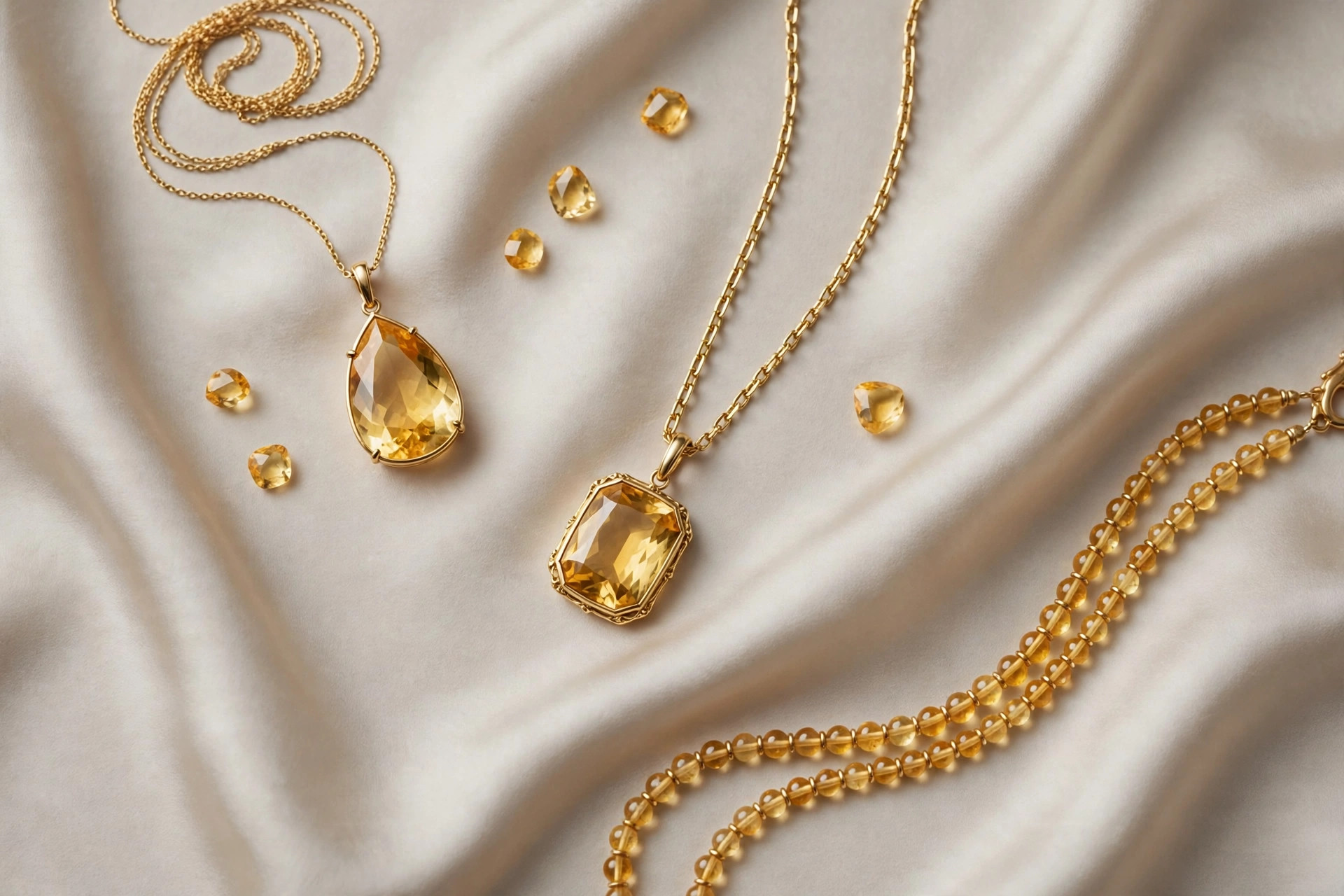
Citrine necklaces feature citrine gemstones as their main focal point. Citrine is a beautiful gemstone known for its golden to yellowish-orange hues, resembling the warm tones of autumn. It's a variety of quartz and is often associated with positivity, abundance, and energy. Citrine necklaces are popular for their vibrant color and can be designed in various styles to suit different preferences and occasions.
Key Features and Design Elements:
Citrine Gemstones:
Citrine gemstones can vary in shades from pale yellow to deep amber. The
gemstones are usually faceted or shaped into various cuts such as oval,
round, pear, cushion, or emerald cuts to enhance their brilliance.
Metal
Settings:
The citrine gemstones are set in various metals like gold, yellow gold, rose gold, white gold, or sterling silver to complement and enhance the gem's color.
Chain or Necklace Design:
The design of the necklace can vary widely, from simple solitaire pendants to elaborate multi-gem designs. Common styles include solitaire pendants, cluster necklaces, bib necklaces, and layered necklaces.
Accents and Complementing Gems:
Citrine necklaces may feature accents like diamonds, other gemstones, or even other citrine gems to add contrast and visual interest to the piece.
Shapes and Sizes:
Citrine necklaces can come in various shapes and sizes, including small delicate pendants or larger statement pieces. The choice often depends on personal style and occasion.
Significance and Symbolism:
Warmth and Energy: Citrine is associated with warmth, energy, and vitality. Wearing citrine is believed to energize and invigorate the wearer, bringing a sense of positivity and motivation.
Abundance and Prosperity: Citrine is also often referred to as the "merchant's stone" due to its historical use in enhancing wealth and prosperity. It's believed to attract success and abundance in various aspects of life.
November Birthstone: Citrine is recognized as one of the birthstones for November, making citrine necklaces a popular choice for those born in that month.
Occasions for Wearing:
Everyday Wear: Citrine necklaces can be worn casually as part of everyday jewelry, adding a pop of color and radiance to any outfit.
Special Occasions: Depending on the design and style, citrine necklaces can be worn to formal events, parties, or special gatherings, especially those that align with the gemstone's symbolism.
Gifts: Citrine necklaces can make thoughtful gifts for individuals born in November or anyone who appreciates the gemstone's vibrant and uplifting qualities.
Shopping for Citrine Necklaces:
When looking to purchase high-quality citrine necklaces, consider these options:
Specialty Jewelry Stores:
Visit reputable jewelry stores that specialize in gemstone jewelry. They often have a dedicated section for citrine jewelry, offering a wide range of designs and quality.
Online Gemstone Retailers:
Explore reputable online retailers that specialize in gemstone jewelry. Ensure they provide detailed information about the citrine's quality, origin, and authenticity.
Gemstone Exhibitions and Shows:
Attend gem and jewelry exhibitions or shows where you can directly purchase citrine necklaces from vendors. This allows you to inspect the gemstones and craftsmanship in person.
Gemstone Auctions:
Participate in gemstone auctions where citrine necklaces may be available. Be sure to research and verify the authenticity and quality of the piece before bidding.
Trusted Jewelry Designers:
Consider purchasing from well-known jewelry designers who work with citrine. Many designers create unique and high-quality citrine necklaces.
Geological Properties of Citrine:
Citrine is a variety of quartz and is known for its yellow to golden-orange coloration. Here are some key geological properties:
Composition:
Citrine is primarily composed of silicon dioxide (SiO2), the same mineral
composition as amethyst. The yellow color is caused by iron impurities
within the crystal.
Color and Varieties:
The color of citrine ranges from pale yellow to deep amber and is often referred to as "burnt amethyst" due to its origin from amethyst crystals that underwent heat treatment.
Crystal Structure:
Citrine shares the same trigonal crystal system as other quartz varieties. It forms hexagonal prismatic crystals with a smooth and glassy luster.
Transparency:
Citrine is typically transparent to translucent, allowing light to pass through and showcase its warm, golden hues.
Formation:
Citrine is formed when amethyst, another variety of quartz, undergoes natural heating processes within the Earth's crust. This can occur through exposure to high temperatures from nearby magmatic sources or geological events.
Occurrence and Mining:
Locations: Citrine is found in various locations worldwide, including Brazil (the primary producer), Bolivia, Spain, Madagascar, Russia, Zambia, and the United States (North Carolina, Colorado).
Mining: Citrine is typically mined from igneous and metamorphic rocks, including granite, pegmatites, and hydrothermal veins. Miners extract citrine crystals through surface mining methods like open-pit mining or underground mining.
Processing: Once mined, citrine rough undergoes cutting, faceting, and polishing to create gemstones suitable for jewelry. Some citrine may also be heat-treated to enhance or modify its color.
Understanding the geological properties and mining origins of citrine can enhance your appreciation for this beautiful gemstone and guide you in selecting high-quality citrine necklaces from reliable sources.
Citrine necklaces are not only beautiful accessories but also carry positive energy and symbolism, making them a meaningful addition to any jewelry collection.
Learn about citrine bracelets, citrine rings and citrine earrings.
Reading Citrine Color
Citrine runs a warm spectrum: lemon yellow at the light end, honey gold in the middle, and the deep orange-brown of Madeira stones at the top of the market. In pendants, checkerboard and concave cuts are popular because they spread that color in bright flashes across a large face, while emerald and oval cuts show the body color most evenly. Because citrine is plentiful in big sizes, necklace design can lead with scale: a single bold pendant stone, a graduated strand, or citrine beads mixed with smoky quartz and gold.
Metal choice steers the effect. Yellow gold deepens the warm impression and suits Madeira stones; white gold and silver cool the palette and make pale lemon citrine look crisp. Judge a citrine pendant in daylight as well as shop light, since warm artificial light flatters yellow stones, and check the stone from the side for an even spread of color rather than a pale center.
Common Questions
Is most citrine heat treated?
Yes. Most citrine sold today began as amethyst or smoky quartz and was heat treated to golden yellow and orange-brown tones. The treatment is permanent, stable and universally accepted in the trade, and it does not need special care. Natural untreated citrine exists but is usually paler. A seller should disclose treatment on request, but its presence does not make a stone inferior.
What color citrine is most valued in a necklace?
Deep, saturated golden yellow to orange-brown, sold as Madeira citrine, commands the highest prices, followed by even mid-golden tones. Very pale stones cost less but suit delicate pendants. In a necklace the stone is seen against skin and clothing, so even color without brown or grey patches matters more than a small step up in depth.
How should citrine necklaces be cleaned?
Warm water, mild soap and a soft brush are safe for citrine, and ultrasonic cleaning is generally acceptable for clean, fracture-free stones. Avoid prolonged strong sunlight, which can fade some citrine over time, and store pendants separately so the quartz does not scratch softer gems or get scratched by diamonds.