Ruby Rose Fashion Blog
Celebrity fashion blog posts and style coverage from Apparel Search — Ruby Rose
Ruby Rose's fashion story is a before-and-after marker for androgynous dressing in the mainstream. The Australian model, MTV VJ and DJ arrived with a pixie cut, visible tattoos and a wardrobe that treated tailoring and gowns as interchangeable — and when Orange Is the New Black made her a global sensation in 2015, that presentation moved millions of followers and a generation of red carpets with it. Beauty contracts, a Batwoman cowl and an action-film run followed. This page collects the Apparel Search fashion blog coverage of what she wears, and the influence the wearing had.

View more fashion blog celebrities.
MTV, Maybelline and the Australian Years
Rose was runner-up in Girlfriend magazine's 2002 model search and built the multi-hyphenate career at home first: VJ on MTV Australia (2007–2011), television presenting, DJ sets, and a face-of-Maybelline contract in Australia that put the short hair and tattoos into mainstream beauty advertising years before Hollywood caught up. Fashion design ran alongside — a capsule collaboration with Milk and Honey, and the Faircloth Lane line — early evidence that the look was authored, not accidental.
The presentation was consistent from the start: masculine and feminine elements in deliberate mixture — tailored suits, leather, and then a gown worn with the same tattoos uncovered — styled with sharp eyeliner and sculpted cheekbones that beauty coverage broke down like a tutorial.
The design collaborations of the Australian years are easy to overlook and worth keeping: the Milk and Honey capsule and the Faircloth Lane line with Phoebe Dahl put Rose's name inside garments a decade before the beauty contracts, evidence that the fashion authorship preceded the fame that later licensed it.
The Stella Effect and the Beauty Contracts
Her 2015 arrival as Stella Carlin in Orange Is the New Black's third season was a genuine cultural event — the internet's collective crush, declared in headlines on several continents — and it converted instantly into fashion capital: Urban Decay signed her in 2016 as a face of the brand, a 'Most Wanted' ambassador whose image sold makeup precisely because it did not look like makeup advertising. Ralph Lauren's Denim and Supply and Nike campaigns extended the same logic to apparel.
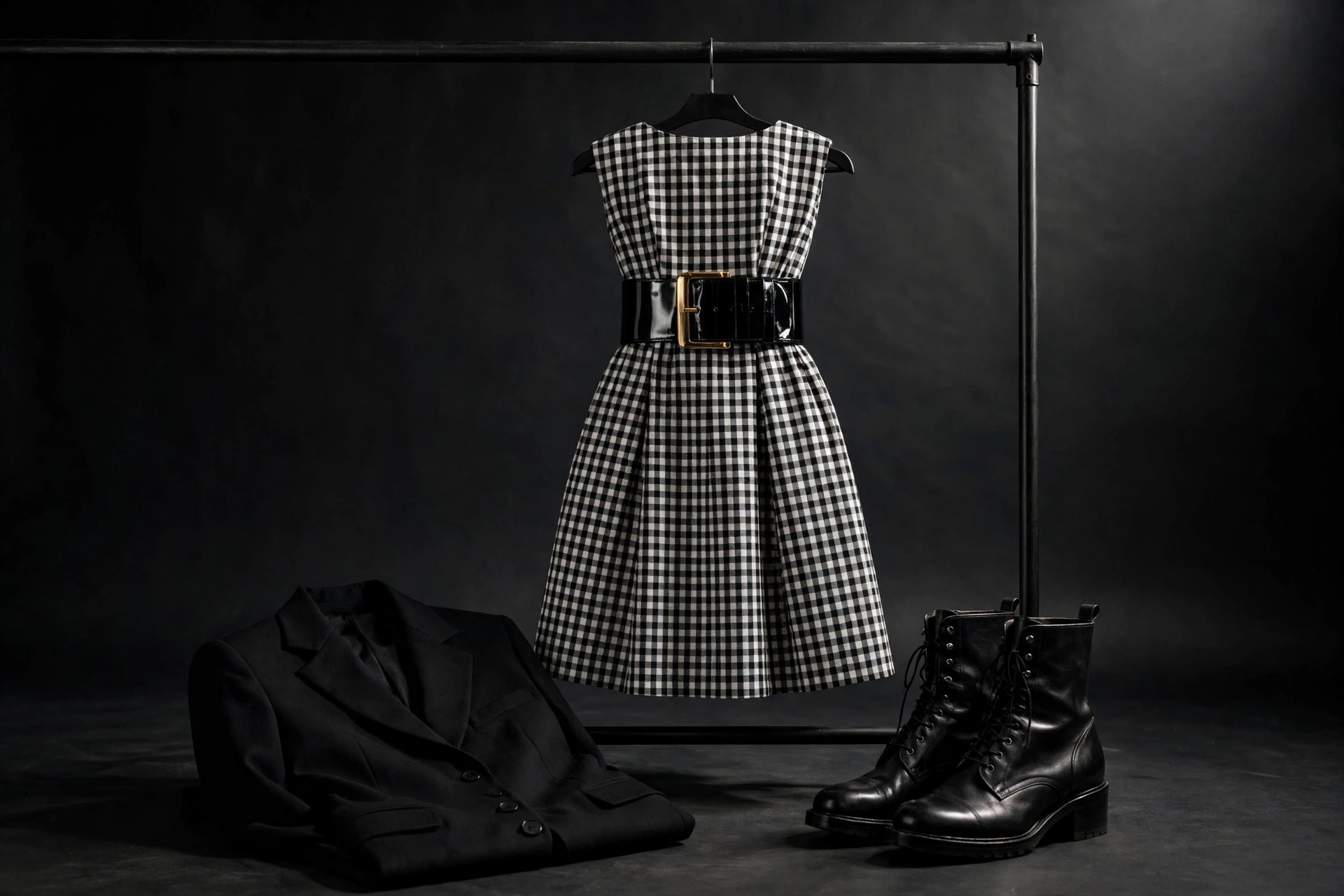
Red carpets of the period are the archive of the effect: Rose in Dior checks with a wide patent belt, in tuxedo tailoring, in gowns — the constant being the refusal to soften the presentation for the occasion. Coverage of the era credits her with normalising androgynous glamour for a mainstream audience that had not had a reference at her scale.
The tattoo visibility was itself a styling decision with consequences: where earlier tattooed performers covered up for couture, Rose wore the ink uncovered in gowns and beauty campaigns alike, and the Urban Decay contract put full-sleeve tattoos into mainstream cosmetics advertising at global scale. Beauty coverage of the period treats the signing as a threshold — after it, the covered-up era looked dated.
Batwoman, Action Films and the Quieter Years
The action run — xXx: Return of Xander Cage, John Wick: Chapter 2, Pitch Perfect 3, The Meg — dressed her in tactical and tactical-adjacent wardrobes, and in 2019 she took the cowl as Kate Kane in Batwoman, the first openly LGBTQ lead of a live-action superhero series, her own identity part of the casting's meaning. She departed after one season, and the subsequent years have been quieter — independent and action features including Dirty Angels (2024), a lower public profile, and a style legacy that no longer needs her presence to operate: the pixie-and-tailoring template she normalised is now standard red-carpet vocabulary.
The blog posts gathered here document the peak years look by look — the record of how one person's refusal to dress differently changed what different looks like.
The Template, Ten Years On
Measure the influence by the present tense: the pixie cut with tailoring, the tuxedo worn as glamour, tattoos treated as jewellery rather than obstacles — all standard vocabulary on current red carpets, all of it scaled to the mainstream by Rose's 2015 moment. Younger performers cite the Stella season the way earlier generations cited Bowie: as the permission slip.
Her quieter recent years have not diluted the record, because the record was never only hers to maintain — it is carried now by every carpet that uses the template. The blog archive here preserves the original at full strength.
Career Timeline
2002 — Runner-up in Girlfriend magazine's model search in Australia.
2007 — Becomes an MTV Australia VJ, a role she holds to 2011; fronts Maybelline in Australia.
2015 — Breaks out globally as Stella Carlin in Orange Is the New Black.
2016 — Signed by Urban Decay as a brand face; the action-film run builds.
2019 — Debuts as Kate Kane in Batwoman, departing after one season.
2024 — Appears in the action film Dirty Angels.
Following Ruby Rose's Coverage
Her social accounts are linked at the top of this page, with Wikipedia and IMDb for reference. The fashion blog search here collects Apparel Search's written posts about what she has been wearing. In the R index she follows Rose McIver; the Fashion Blog Celebrities hub provides the full list.
Guides keep her page at the front of the androgyny chapter for a reason: later arrivals refined the template, but Rose is the one who carried it through the door of mainstream beauty advertising and network television in the same eighteen months — the archive above is where that happened.
Common Questions
Why is Ruby Rose a fashion landmark?
Her androgynous presentation — pixie cut, visible tattoos, tailoring and gowns worn interchangeably — reached global scale with Orange Is the New Black in 2015 and normalised a style template that red carpets have used ever since.
Which beauty brands has Ruby Rose fronted?
She was a face of Maybelline in Australia and signed with Urban Decay in 2016, alongside apparel campaigns for Nike and Ralph Lauren's Denim and Supply.
What was Ruby Rose's superhero role?
Kate Kane in Batwoman (2019–2020) — the first openly LGBTQ lead of a live-action superhero series; she left after one season.
What did Ruby Rose do before acting?
She modelled, presented on MTV Australia as a VJ from 2007 to 2011, worked as a DJ, and designed capsule fashion collaborations.