Met Gala Fashion
The Costume Institute Benefit at The Met — the theme, the dress code and fashion's biggest red carpet night
The Met Gala — formally the Costume Institute Benefit — is the annual fundraising gala for The Costume Institute at The Metropolitan Museum of Art in New York, held on the first Monday in May to open the Institute's spring exhibition. This guide covers what the benefit is and why a museum department depends on it, its history from Eleanor Lambert's 1948 midnight supper through the Diana Vreeland and Anna Wintour eras, how each year's exhibition theme and invitation dress code work, the looks that made the night famous, and the exhibition the public can visit after the party ends.
On the first Monday in May, the steps of The Metropolitan Museum of Art in New York become the most watched runway in the world. The occasion is the Met Gala — formally the Costume Institute Benefit — a one-night fundraising party whose arrivals have grown into fashion's biggest red carpet, where the dress code is set by a museum exhibition and the clothes are expected to be part scholarship, part spectacle.
The gala exists to do a job. The Costume Institute, The Met's fashion department, holds a collection of more than 33,000 objects spanning seven centuries of dress, from the fifteenth century to the present. Unusually for a museum department, it is required to raise its own operating funds, and the benefit is its primary source of money for exhibitions, publications, acquisitions and day-to-day operations. The party therefore has a purpose beyond the photographs: a single night's ticket sales and sponsorships underwrite a year of serious costume scholarship. The sums are large — the 2024 gala raised nearly $26 million, and the 2025 gala raised nearly $31 million, a record for the event.
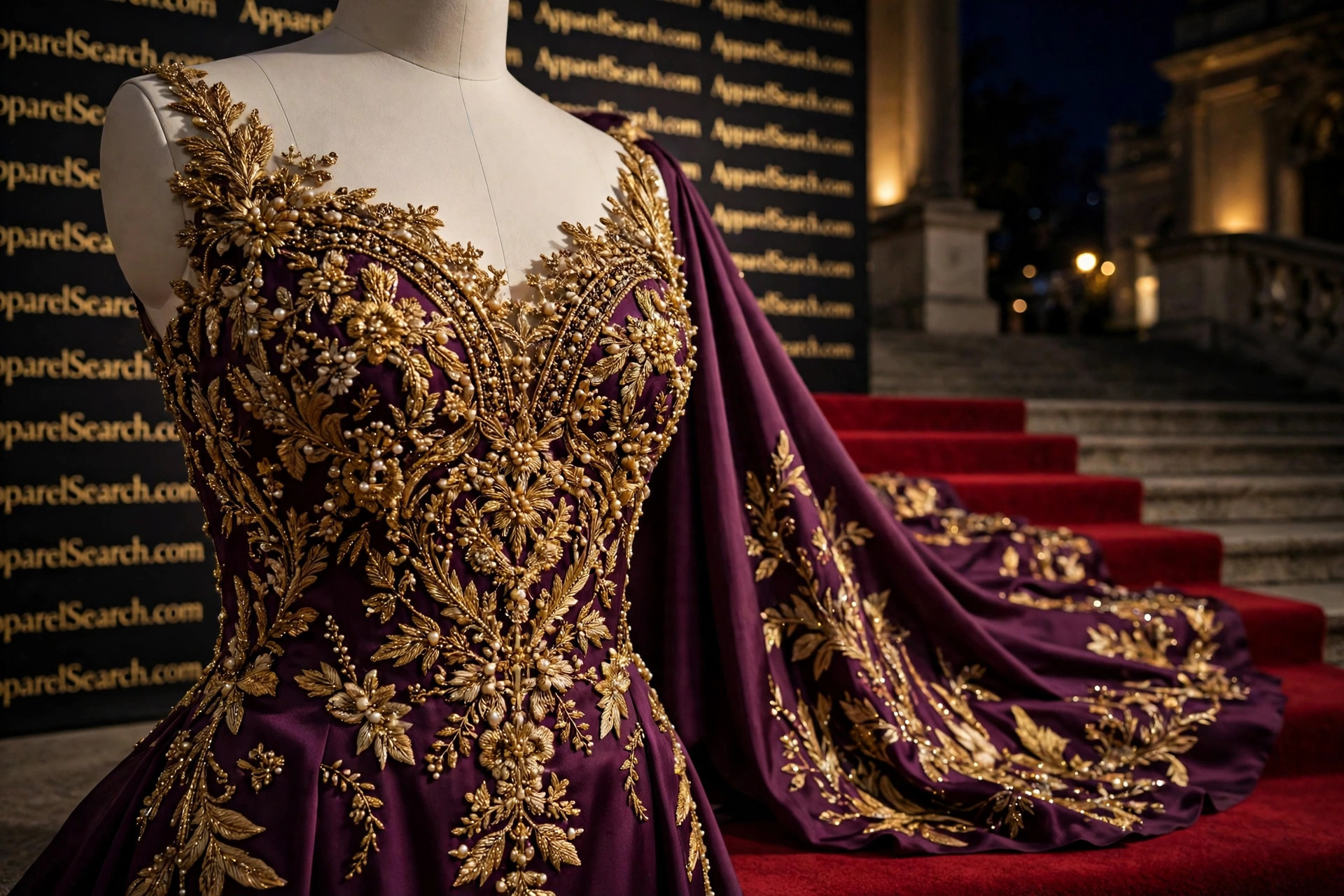
Every other red carpet asks what a star is wearing. The Met Gala asks what a star is saying — about the exhibition, about fashion history, and about how far a single look can go.
From a Midnight Supper to Fashion's Biggest Night
The benefit began modestly. The Costume Institute itself started life as the independent Museum of Costume Art in 1937 and merged into The Met in 1946, becoming a full curatorial department in 1959. In 1948 the fashion publicist Eleanor Lambert — creator of New York's first Press Week and later founder of the Council of Fashion Designers of America — organized the first benefit as a midnight supper, promoted as the "Party of the Year," with tickets at fifty dollars. For its first decades the party was held in late fall or December at venues around New York such as the Rainbow Room and the Waldorf Astoria, and its guests were drawn from the fashion industry and New York society.
The modern gala begins with Diana Vreeland. The former Vogue editor became special consultant to the Costume Institute in 1972 and served until her death in 1989, staging a run of landmark exhibitions that opened with The World of Balenciaga in 1973. Vreeland moved the party into the museum itself, matched the party's theme to the exhibition for the first time, and filled the guest list with artists and performers — Andy Warhol, Diana Ross and Cher among them. The formula she set, a serious exhibition celebrated by a theatrical party, is still the formula today.
Anna Wintour, editor-in-chief of Vogue, took over as the gala's chair in 1995 — she has overseen every edition since except those of 1996 and 1998 — and scaled the Vreeland formula into a global media event. Under Wintour the date settled, by the mid-2000s, on the first Monday in May; the guest list expanded from society and fashion to film, music, sport and business; and the red carpet arrivals became a broadcast spectacle watched around the world. The event has run almost every year since 1948; the notable modern interruption came in 2020, when the gala was cancelled during the COVID-19 pandemic. It is now routinely described as fashion's biggest night, and its scale funds the Institute's work on a level Lambert's fifty-dollar supper could never have imagined.
How the Theme Works
Each spring the Costume Institute mounts a major exhibition, curated in recent years by Andrew Bolton, the Institute's curator in charge since 2016. The exhibition's title becomes the gala's theme, and the printed invitation adds a dress code. The two are related but not identical, and the distinction is where the fashion interest lies. Sometimes the dress code simply restates the theme in instruction form; sometimes it hands guests a narrower, more poetic brief that interprets the exhibition rather than naming it. Guests then answer the brief — or, in a few famous cases, ignore it entirely — with looks that are usually custom-made by a designer working with the guest's stylist over months of fittings.
| Year | Exhibition (the theme) | Dress code on the invitation |
|---|---|---|
| 2023 | Karl Lagerfeld: A Line of Beauty | "In honor of Karl" |
| 2024 | Sleeping Beauties: Reawakening Fashion | "The Garden of Time" |
| 2025 | Superfine: Tailoring Black Style | "Tailored for You" |
| 2026 | Costume Art | "Fashion Is Art" |
The recent run of themes shows the range. In 2023 the exhibition honored Karl Lagerfeld, displaying more than 150 of his garments across his six decades at Chanel, Fendi, Chloé and his own label, and the carpet filled with his signatures — black and white, pearls, fingerless gloves. In 2024, Sleeping Beauties presented some 250 rare pieces from the collection spanning 400 years, many of them "sleeping beauties" too fragile ever to be worn again, while the dress code, borrowed from a 1962 short story by J. G. Ballard, sent guests toward flowers, nature and melancholy gardens. In 2025, Superfine examined Black dandyism and the tailoring traditions of the Black diaspora, drawing on Monica Miller's book Slaves to Fashion, and the "Tailored for You" code produced a carpet of immaculate suiting. The 2026 exhibition, Costume Art, pairs garments with artworks from across The Met's whole collection to argue that the dressed body is the thread running through every gallery in the museum — and its dress code, "Fashion Is Art," asked guests to treat their own bodies as the canvas.
Earlier themes explain the looks that made the gala famous. China: Through the Looking Glass (2015) explored Chinese aesthetics in Western fashion; Heavenly Bodies: Fashion and the Catholic Imagination (2018) placed couture alongside Vatican loans and became the most visited exhibition in The Met's history, drawing more than 1.65 million visitors; Camp: Notes on Fashion (2019) licensed pure theatrical excess; and the two-part In America exhibitions (2021 and 2022) turned the lens on American fashion, the second with a "Gilded Glamour" dress code that sent guests into corsets and bustles.
Iconic Looks: A Short History in Dresses
Cher, 1974 — Bob Mackie. Decades before the gala was a costume contest, Cher arrived on designer Bob Mackie's arm in a sheer, crystal-beaded "naked illusion" gown with white feather trim at the sleeves and hem, for the exhibition Romantic and Glamorous Hollywood Design. The dress scandalized and then defined red carpet daring; Cher wore it again for a Time magazine cover in 1975.
Diana, Princess of Wales, 1996 — John Galliano for Dior. At the gala honoring Christian Dior, Diana made her only Met Gala appearance in a navy silk slip dress with black lace trim from Galliano's first couture collection for the house, worn months after her divorce was finalized. Galliano later recalled that she had removed the dress's corset before arriving — a small alteration that turned a beautiful gown into a statement of independence.
Rihanna, 2015 — Guo Pei. For China: Through the Looking Glass, Rihanna wore a canary-yellow embroidered cape by the Chinese couturier Guo Pei, its train some sixteen feet long and spreading across the museum steps. It remains the single most reproduced Met Gala image of its decade — and a lesson in dressing to the theme with a designer from the culture the exhibition examined.
Rihanna, 2018 — Maison Margiela by John Galliano. Answering Heavenly Bodies, Rihanna arrived in a pearl- and crystal-encrusted papal ensemble — mitre, robe and minidress — that took the Catholic imagination theme entirely literally and entirely seriously at once.
Lady Gaga, 2019 — Brandon Maxwell. The Camp theme received its definitive performance when Gaga staged four looks on the steps: an enormous hot-pink gown peeled away to a black strapless dress, then a pink column dress, then black sequined lingerie with fishnets and platform boots — a striptease that was also a history of her own image.
Billy Porter, 2019 — The Blonds. Porter entered carried on a litter by six attendants, wearing a gold winged catsuit by The Blonds that cast him as a sun god — an entrance that treated the museum steps as a stage set, exactly as the Camp brief invited.
Zendaya, 2019 — Tommy Hilfiger. With stylist Law Roach costumed beside her as a fairy godfather, wand in hand, Zendaya's grey Cinderella ballgown lit up and bloomed into glowing blue on the steps — fashion technology used as pure fairy tale, and a landmark in how electronics entered couture.
Alexandria Ocasio-Cortez, 2021 — Aurora James. The congresswoman's white off-the-shoulder gown carried the words "Tax the Rich" in red across the back — the gala's wealth and exclusivity answered, on its own carpet, in a slogan that dominated the next day's coverage.
Kim Kardashian, 2022 — Marilyn Monroe's dress. For the Gilded Age brief, Kardashian borrowed fashion history itself: the crystal-beaded Jean Louis gown Marilyn Monroe wore to sing "Happy Birthday" to President Kennedy in 1962. Wearing a fragile museum-piece original — briefly, before changing into a replica — ignited a lasting debate about conservation versus spectacle.
Blake Lively, 2022 — Atelier Versace. Lively, a co-chair that year, wore a bronze and rose-gold gown that transformed on the steps: an oversized bow released a blue-green train painted with the constellation ceiling of Grand Central Terminal, the whole dress telling the story of the Statue of Liberty's copper oxidizing to patina — New York architecture as a dress.
Zendaya, 2024 — Maison Margiela. As a co-chair for Sleeping Beauties, Zendaya opened the night in an ocean-blue Margiela gown with a feathered headpiece answering "The Garden of Time," then changed into a second look later in the evening — a reminder that for the gala's most committed guests, one interpretation of the brief is not enough.
The Exhibition After the Party
The party lasts one night; the exhibition is the point. Gala guests get the first look at the show on the night itself, and the exhibition then opens to the public a few days later and runs for months. The 2026 Costume Art exhibition, for example, opened on May 10, 2026 and runs to January 10, 2027 — and it inaugurates the Condé M. Nast Galleries, nearly 12,000 square feet beside the museum's Great Hall that are now the Costume Institute's permanent home for its spring shows. Because textiles fade and weaken in light, the Institute's collection is not on permanent display, which makes the spring exhibition the one reliable chance each year to see garments from the largest and most comprehensive costume collection in the world, shown alongside the loans and artworks each theme brings in. Heavenly Bodies showed what a theme can do at full stretch: staged across two Met locations, it drew more than 1.65 million visitors, the most attended exhibition in the museum's history.
Getting In: Invitations, Tickets and House Rules
There is no way to buy your way in off the street. The guest list is by invitation, and every name on it is approved by Anna Wintour, who oversees the gala's details; each year a small group of co-chairs — in 2026, Beyoncé, Nicole Kidman and Venus Williams — serves alongside her. Fashion houses and brands buy tables and invite guests, who are then expected to wear that house's clothes, which is why so many arrivals function as designer showcases. By 2025 the published price of attendance had reached $75,000 for an individual ticket and $350,000 for a table of ten. Inside, the evening runs on Wintour's rules: guests must be eighteen or older, and phones are put away — selfies and social media are banned beyond the red carpet, one reason so little of the party itself ever leaks. The museum is closed to the general public for the day. What the world sees, by design, is the staircase: arrivals climbing the steps in their answers to the theme, which is where our wider celebrity events coverage of red carpet fashion begins.
References & Further Reading
The Metropolitan Museum of Art's own pages are the primary sources for this guide: the Costume Institute department page, covering the collection, its history and the Benefit, and the Met's brief history of the Met Gala, from the 1948 midnight supper to the present. For the other great fashion nights of the year, see the companion event guides in the More to Explore section below.
Common Questions
What is the Met Gala?
The Met Gala is the Costume Institute Benefit, the annual fundraising gala for The Costume Institute at The Metropolitan Museum of Art in New York City. It is held on the first Monday in May and marks the opening of the Institute's spring exhibition. The Costume Institute is the only curatorial department at The Met required to raise its own operating funds, and the gala is its primary source of funding for exhibitions, publications, acquisitions and operations.
Who chooses the Met Gala theme and dress code?
The Costume Institute's curator chooses each year's exhibition, and the exhibition's title becomes the theme of the gala. The invitation then carries a dress code that tells guests how to dress for the night: sometimes it simply restates the theme, as in 2023, when guests were asked to dress “in honor of Karl” for Karl Lagerfeld: A Line of Beauty, and sometimes it interprets the theme, as in 2024, when the Sleeping Beauties exhibition came with the dress code “The Garden of Time.” Anna Wintour, the gala's chair, oversees the event itself.
How do you get invited to the Met Gala, and what does it cost?
Attendance is by invitation only, and every guest requires the approval of Anna Wintour, who has chaired the gala since 1995. Many guests attend as the invited guests of designers and fashion houses, and are expected to wear a theme-related outfit by that designer. By 2025, an individual ticket cost $75,000 and a table of ten cost $350,000 — prices that make the benefit one of the most successful charity fundraisers in New York.
When was the most recent Met Gala?
The most recent Met Gala was held on Monday, May 4, 2026. The spring exhibition was Costume Art, which pairs garments with artworks from across The Met's collection to explore the dressed body, and the dress code for the night was “Fashion Is Art.” Beyoncé, Nicole Kidman and Venus Williams served as co-chairs alongside Anna Wintour. The exhibition opened to the public on May 10, 2026, in the new Condé M. Nast Galleries and runs to January 10, 2027.
Can the public see the exhibition after the gala?
Yes. The gala itself is a one-night, invitation-only benefit, and The Met is closed to the general public that day, but the exhibition it opens is a public museum show. It opens to visitors a few days after the gala and typically runs for months — the 2026 Costume Art exhibition runs from May 10, 2026 to January 10, 2027. Because textiles are light-sensitive, the Costume Institute's collection of more than 33,000 objects is not on permanent public view, so the spring exhibition is the main chance to see it.