Women's Camo Boots Guide
Field boots built for wet ground, cold sits, and long walks — how insulation, waterproofing, tread, and fit actually work together.
Shop Women's Camo Boots Now
Shop Women's Camo Boots on Amazon Shop Women's Camo Boots on eBayThe Amazon and eBay links on this page are affiliate links. If you make a purchase through them, Apparel Search may earn a commission.
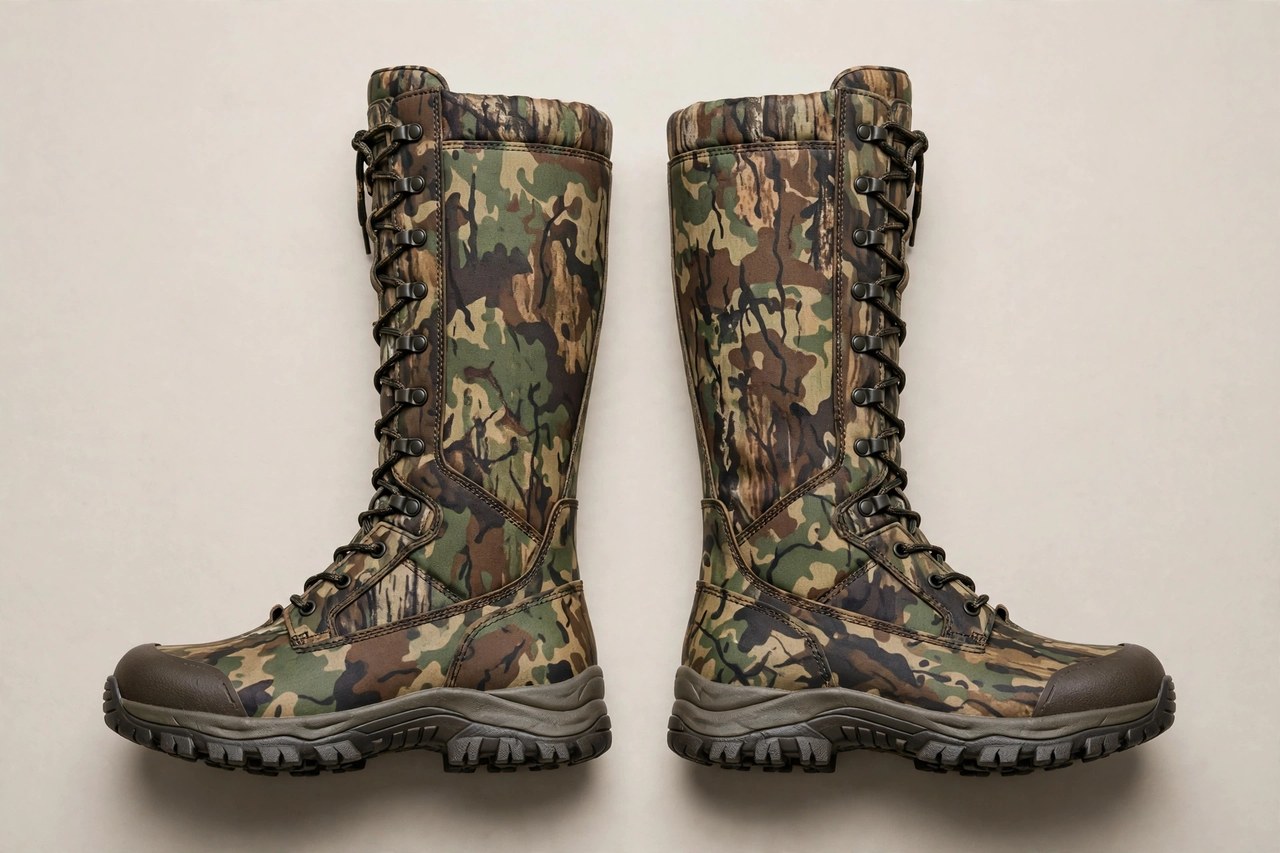
A good pair of women's camo boots does three jobs at once: it keeps your feet dry crossing wet grass and shallow creeks, warm during long stationary sits, and supported over uneven ground where a twisted ankle ends a hunt or a workday. Camo boots are not simply hiking boots in a woodland color. Field boots are usually taller, with shafts that protect the calf from brush and tuck pant legs away from burrs and ticks, and they are built around hunting realities — scent-conscious materials on rubber styles, quiet flexible soles for stalking, and insulation rated for sitting still rather than hiking hard. Choosing well means matching the boot to your terrain, your season, and how much you move. A turkey hunter who walks ridges all morning needs a different boot from a waterfowler standing in flooded timber, and this guide explains those differences so one purchase can serve you for years.
Boot Styles: Rubber, Leather Field, Snake, and Upland
Rubber and neoprene boots are the waterproof standard for swamps, flooded fields, and muddy farm work. They pull on, rinse clean, and block scent well, but they offer limited ankle support and can feel hot in warm weather. Leather and synthetic field boots lace up for a closer, more supportive fit and suit mixed terrain, dry uplands, and long walks; most use a waterproof membrane rather than relying on the outer material alone. Snake boots rise high on the calf with puncture-resistant panels, essential in southern and western country where venomous snakes share the ground. Upland boots are lighter and more flexible, made for covering miles behind a dog on relatively open ground. Insulated pac-style boots with removable liners serve extreme cold. Heights typically run from ankle-high hikers to sixteen- or eighteen-inch full boots, and the right height is mostly about your ground: the wetter and thicker the cover, the taller the boot earns its place.
Insulation and Waterproofing Explained
Insulation in hunting boots is measured in grams, and the number only makes sense alongside your activity level. Uninsulated or lightly lined boots suit early season and high-mileage days. Around 400 grams is the versatile middle for active hunting in cool weather. Boots with 800 to 1,200 grams are made for stationary sits in late-season cold, when your feet generate little heat of their own; 1,600 grams and above belong to ice fishing, late waterfowl, and extreme climates. Too much insulation is its own problem — sweaty feet get cold faster once you stop moving — so buy for the coldest job only if that job is truly yours. Waterproofing comes from rubber construction or from an internal membrane bootie sealed at the seams. Membranes breathe better than rubber but need intact seams and cared-for outer materials. Always pair the boot with merino or synthetic socks; cotton socks defeat even the best insulation by holding cold moisture against the skin.
Tread, Support, and Quiet Movement
Outsole tread should match your footing. Deep, widely spaced lugs shed mud and grip soft ground, creek banks, and leaf-covered slopes, while tighter patterns and softer rubber compounds grip wet rock and slick timber better. Very aggressive mud treads can feel clumsy on hard floors and noisy on gravel, so all-round hunters often choose a moderate lug. Support matters over distance: a firm shank protects the arch on rocky ground and when climbing into stands, and a well-shaped heel cup stops the lift-and-rub that causes blisters. For still-hunting and stalking, flexibility and a sole that rolls silently matter more than maximum stiffness; test boots by walking heel-to-toe and listening. Rubber boots trade support for waterproof simplicity, which is acceptable for short walks to a blind but punishing on all-day treks.
Fit Checks and Sizing With Hunting Socks
Always fit camo boots wearing the heaviest socks you plan to hunt in, ideally late in the day when feet are at their largest. You want a thumb's width of room in front of your toes, because feet swell on long walks and toes jammed against the front will bruise on downhill ground. The heel should sit snugly with minimal lift, the midfoot should feel held without numbness, and tall shafts should clear the calf comfortably even over tucked pants. Women's-specific lasts, narrower through the heel with room in the forefoot, genuinely reduce blisters compared with small men's sizes. Break new boots in on short walks before any long hunt; leather and stiff synthetics need miles to flex comfortably. For rubber boots, check that the top of the shaft does not saw against your calf and that an adjustable gusset or strap can seal out debris. If you are between sizes, the slightly larger boot with a thicker sock almost always hunts happier.
Care That Keeps Boots Waterproof and Warm
Boots die from neglect more often than from wear. Knock mud off after every outing, rinse rubber boots clean, and dry all boots slowly at room temperature away from direct heat, which cracks leather and delaminates membrane linings. Stuffing damp boots with newspaper speeds drying and holds their shape. Condition leather uppers regularly so the material stays supple and resists water; dried-out leather cracks at the flex points and then leaks no matter how good the membrane is. Store boots upright, unbuckled, in a dry place out of sunlight, and keep insulated liners fully dry between uses to prevent odor and mildew. Treat small seam leaks and worn waterproof coatings early with the products the maker recommends. Looked after this way, a quality pair of field boots should serve many seasons before the tread wears smooth.
Related Women's Camo Guides
Photos


More to Explore on Apparel Search
Looking for Women's Clothing Stores?
This guide helps you choose women's camo boots by insulation and terrain. To browse where to buy, visit our women's clothing store directory, where you can find retailers that carry them.