Women's Bra Colors Guide
The right bra color is the one nobody sees — a practical guide to nude tones, black, white and brights, and what each does under your clothes.
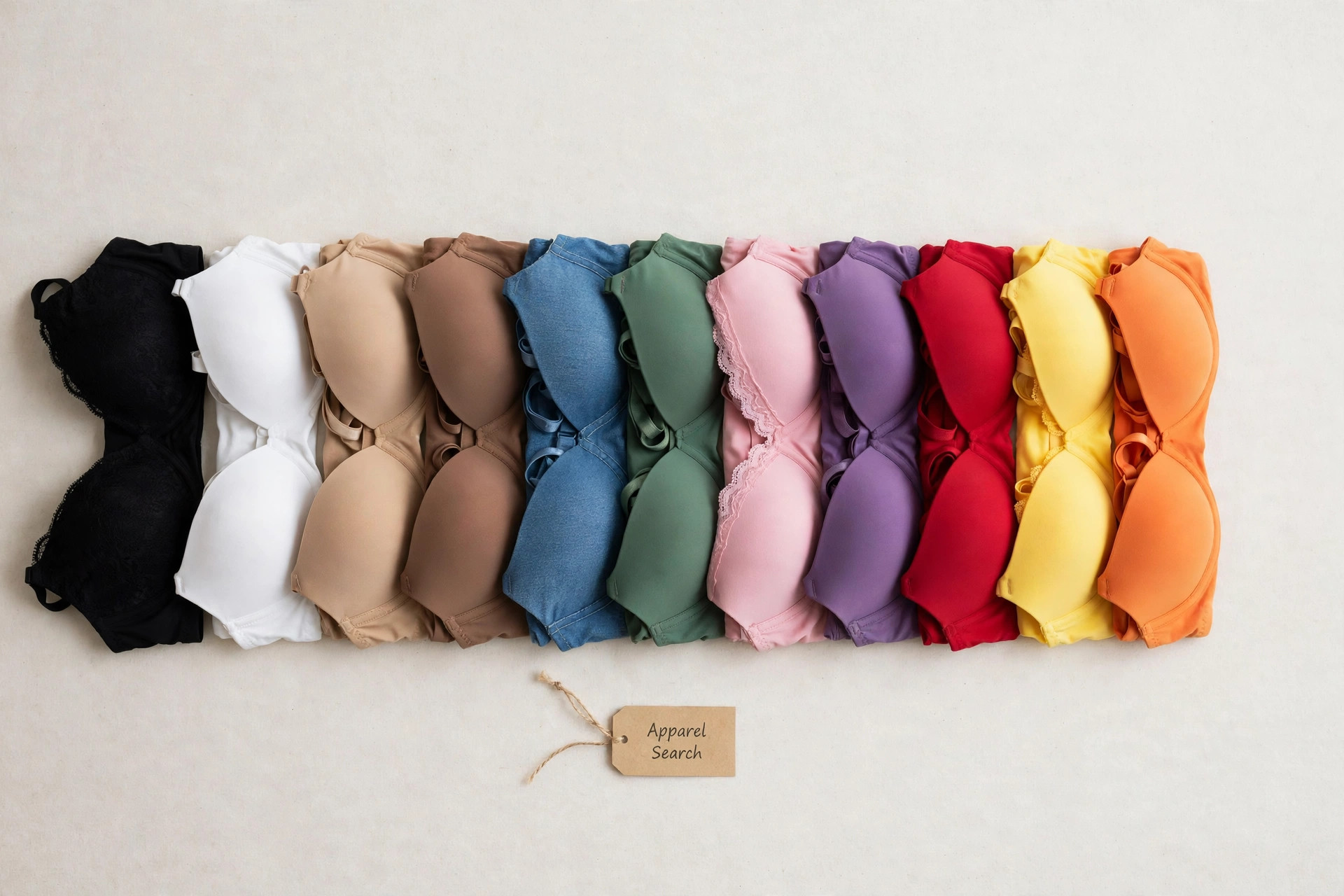
Bra color is a wardrobe tool before it is a fashion choice. The shade that vanishes under a white shirt is rarely white itself, and the bright colors in the drawer have their own jobs to do. This guide covers the color range as a product question — fabrics, show-through, matching sets and wash care — so you can stock the colors your clothes actually require.
The Invisible Colors: Nude Tones, Tan and Brown
The bra that disappears under light clothing is the one closest to your own skin tone, which is why the useful end of the color range runs from pale tan through warm beige to deep brown. A shade one step deeper than your skin usually hides better than an exact match, because fabric shadows darken it slightly. White, counterintuitively, is one of the most visible colors under a white top: the bright fabric outlines itself against skin and shows through as a clear shape.
Keep at least two near-skin shades if you wear pale or sheer fabrics often, and test a new shade under your thinnest white shirt in daylight before relying on it. Smooth, seamless fabrics in these tones hide best of all.
Black, White and the Working Basics
Black is the workhorse for dark clothing: invisible under black and deep jewel tones, forgiving of wash wear, and the easiest color to buy as a matching set. It is also the color most likely to show under anything pale, where its outline reads through knits and cotton alike. White bras suit white and very light outfits only when the top is opaque; under anything thin, switch to a skin-tone shade instead.
Brown shades bridge the two roles, disappearing under mid-tone clothing and reading as a rich neutral in sets. When building a basic rotation, most wardrobes settle on two skin-tone bras, two black, and one white or pale shade for opaque light tops.
Color for Its Own Sake: Blue, Green, Pink, Purple, Red, Yellow and Orange
Beyond the basics, color is where sets and personal preference live. Blue and green shades, from navy to teal and sage, coordinate easily with everyday clothing and launder well. Pink and purple run from soft blush and lavender to vivid fuchsia and plum, and are popular in lace and seasonal collections. Red is the classic strong color for sets, while yellow and orange appear mainly in warm-weather and sport styles, where bright color is part of the design.
Care keeps these colors honest. Wash dark and bright bras separately from pale laundry, use cold water, and close the hooks before washing so they do not snag lace or stretch other garments. A mesh wash bag, gentle detergent and air drying protect both the dye and the elastic; heat from a dryer fades color and shortens the life of the fabric faster than anything else.
Women's Bra Colors by Shade
For the wider range of coordinated pieces, see our guide to lingerie colors, which covers the same color families across full sets and seasonal collections.
Common Questions
What bra color should I wear under a white shirt?
The shade closest to your own skin tone, in a smooth, seamless fabric. Plain white is usually more visible under white clothing, because the bright fabric shows as an outline against the skin, while a tan or brown tone matched to you blends in and disappears.
How many bra colors does a wardrobe actually need?
Three groups cover almost everything: one or two shades near your skin tone for light and sheer clothing, black for dark clothing, and one pale or white bra for opaque light tops. Add bright or seasonal colors only where you enjoy them or want matching sets.
How do I stop bra colors fading in the wash?
Wash like colors together in cold water with a gentle detergent, hooks closed, ideally in a mesh bag, and always air dry. Dryer heat is the main enemy: it fades dye and degrades elastic at the same time, so the colors that stay bright longest are the ones that never meet it.
Thank you for using the Apparel Search website. We hope this guide helps you choose bra colors with confidence, and we invite you to keep exploring the color guides linked above as your wardrobe grows and seasons change.

Looking for Women's Clothing Stores?
This guide helps you choose bra colors that work under your clothes and in matching sets. To browse where to buy, visit our women's clothing store directory, where you can find retailers that carry them.
Search Apparel Search