Women's Maillot Swimwear Guide
The maillot is the original one-piece swimsuit: a tank-style top joined to a brief bottom in a single garment — modest, streamlined, and a swim staple since the 1920s.
Shop Women's Maillot Swimsuits Now
Shop Women's Maillot Swimsuits on Amazon Shop Women's Maillot Swimsuits on eBayThe Amazon and eBay links on this page are affiliate links. If you make a purchase through them, Apparel Search may earn a commission.
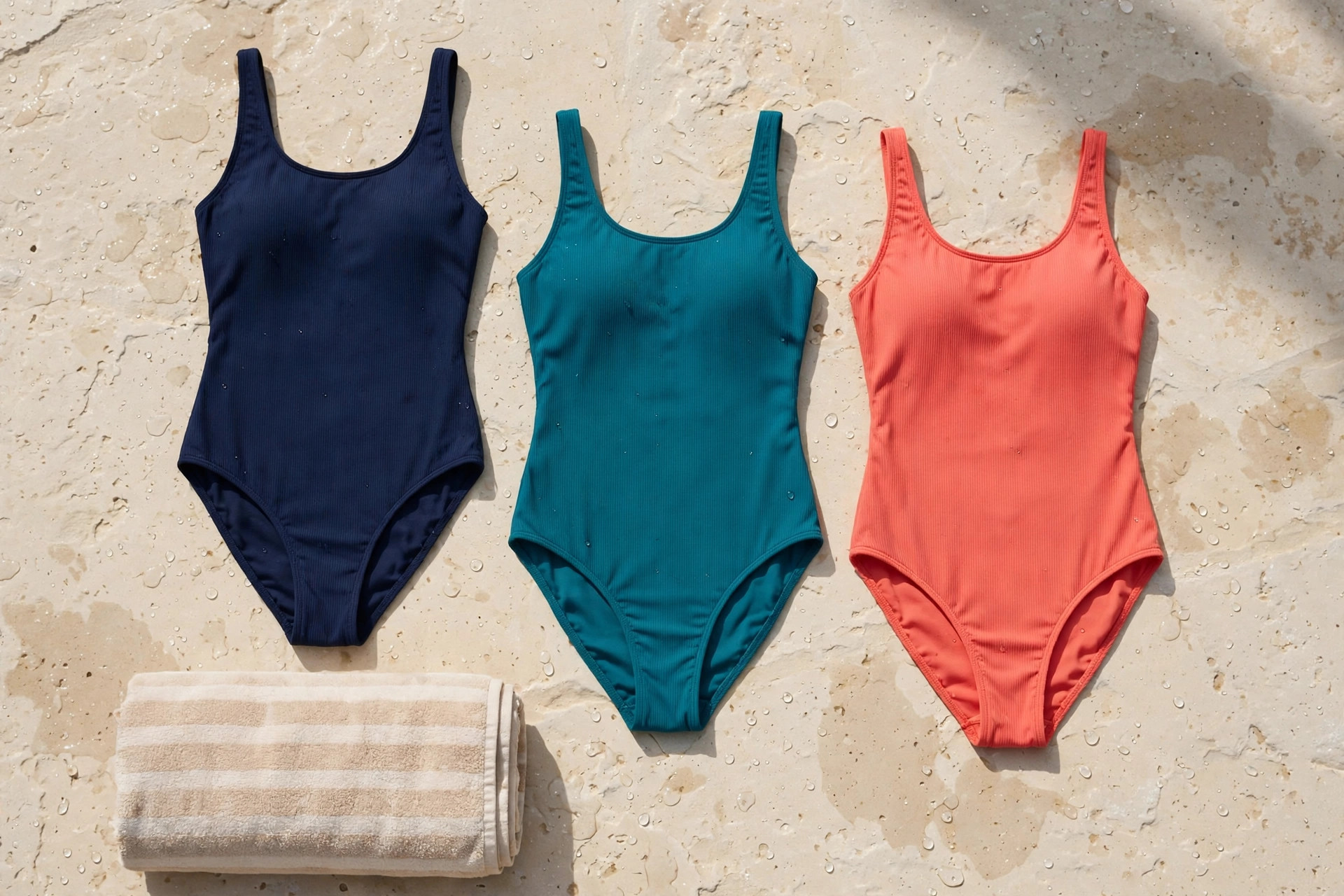
A maillot is a woman's one-piece swimsuit, also called a tank suit. The classic maillot joins a tank-style torso top to high-cut legs in one continuous garment, covering the torso in a smooth, unbroken line. It is a product with a simple job description: full one-piece coverage, freedom to swim, and nothing to adjust, retie or come undone in the water.
The word itself carries history. The modern French term for a swimsuit is maillot de bain, and the name “tank suit” alludes to the tank — the pool — in which the wearer swims. Maillot swimwear has been a staple of women's wardrobes since the 1920s, when one-piece suits first became respectable beachwear, and it has remained a classic look ever since.
Tank Maillots, Pretzel Maillots and Other One-Pieces
In present-day language, the phrase “one-piece swimsuit” has almost completely replaced the term maillot in everyday speech, and the older word is now somewhat obsolete colloquially. Where it survives, it is used to distinguish between types of one-piece: the tank maillot, the straightforward athletic cut with wide straps and a scoop or square neck, and the pretzel maillot, whose straps cross and twist at the back or front for a more decorative line.
Beyond those two, a maillot may include a plunging neckline, a turtleneck-style top, or cutouts at the sides — but the defining features stay constant: one piece, a fitted torso, and leg openings that range from modest boy-leg cuts to the high-cut styles that lengthen the leg line. If a suit is sold in two separate pieces, however classic, it is not a maillot.
Fabrics, Lining and Support
Maillots are knitted from stretch swim fabrics — nylon or polyester blended with elastane — chosen to recover their shape wet or dry and to resist chlorine and salt. A good suit is fully lined at the front, and many add a shelf bra, soft cups or underwire-free support panels so the tank top stays smooth without hardware digging in while you swim.
Fabric weight matters more than decoration. Thinner, unlined suits can turn translucent when wet and wear out quickly in chlorinated pools; a denser knit with a proper lining keeps its opacity and its fit for seasons. Competition and lap-swimming maillots use chlorine-resistant polyester blends and compression fits; leisure styles trade a little of that durability for softer hand-feel and prints.
Choosing and Caring for a Maillot
Fit a maillot by torso length first. A suit that is short in the body will pull at the shoulders and ride up no matter what the size chart says about bust and hip, so look for long-torso options if you are tall. Straps should stay put when you reach overhead, the leg elastic should sit flat without digging, and the seat should stay covered when you bend — the poolside squat test tells you more than any mirror pose.
Care is rinsing, above all. Rinse the suit in cool fresh water after every swim, wash it gently by hand with mild soap, and dry it flat in shade; heat, wringing and machine drying break down elastane faster than chlorine does. Rotate two suits if you swim daily, and the maillot's famous longevity — this is a style that has stayed in service for a century — will hold true for yours.
One More Consideration
A last word on value: a maillot is a small garment with a long service life expected of it, and the cost-per-swim of a well-made suit is pennies. Judge by the density of the knit, the quality of the lining and the recovery of the straps rather than by decoration, keep two suits in rotation if you swim weekly, and the classic tank suit will do what it has done since the 1920s — simply work, swim after swim, season after season.
Related Women's Guides
More to Explore on Apparel Search
Looking for Women's Clothing Stores?
If you are ready to shop rather than browse guides, visit our women’s clothing shopping directory for stores carrying women's maillot swimsuits and one-piece swimwear and much more, or use the Amazon and eBay buttons at the top of this page.