Women's Quick Dry Swimwear Guide
Quick dry swimwear is swimwear engineered to shed water fast — dry to the touch in a fraction of the time an ordinary suit stays cold and damp.
Shop Women's Quick Dry Swimsuits Now
Shop Women's Quick Dry Swimsuits on Amazon Shop Women's Quick Dry Swimsuits on eBayThe Amazon and eBay links on this page are affiliate links. If you make a purchase through them, Apparel Search may earn a commission.
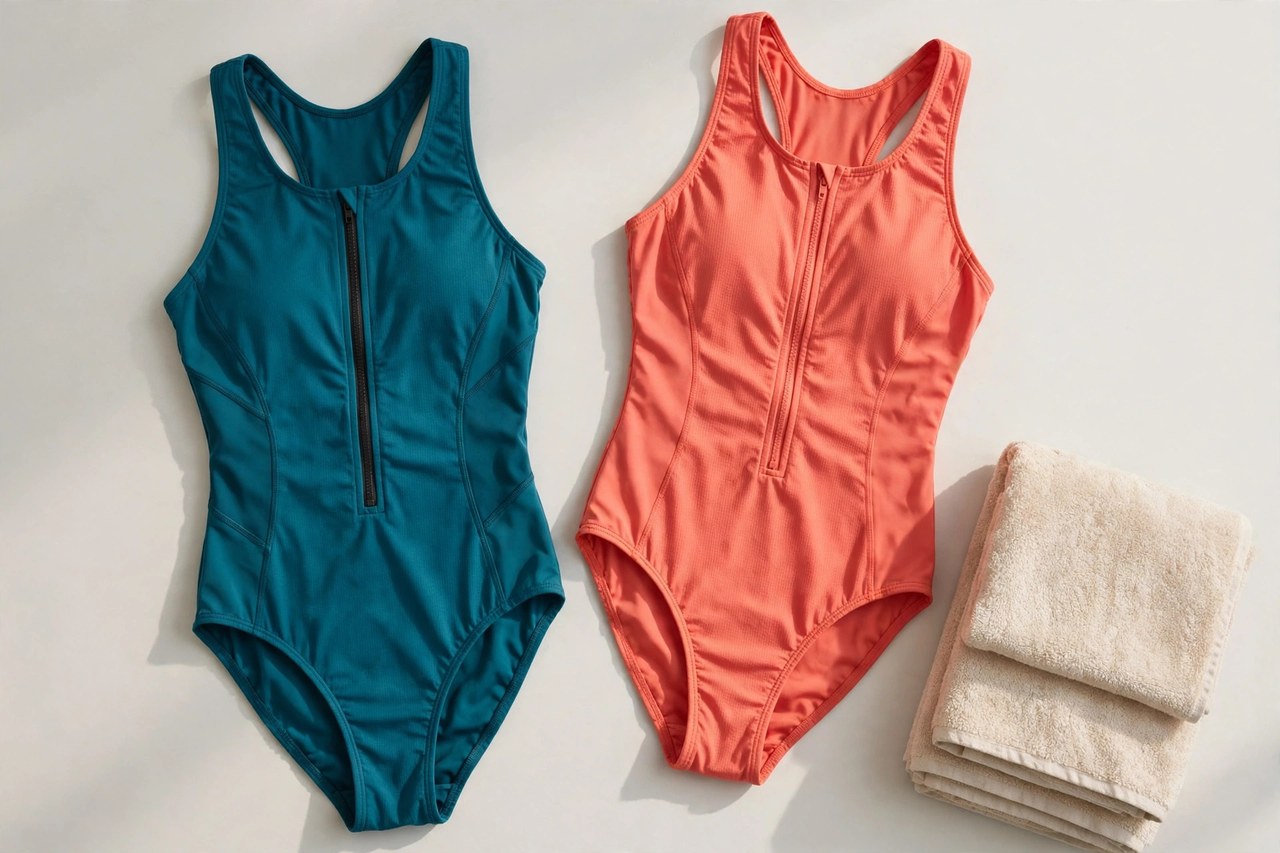
Quick dry swimwear is exactly what its name promises: swimwear that dries fast. Quick means moving fast or doing something in a short time, and after we get out of the ocean, pool, river or lake, we want our swimwear to dry — some of us want it to happen quickly. A genuinely quick dry suit typically goes from wet to damp in under 30 minutes and can become completely dry within a few hours, where an ordinary heavy suit can stay clammy for the rest of the day.
This is a strictly product-focused guide to that performance: the fabrics that dry quickly and the ones that do not, the wicking mechanism that moves water out of a suit, the construction details that speed or slow drying, and how to choose and care for a suit when fast drying is the point of the purchase — for travel, for water sports, and for anyone who swims more than once in a day.
Why Polyester and Nylon Dry Fast
Quick dry fabric works by refusing to hold water. Polyester dries so quickly in part because it does not absorb moisture: water sits on and between its fibers rather than soaking into them, so it can drain and evaporate instead of having to be drawn out of the fiber itself. Nylon absorbs slightly more than polyester but is still a fast drying fabric, and both fibers are built to wick — to move moisture along the fabric and out to the open air, spreading it over a wide surface where it evaporates more quickly.
Cotton is the counterexample that explains the whole category. Cotton is comfortable and breathable in dry clothing, but its fibers absorb water greedily and hold it inside the fiber, so a cotton garment takes much longer to dry — which is why true swimwear is never cotton, and why the cotton-rich cover-up you throw over a quick dry suit can still be wet at dinner. One caution stands: drying speed is not a 100 percent accurate science when selecting a swimsuit, because each maker uses different fabrics, blends and constructions, so treat any stated drying time as a comparison, not a guarantee.
Construction: Where Drying Is Won or Lost
Fabric sets the ceiling; construction decides how close a suit gets to it. Thin, single-layer panels dry fastest, which is why unlined and lightly lined suits lead the category. Full linings, padded cups and tummy-control panels each add a layer that traps a film of water between fabrics, and those suits dry noticeably more slowly — a fair trade if you want the shaping, but one to make knowingly. Mesh linings and mesh inserts are the compromise, holding shape while letting water pass straight through.
Details matter at the edges. Wide, solid elastic traps water at the leg and neck openings, while narrow or laser-cut bindings shed it. Heavy embellishment — thick straps, large hardware, dense ruching and layered ruffles — holds water in its folds. The fastest-drying suits in any range share a look: smooth, close, uncomplicated surfaces, minimal padding, and hardware kept small or made of plastic rather than metal. If a product description lists the fabric, a high polyester content with elastane for stretch is the quick dry signature; recycled polyester versions dry the same way.
Choosing a Quick Dry Suit for Your Use
Match the suit to the day you are planning. For travel, where a suit is rinsed in a sink and must be dry by morning in a hotel room, choose the lightest construction you are comfortable in, in a dark or printed color that hides the damp stage, and pack two so they can rotate. For active water use — lap swimming, surfing, paddle sports — fit comes first: a quick dry suit that shifts when wet is worse than a slower suit that stays put, so prioritize secure straps and a snug leg opening, then drying speed. For resort and beach days with repeated swims, quick drying pays for itself at lunch: a suit that is damp-dry in under half an hour is comfortable to sit in, and kind to the car seat on the drive home.
Check the label for the same three facts as any swimsuit, with drying in mind: fiber percentages (polyester first for speed, nylon first for softness), lining description (mesh or partial linings dry faster), and care instructions.
Care That Keeps a Suit Quick
A quick dry suit stays quick only if its fibers stay clean. Sunscreen, body oils and pool chemicals coat synthetic fibers and slow wicking, so rinse the suit in cold fresh water after every wear — this is also where the fast-drying promise starts, since a rinsed suit hung in moving air can reach the damp stage remarkably soon. Hand wash occasionally with a mild suit wash, never bleach, and never leave the suit rolled wet in a bag, where elastane degrades and mildew undoes the fabric's open structure.
Dry the suit flat or folded over a rail, out of direct sun, and keep it out of hot tubs, whose hot chlorinated water attacks the elastane that gives the suit its fit. Give travel suits the towel trick: roll the suit in a dry towel and press, which pulls out the water that would otherwise take the first hour of drying with it. Cared for this way, a quick dry suit keeps both its fit and its one defining talent, season after season.
Related Women's Guides
More to Explore on Apparel Search
Looking for Women's Clothing Stores?
This guide helps you choose women's quick dry swimsuits. To browse where to buy, visit our women's clothing store directory, where you can find retailers that carry them.