Women's Satin Blouses Guide
A satin blouse is a woven top cut from satin-weave fabric, with the smooth, light-catching face of the cloth worn outward.
Shop Women's Satin Blouses Now
Shop Women's Satin Blouses on Amazon Shop Women's Satin Blouses on eBayThe Amazon and eBay links on this page are affiliate links. If you make a purchase through them, Apparel Search may earn a commission.
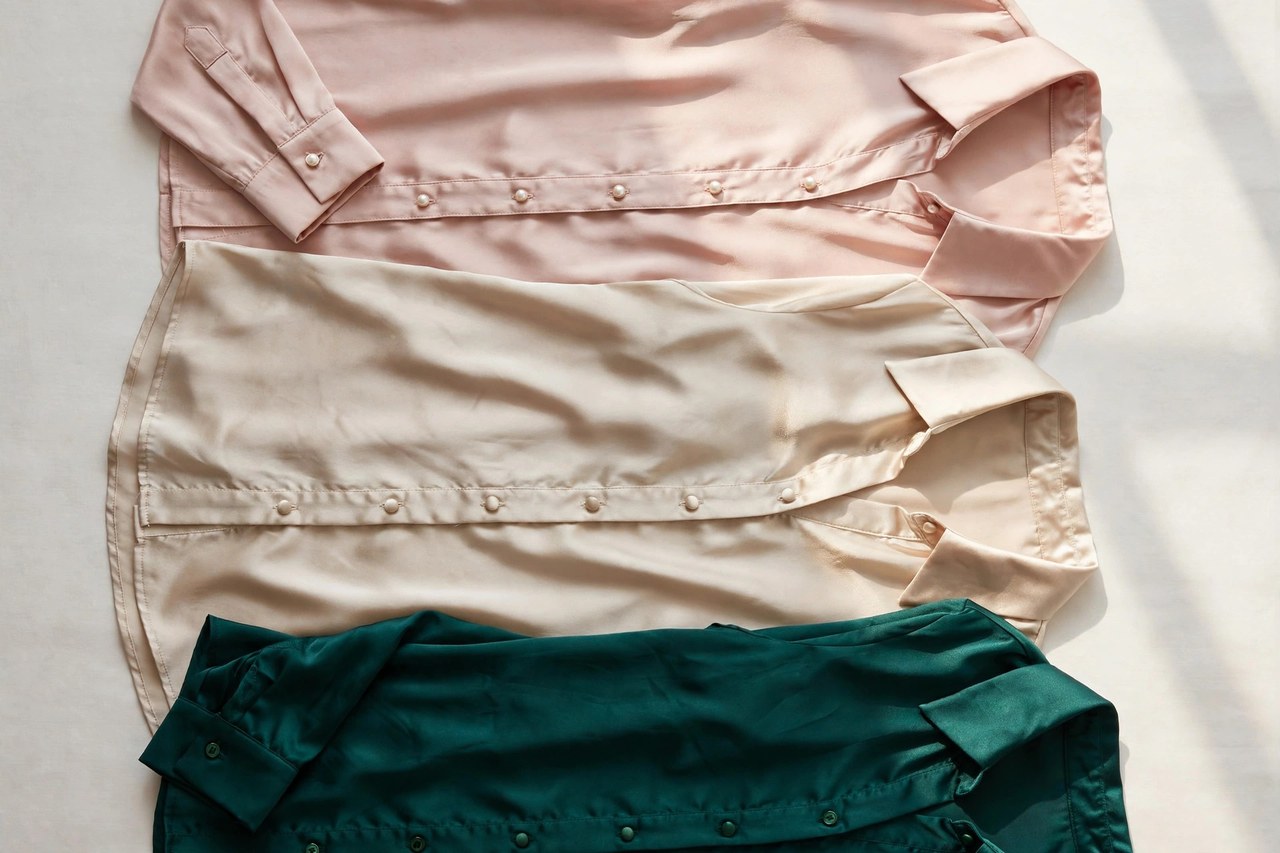
A satin blouse is a woven top cut from satin-weave fabric, with the smooth, light-catching face of the cloth worn outward. This page treats the blouse as a tailored daytime and office garment, distinct from satin camisoles and sleepwear: collars, button plackets, cuffs and tuck-in lengths are its subject.
This guide covers satin blouses in the order a careful buyer needs it: what the garment is made from, how it is constructed, how it should fit, how to choose it for real use, and how to care for it so it lasts. Apparel Search has published guides to women's clothing for decades, and this rebuilt page keeps the subject focused — measurable details, named materials and checks you can perform in a shop or on a parcel's arrival, rather than general fashion language.
The Satin Weave and Its Fibers
Satin is a weave structure, not a fiber: warp yarns float over several weft yarns, which is what creates the smooth, light-reflecting face and the matte back. That distinction is the first thing to settle when buying satin blouses, because two garments with the same satin shine can be made from entirely different fibers and behave nothing alike in wear or washing. Silk satin is the traditional luxury form — breathable, fluid and strong for its weight, but water-sensitive and the most expensive. Polyester satin is the modern workhorse: colorfast, washable, resistant to wrinkles and far cheaper, though less breathable. Acetate, rayon and nylon satins sit between those poles, and blends try to combine silk's hand with synthetic durability.
Weight and finish refine the choice further. Light charmeuse-style satins drape close and suit fluid, bias-cut forms; heavier duchess-style satins hold a sculpted shape and suit structured garments. A matte-backed crepe-back satin can be reversed so either face shows, which some makers use for contrast panels. Whatever the fiber, judge the fabric in motion and in daylight: a good satin reflects light in a soft, even glow, while a cheap one glares in hard streaks and shows every seam imperfection beneath it. Look for a covered or neatly finished button placket, a collar that sits flat, and cuffs that close without gaping when the arm bends.
Fit, Cut and Sizing
Satin has almost no natural stretch unless elastane is woven in, so fit in satin blouses is created by cut rather than by the fabric giving way. Bias cutting — placing the pattern at forty-five degrees to the grain — lets woven satin skim and move, but it also means the garment can grow in length as it hangs, and seams sit under diagonal stress. Straight-grain satin holds its measurements precisely and needs darts, seams or closures to shape it. Read size charts by your fullest measurement for the garment's zone, not by your usual dress size, because satin shows a too-tight fit immediately in horizontal pull lines across the body.
Try the garment sitting, reaching and walking, not only standing in front of a mirror. Satin's smooth back slides over other fabrics, which is a virtue under tailored clothing and a problem wherever the garment must stay anchored on its own. Straps, waistbands and elastic should therefore be judged by whether they hold position through movement. Between sizes, the larger size almost always looks better in satin: the fabric's shine advertises strain, while a slight ease reads as intentional fluidity. Keep the size chart and fiber label from anything you buy online, because satin cuts vary more between brands than cotton basics do.
Choosing and Wearing
Choose satin blouses by the job the garment must do across a real week, not by a single occasion photograph. Satin rewards a deliberate wardrobe: its shine raises the register of everything worn with it, so matte partners — wool, cotton, denim, knitwear — usually balance it best, while satin-on-satin outfits need a clear difference in color or texture to avoid looking like an accidental set. Color also behaves distinctively in this weave: jewel tones gain depth, pastels can wash out under strong light, and black satin shows lint and pale marks more readily than almost any other black fabric.
For value, weigh fiber against frequency of wear. A rarely worn occasion piece can justify delicate silk; a garment in weekly rotation earns its keep in a washable, crease-resistant satin that survives real life. Check return policies on satin bought online, because screen photographs flatten the difference between a soft glow and a harsh glare that is obvious the moment the parcel is opened. In practice, rank the checks above in the order your own use demands — frequency of wear first, then weather, washing facilities and budget — because that order differs by household, and it is the real reason two careful buyers can correctly choose differently from the same shelf. Handled with that much attention at the buying stage, satin stops being a risky fabric and becomes one of the most reliable ways to add polish to a wardrobe.
Care, Wrinkles and Storage
Care follows the fiber, never the shine. Silk satin generally wants hand washing in cool water with a gentle detergent, or dry cleaning for structured garments; most polyester satins tolerate a gentle machine cycle in a mesh bag. In all cases, wash dark and bright satins separately at first, avoid wringing — roll in a towel to remove water — and dry away from direct heat and sun, which fade the face and can set water spots. Water spotting is satin's characteristic care problem: droplets dry as visible rings on some satins, so an even, full wash is safer than spot-dabbing a single mark.
Iron satin on the reverse side, on a low setting, ideally while very slightly damp or through a press cloth, and steam cautiously — some satins water-spot under steam. Store garments hung on padded hangers or folded with tissue at the folds, away from rough surfaces that can snag the float yarns of the weave. A pulled float can often be eased back into place from the reverse with a fingertip rather than cut. With that routine — gentle washing, reverse ironing, smooth storage — satin keeps the even, liquid surface that made it worth buying, season after season.
Related Women's Guides
More to Explore on Apparel Search
Looking for Women's Clothing Stores?
This guide helps you choose women's satin blouses. To browse where to buy, visit our women's clothing store directory, where you can find retailers that carry them.