Women's Swimdress Guide
A swimdress is a dress-silhouette swimsuit — a fitted swim top with an attached skirt overlay, built from swim fabric for use in and out of the water.
Shop Women's Swimdresses Now
Shop Women's Swimdresses on Amazon Shop Women's Swimdresses on eBayThe Amazon and eBay links on this page are affiliate links. If you make a purchase through them, Apparel Search may earn a commission.
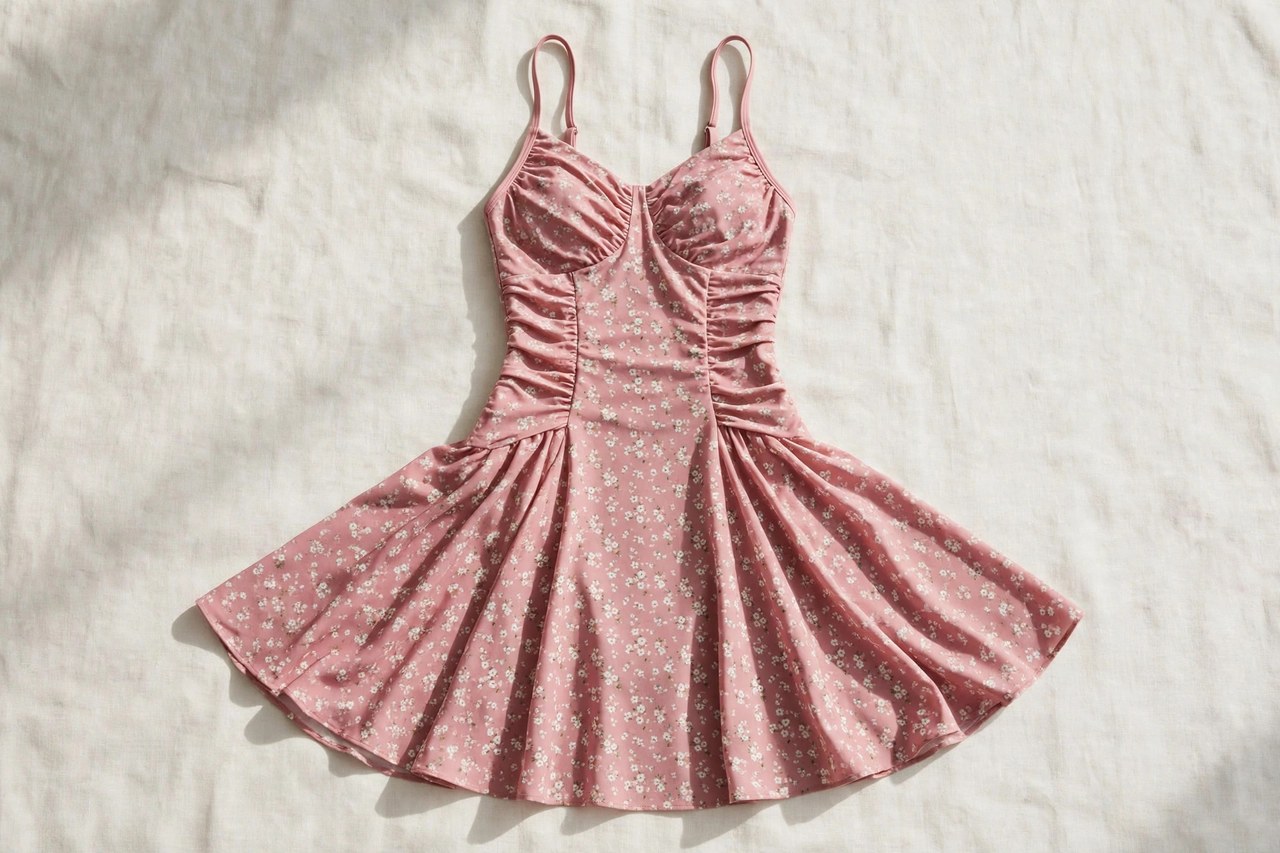
A swimdress is a swimsuit built in the silhouette of a dress. Yes, a swimdress is very different from a gown — this type of dress is meant to be worn in the water. It has a similar silhouette to a dress but is designed for water activities, with an attached skirt overlay over a fitted swim brief, all made from swim fabric with stretch. It is a distinct construction, not a one-piece with decoration, and this guide treats it as its own garment.
Within the swimwear family, the swimdress is a third answer to the same question the swimsuit and swim short answer differently: its form is a dress — a bodice and a skirt that moves in and out of the water. The sections below cover its construction, fabrics, lengths, sizing and care.
Construction: Bodice, Brief and Skirt Overlay
A swimdress is built in two layers that work as one garment. The foundation is a fitted swim brief or one-piece base that provides the swimsuit function: secure fit in the water, a lined front, and support built into the bodice through molded cups, soft cups or a shelf construction on many styles. Over that base hangs the defining feature — an attached skirt overlay that falls from the waist or hip to a hem at mid-thigh or above the knee, cut to flare slightly so it moves with walking and swimming rather than wrapping the legs.
Bodices vary: halter, tank and scoop necklines, adjustable straps, and empire or natural waist seams where the skirt joins. Skirt constructions vary too — a full overlay, a handkerchief hem, or a ruffle-tiered skirt. A well-made swimdress balances the skirt's water behavior: the fabric settles after floating, the hem does not roll, and the length neither drags nor hikes. Those details, not the print, are where quality shows.
Fabrics, Patterns and Color
Swimdress fabric is standard swimwear fabric: the garment uses the same stretch materials as other categories of swimwear so that it performs in water. That means nylon or polyester knits blended with elastane, quick to dry, resistant to sagging when wet, and available in chlorine-resistant versions for pool use. Polyester versions hold color longest under chlorine and sun; nylon versions feel softest. A swimdress uses more fabric than a brief-style suit, so fabric weight matters: a heavy skirt holds water and hangs heavily on exit, while a light, quick-dry knit sheds water and recovers its drape within minutes.
Swimdresses come in a wide variety of styles, fabrics and colors, often printed with fun designs but also available in solid colors — and the dress format gives prints more room to work than any other swim garment. Florals, polka dots and retro patterns suit the silhouette's dress heritage, while solid dark colors with a contrasting trim give it a tailored, minimal reading. Pattern placement is a real quality check: a print matched at the skirt join looks considered; one chopped arbitrarily at the waist signals rushed construction.
Lengths, Fit and Sizing
Skirt length is the main fit variable. Shorter skirt overlays ending high on the thigh behave most like a standard swimsuit in the water and dry fastest. Mid-thigh and knee-length skirts give the fullest dress silhouette and the most coverage, and they suit walking, resort wear and activities that move between the water and a cafe or boardwalk. Torso length matters as much as skirt length: a swimdress that is short in the body will pull the skirt up with it, so shoppers between sizes, or with a longer torso, should check whether a brand offers long-torso sizing, and size by torso and hip rather than by dress size alone.
Fit checks are practical: straps should stay in place through a swim stroke, and the skirt should flare from its join rather than cling to the brief beneath it — a skirt that sticks flat when wet was cut too straight or made from too heavy a fabric. Sit and bend in the fitting room: the skirt should fall back into place. Elastane relaxes slightly with use, so a snug-but-comfortable fit when dry is correct.
Care for a Skirted Swimsuit
Care follows standard swimwear practice with one addition for the skirt. Rinse the garment in clean, cool water after every use to remove chlorine, salt and sunscreen, wash occasionally by hand or on a gentle cycle with mild detergent, and never wring the skirt overlay hard — twisting sets creases in the flare and stresses the waist join where the skirt attaches. Dry the swimdress flat or hanging in shade, arranged so the skirt hangs in its natural flare rather than folded against itself, which keeps the overlay's shape between wears.
Ultraviolet light and hot tubs degrade elastane, and a swimdress has more fabric exposed to both. Rotate two suits if you swim daily, and expect the base brief's elastic to age before the skirt does. On the rinse-and-shade routine, a well-constructed swimdress keeps its silhouette and swim function for several seasons.
Related Women's Guides
Photos

Looking for Women's Clothing Stores?
This guide helps you choose women's swimdresses. To browse where to buy, visit our women's clothing store directory, where you can find retailers that carry them.