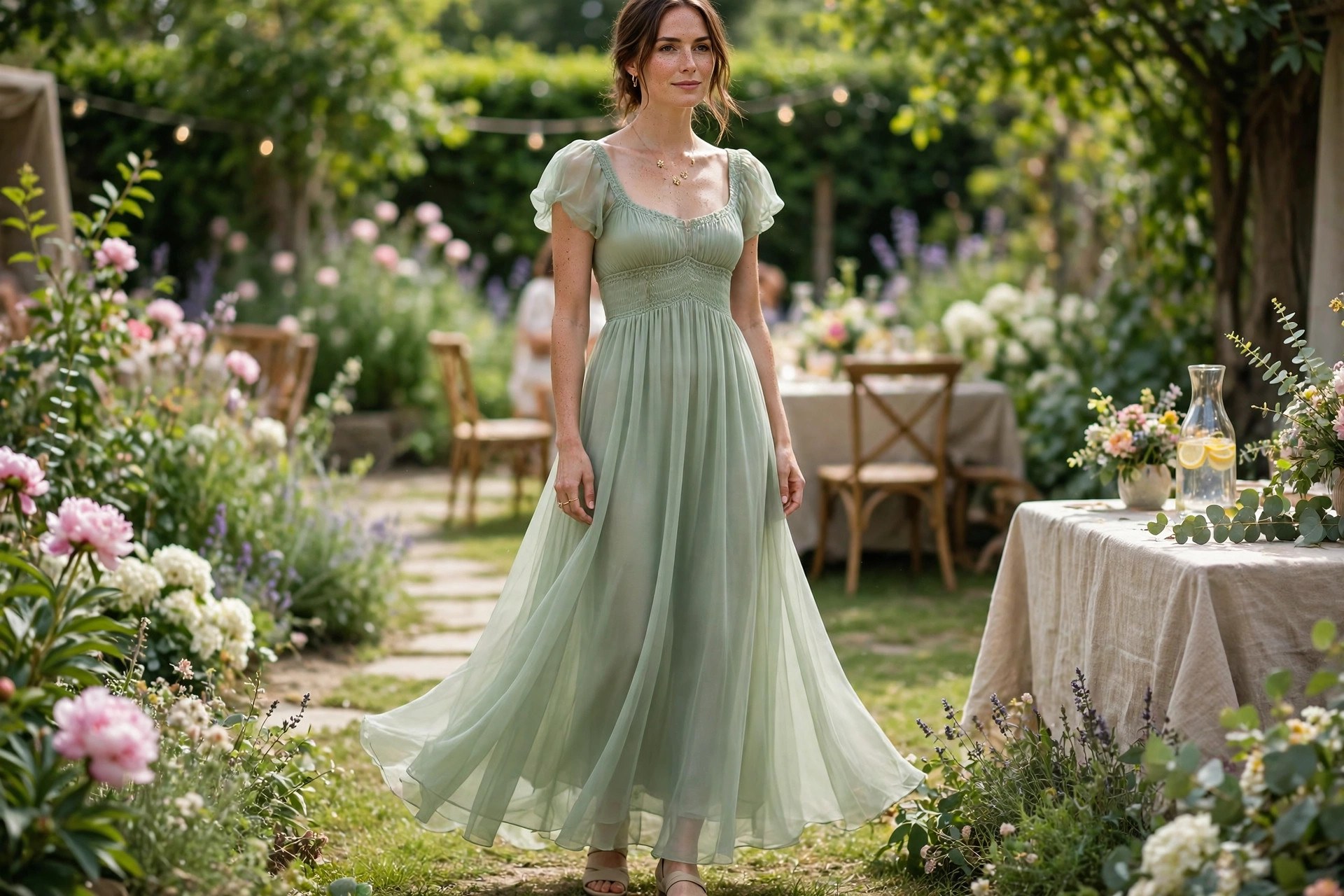
An empire waist dress has its waist seam raised to just below the bust — the highest waistline of any dress silhouette. From that seam the skirt falls in a long, unbroken line over the waist, stomach, and hips instead of fitting them. The result is a dress that defines the narrowest part of the torso, lengthens the look of the legs, and moves freely over everything below the seam.
Where the Waist Sits — and Where the Style Comes From
On an empire dress the seam sits at the underbust, roughly where a bra band sits, several inches above the natural waist. Everything above the seam is a fitted bodice; everything below it is skirt. That single construction detail is the whole silhouette, and it is why two dresses with the same fabric and colour can look completely different — move the seam from the natural waist to the underbust and a fitted dress becomes an empire dress.
The style takes its name from the First French Empire of the early 1800s, when high-waisted, free-flowing dresses replaced the stiff, corseted shapes of the century before. The look is forever linked with the Regency era — think of the dresses in Jane Austen adaptations — and it has returned in every generation since, from 1960s babydoll-adjacent styles (which are shorter and looser) to the flowing maternity and bridesmaid dresses it is most used for today.
Who an Empire Waist Flatters
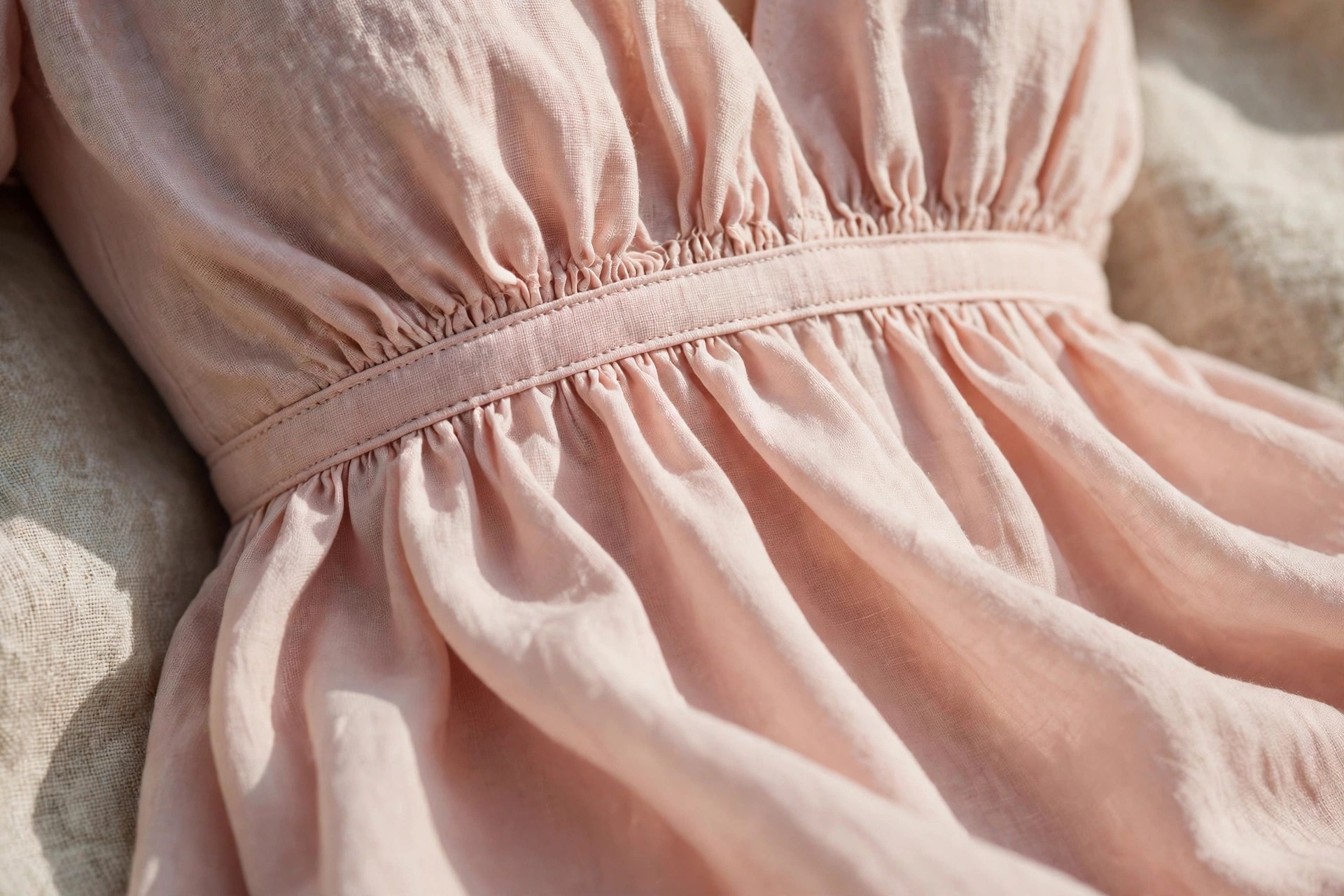
The raised seam draws the eye to the underbust, usually the slimmest point of the torso, and then lets fabric fall away from the stomach and hips. That makes the style a reliable choice for anyone who prefers not to define the midsection: apple shapes, post-partum wearers, and anyone who finds natural-waist dresses unforgiving after lunch. The long fall of skirt also makes legs look longer, which is why petite wearers often find empire dresses more lengthening than waist-fitted ones — provided the skirt itself is not so full that it overwhelms a small frame.
It is not automatic, though. The bodice has to fit: too loose and the dress reads as a tent, too tight and the seam rides up. Fuller busts need a bodice with real structure — wide straps or a squared neckline — because the seam puts all the emphasis at the bust.
Fabrics, Lengths, and Necklines
Empire dresses live or die by drape. The skirt must fall, not stand away from the body, so fluid fabrics dominate: chiffon, georgette, crepe, soft jersey, rayon, and silk. Stiff cotton or taffeta versions exist, but the skirt bells out and the effect turns costumey. Jersey empire dresses are the everyday workhorses — comfortable, washable, and forgiving — while chiffon over a lining is the standard for weddings and formal events.
When to Wear One: Maternity, Weddings, and Everyday
The empire waist is the default recommendation for maternity occasion dressing for a simple mechanical reason: the seam sits above a growing bump and the skirt has nothing to fit below it, so one dress can work across several months. The same logic makes it a forgiving choice after abdominal surgery or during any period when a fitted waistband is unwelcome — check with your own comfort, and choose soft jersey.
As a wedding guest it solves the two classic problems at once: it looks dressed up, and it stays comfortable through a meal and an evening of dancing. It is also a long-standing bridesmaid style because one silhouette can suit a whole group of different body types, with the colour and fabric providing the uniformity. For everyday wear, a jersey empire dress with flats or ankle boots is an easy one-piece outfit; add a cropped jacket — cropped, so it ends near the seam rather than fighting it — when you need a layer. For product examples and current styles, see the empire waist dress product page.
Empire vs A-Line, Fit-and-Flare, and Babydoll
These four silhouettes are confused constantly, and the seam position sorts them out. An empire dress sews its waist just under the bust and falls straight from there. An A-line dress fits at the natural waist (or has no seam at all) and flares gradually toward the hem like the letter A, giving gentle definition at the real waist. Fit-and-flare also uses the natural waist but fits closely through the torso before a much fuller skirt — the most waist-defining of the group.
The babydoll is the empire's close cousin: a high waist and a loose fall, but cut short and deliberately looser and more playful, often with puffed sleeves. If a dress is knee-length or longer and the bodice is properly fitted, call it empire; if it is short, swingy, and loose everywhere, it is a babydoll. The women's empire dress guide in the Clothes Guide collects more examples of the silhouette in context.
Styling an Empire Waist Dress
Work with the seam, not against it. Belts, if you wear one, belong at the seam itself or not at all — a belt at your natural waist cuts the dress's long line in two and fights the construction. Necklaces should sit above the seam: a pendant that lands on the seam line looks accidental. Shoes can be almost anything, because the silhouette is a blank column: flats and sandals for day, a heeled sandal or court shoe to formalise it, ankle boots with a midi in autumn.
Layers need the same discipline. Cropped cardigans, boleros, and short denim or leather jackets end where the dress's interest is and preserve the shape. A long, loose cardigan over an empire dress hides the bodice and leaves only volume — the one combination that makes this flattering style look shapeless.
Common Questions
- What is an empire waist on a dress?
- An empire waist is a waist seam placed just below the bust, the highest waistline used on a dress. The bodice is fitted above that seam and the skirt falls freely from it over the natural waist, stomach, and hips, which lengthens the legs and skims the midsection.
- Are empire waist dresses flattering?
- For many wearers, yes. The seam highlights the underbust, usually the slimmest part of the torso, and the skirt falls away from the stomach and hips rather than fitting them. The bodice must fit properly, though: too loose reads shapeless, and too tight rides up.
- Can you wear an empire waist dress when pregnant?
- Yes — it is the most recommended silhouette for maternity occasion wear. The seam sits above the bump and the skirt needs no fitting below it, so the same dress often works across several months. Soft jersey versions are the most comfortable for everyday wear.
- What is the difference between empire waist and A-line?
- The seam position. An empire dress is seamed just under the bust and falls straight from there. An A-line dress fits at the natural waist, or has no seam, and flares gradually to the hem. Empire skims the midsection entirely; A-line still defines the natural waist.
- What jacket goes with an empire waist dress?
- A cropped one. Cropped cardigans, boleros, and short denim or leather jackets end near the dress's raised seam and preserve its long line. Long, loose layers hide the fitted bodice and leave only volume, which makes the dress look shapeless.