Flannel Fabric Mills
Mills are where flannel begins: weaving the cloth and brushing the nap that makes it flannel. This guide explains what flannel mills do, what to ask them, and lists mills that produce them.
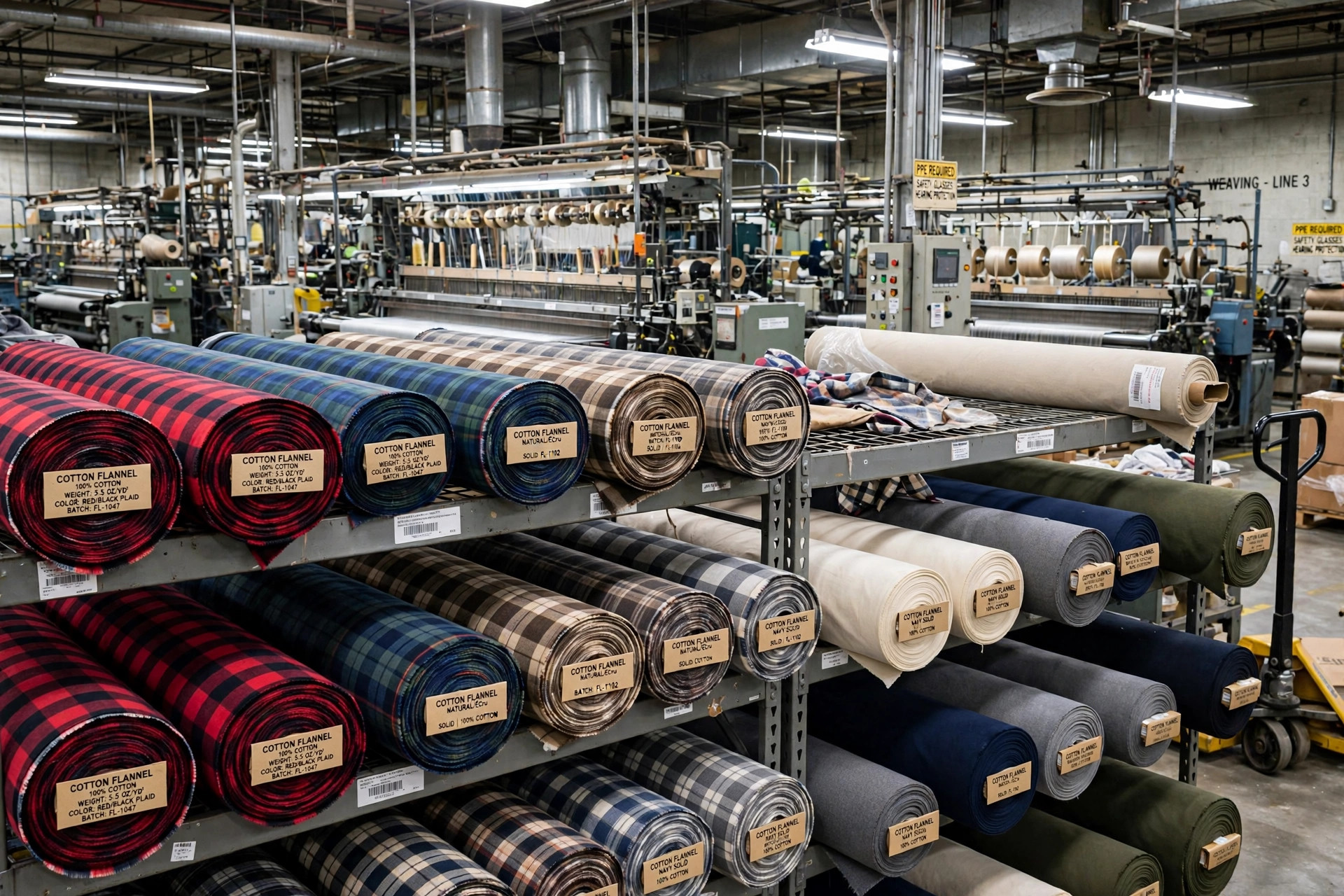
What a Flannel Mill Does
A fabric mill weaves or knits cloth at production scale, and a flannel mill adds the defining step: napping. Looms produce the base weave, often a plain weave or a soft twill, and finishing equipment then brushes the surface to raise the fibers that give flannel its warmth and soft hand. Mills working in flannel therefore need both weaving capacity and controlled finishing, because too little brushing leaves the cloth flat and too much weakens the yarns it raises.
Mills also decide the fiber story. Cotton flannels dominate apparel and home sewing, wool flannels serve tailoring, and blends tune cost and durability. A mill's range, minimum order quantities and willingness to develop custom fabrics vary enormously, so the listings on a page like this are a starting point for conversations rather than a promise that every mill suits every buyer. The wider fabric mills directory on Apparel Search covers mills well beyond flannel.
Baum Textile Mills and Briggs Textile Mill
Baum Textile Mills is a family-run business, operating since 1955. It produces quality fabrics for the home sewing industry and is known for its fleeces and flannels. Baum also offers trademarked finishes, including its WinterFleece velour finish, which allows extraordinary detail and a soft hand on its WinterFleece and Weatherblock fabrics, for both retail and manufacturing clients. It is a useful example of a mill whose identity rests on finishing skill as much as on weaving.
Briggs Textile Mill has developed, manufactured and supplied quality cotton and synthetic textiles to various markets since 1930. Its focus as a fabric and flannel supplier includes cotton flannels, twills, canvas and sheetings, with large inventories of cotton flannel fabrics and woven twills, canvas duck, muslin and sheeting held for buyers who need stock rather than development timelines.
Custom Development and Stock Programs
Briggs also shows the second way mills work: custom development. Alongside its stock lines, the company offers custom developed fabrics for specific end uses, including sateen, osnaburg, organic flannel and grey flannel, in natural and synthetic fabrics including polyesters. Custom development suits buyers with a defined end product and the volume to support a dedicated run, while stock programs suit smaller makers who need reliable cloth quickly.
Choosing between the two is a question of time, volume and risk. A stock flannel can be sampled, tested and sewn within weeks, and reordered while the program lasts. A custom fabric takes longer and ties up money in a run woven for you alone, but it can match an exact weight, finish or fiber standard that stock cloth cannot. Ask any mill, early and plainly, which model a fabric belongs to, what its minimums are, and how reorders are handled when a program ends.
Questions to Ask a Flannel Mill
Start with the cloth itself: fiber content, weight, width, nap on one side or both, and whether patterns are yarn-dyed or printed. Then ask about shrinkage and testing, because napped cotton flannel can shrink and its raised surface changes how a garment wears. A mill that can share test results and wash behavior is saving you from discovering both after a production run has been cut and sewn.
Finish with the commercial questions. What are the minimums per color, how are seconds and shortages handled, where does the fabric ship from, and what lead times apply in the mill's busy season? If you know of additional mills that belong in this section, please suggest them. Suggestions from people working in the trade are how this directory grows. From here, most buyers move on to the wholesalers and stores in this flannel section to compare routes to the same cloth.
Listings in This Directory
The listings below give each mill's details in brief.
Baum Textile Mills
A family run business since 1955, producing quality fabrics for the home sewing industry and known for its fleeces and flannels, including its trademarked WinterFleece velour finish.
Briggs Textile Mill
Has developed, manufactured and supplied quality cotton and synthetic textiles since 1930, focusing on cotton flannels, twills, canvas and sheetings, with large flannel inventories and custom developed fabrics.
Common Questions
What is the difference between a mill and a wholesaler?
A mill manufactures the cloth, weaving it and applying finishes such as napping. A wholesaler buys finished fabric and resells it. Mills usually require larger minimum orders; wholesalers offer smaller quantities from stock.
Can a small maker buy directly from a flannel mill?
Sometimes. Some mills serve retail and manufacturing clients or keep stock programs with modest minimums, while others sell only in large production volumes. Ask about minimums and stock lines before assuming a mill cannot work with you.
What should I check in a mill's flannel sample?
Fiber content, weight, width, whether the nap is on one or both sides, shrinkage after washing, and how the surface wears. Also confirm whether the pattern is yarn-dyed or printed, since that affects color depth and price.
More to Explore
References & Further Reading
Looking for Fabric Mills and Suppliers?
For mills across every fabric type, browse the Apparel Search fabric directory, or return to the Fabric Search hub to start over.