Flannel Fabric Wholesalers
Wholesalers and distributors supply flannel in the volumes that apparel production, quilting programs and retail shelves require. This guide explains how distribution works and lists flannel distributors.
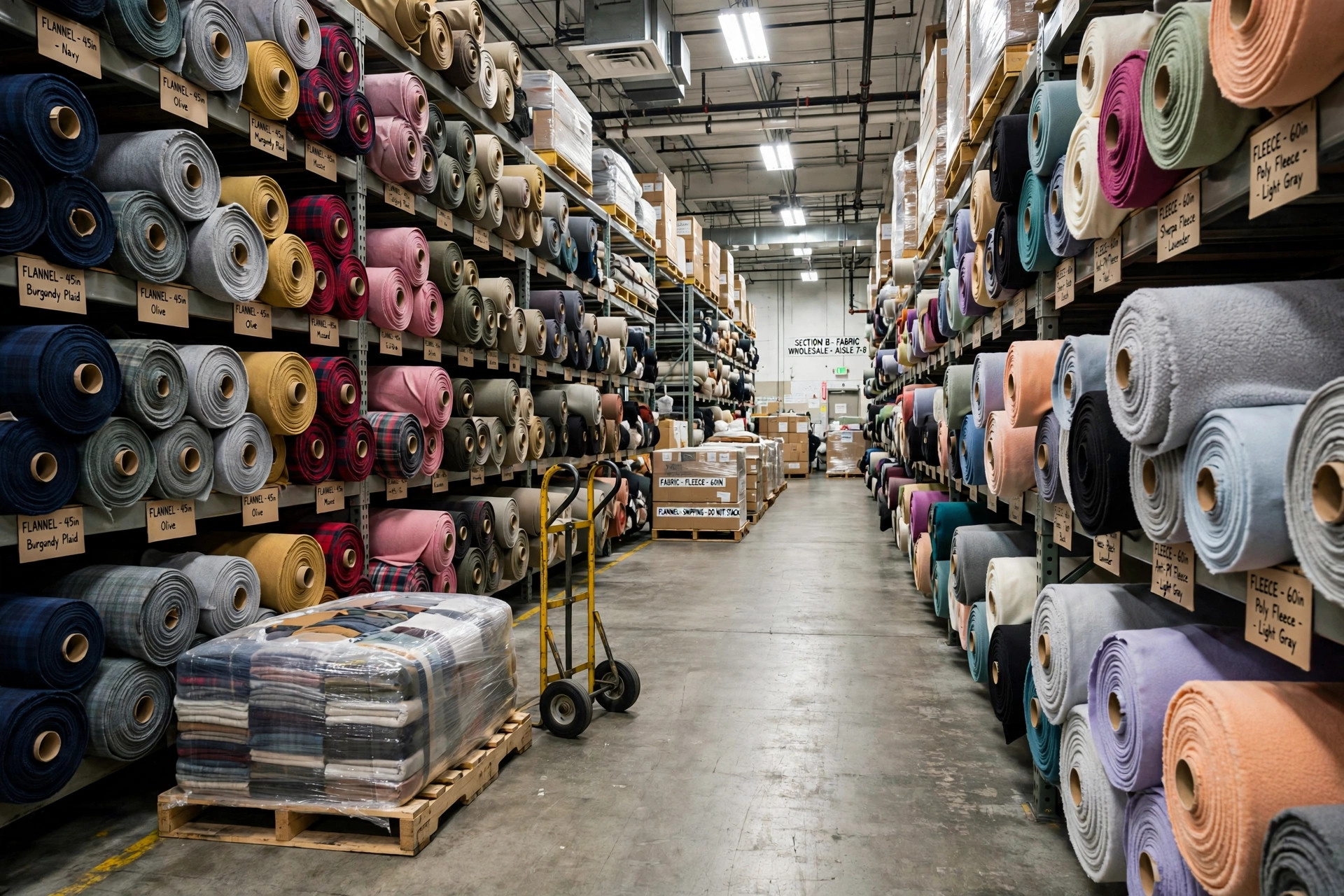
How Fabric Distribution Works
Between the mill that weaves flannel and the maker who sews it sits the distributor, sometimes called a wholesaler or converter. Distributors buy fabric in production quantities, hold it in warehouses, and sell it onward in smaller but still substantial lots to manufacturers, retailers and busy workrooms. Converters go a step further, commissioning greige goods and having them dyed, printed or finished to their own designs, so the flannel on their shelf may exist nowhere else.
That middle role is why wholesale pages matter to trade buyers. A mill run commits you to one fabric in depth; a distributor's stock line lets you build a season from many fabrics at once, reorder the ones that sell, and test new prints without commissioning them. In exchange, expect trade terms: minimum yardage per order, business credentials, and prices that assume you are reselling or manufacturing rather than making a single garment. The Apparel Search wholesale fabric section covers this trade picture beyond flannel.
David Textiles and Robert Kaufman Company
David Textiles was founded in 1985 on the philosophy of providing quality fabrics and products at competitive prices. It works as a textile converter and manufacturer offering licensed and exclusive fabrics, craft and quilt kits, no-sew throws, kitchen and home accessories, finished blankets, receiving and security blankets, throws and pillows. The company is a leader in the design and execution of fleece prints, cottons and flannels, as well as a variety of other base cloths, which makes it a natural fit for buyers whose flannel needs run toward quilting and home products.
Robert Kaufman Company fills the broad stock-line role. For over 60 years the company has supplied quality fabrics to the United States market, and manufacturers across women's, men's and children's wear, sportswear, career and uniform apparel, and home and kitchen goods have all relied on its extensive open stock line. For flannel buyers, an open stock line matters because a shirt or pajama program can reorder the same cloth season after season.
Stock Lines, Sourcing and Custom Development
Kaufman adds a second service worth understanding: a Sourcing and Design Department for customers whose needs go beyond the stock line and require custom development. That is the bridge between distribution and converting. If a stock flannel is nearly right but the color, print scale or finish is wrong for your product, a distributor with sourcing capacity can develop a version for you, at volumes and lead times between a stock order and a full mill commission.
Judge distributors on the fit between these services and your business. A quilting fabric buyer needs print range, reliable reorders and kit-friendly coordination between flannels and fleeces. An apparel manufacturer needs consistent width and shrinkage behavior across dye lots, and honest notice when a line is about to be discontinued. Both need a supplier who answers the telephone when a delivery date starts to matter, which no catalog specification can fully describe.
Working with a Distributor
Open the relationship with samples and paperwork rather than a bulk order. Request swatches or sample yardage, confirm fiber content, width and care behavior, and wash-test napped flannel before committing, since shrinkage discovered after cutting is the most expensive kind. Confirm minimums, freight terms and how shortages or seconds are credited. Then place a first order sized to prove the relationship, not to stock a year of production.
Keep records as you go: which flannels reordered cleanly, which faded or pilled in customers' hands, and which lines were dropped without warning. Those notes turn a directory listing into a supplier you actually understand. If you know of additional distributors that belong in this section, suggestions are welcome, and trade recommendations remain the most reliable way for a directory of working suppliers to grow. Retail buyers who do not meet trade minimums will find the stores page in this flannel section more suitable.
Listings in This Directory
The listings below give each distributor's details in brief.
David Textiles
Founded in 1985 on the philosophy of providing quality fabrics at competitive prices; a textile converter and manufacturer of licensed and exclusive fabrics, known for fleece prints, cottons and flannels, plus craft and quilt kits, blankets and throws.
Robert Kaufman Company
Supplying quality fabrics to the U.S. market for over 60 years, with an extensive open stock line serving apparel and home manufacturers, plus a Sourcing and Design Department for custom development.
Common Questions
Who can buy from a flannel wholesaler?
Generally businesses: apparel manufacturers, retailers, quilting shops and workrooms, usually with minimum yardage requirements and trade terms. Home sewers who need small amounts will usually do better with the retail stores in this section.
What is a textile converter?
A converter buys unfinished greige fabric and has it dyed, printed or finished to its own designs, then sells the finished cloth. David Textiles, listed here, works as a converter and manufacturer.
What is an open stock line?
A range of fabrics a distributor keeps continuously in stock for reordering, rather than offering once. It matters for products like flannel shirts and pajamas that a maker wants to repeat across seasons.
More to Explore
References & Further Reading
Looking for Fabric Mills and Suppliers?
Explore distribution across all fabric types in the Apparel Search fabric directory, or return to the Fabric Search hub.