Flannel Fabric
Welcome to the Flannel Fabric guide. This hub gathers everything in our flannel section: what the fabric is and how its nap is made, the mills that produce it, the wholesalers who distribute it, and the stores that sell it by the yard.
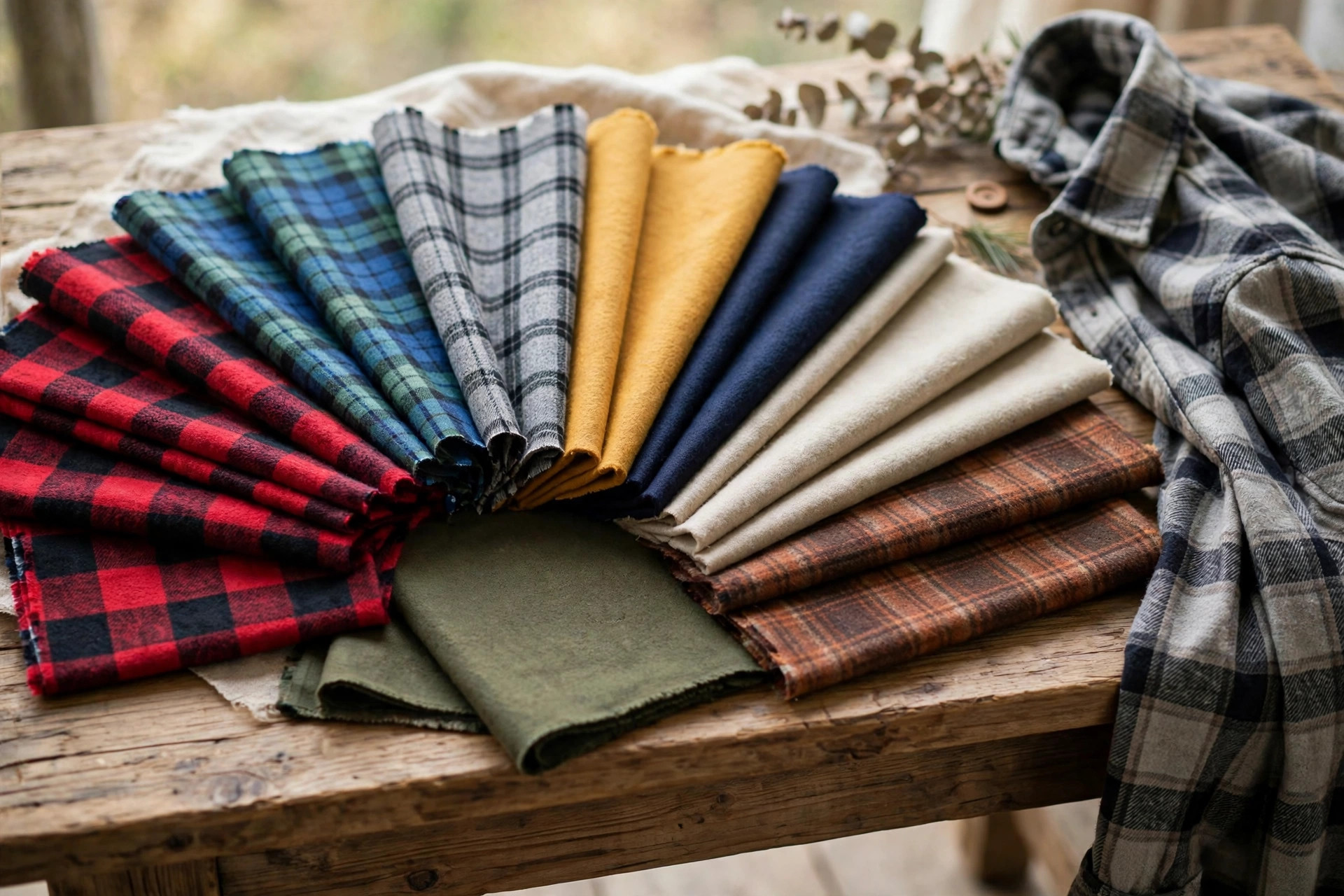
A Soft Fabric with a Simple Secret
Flannel earns its place in wardrobes and linen cupboards through one finishing step. It begins as an ordinary woven cloth, historically wool and now most often cotton, and becomes flannel when the surface is brushed, or napped, to lift fine fibers from the yarn. That raised surface traps air, softens the look of the weave and gives the fabric its familiar combination of warmth and gentleness against the skin.
This guide was designed, as the original hub put it, to help members of the textile and fashion industries learn more about flannel fabric, and to guide them to resources relevant to it. The pages gathered here follow the cloth on its whole journey, from the mill where the nap is raised to the store shelf where a home sewer chooses a plaid. Whether you are sourcing production yardage or planning a single warm shirt, one of the sections below matches the scale of your project.
Start with the Fabric Itself
If your question is what flannel actually is, begin with the fabric guide in this section. It explains the napping process in detail, compares wool, cotton and blended flannels, and covers weights, from light shirtings and sleepwear cloth to the heavy double-napped fabrics used for blankets. It also links onward to the formal flannel definition and to flannel in finished clothing, for readers who arrive here from a garment rather than a bolt of cloth.
Understanding the fabric first makes every later decision easier. A buyer who knows why a double-napped cotton behaves differently from a lightly brushed wool flannel can read a mill's specification sheet, a wholesaler's catalog and a store's bolt-end label with the same informed eye, and can say precisely which construction a project needs instead of asking simply for something soft and warm.
Mills, Wholesalers and Stores
The mills page lists producers of flannel, including a family-run mill working since 1955 and an industrial supplier whose history reaches back to 1930, and explains what to ask about minimums, stock programs and custom development. Mills are the right door for production volumes and for fabrics developed to a specific end use, and the wrong door for a yard or two, which is why this guide keeps the three routes clearly separated.
The wholesalers page covers distributors and converters who hold flannel in depth for manufacturers, quilting programs and retailers, including long-running stock lines that can be reordered season after season. The stores page is the retail end of the journey: chains, outlets, specialists and a woolen mill store selling flannel by the yard. Follow the route that matches your quantity, and use the other pages to understand the hands the cloth passed through before it reached you.
Using This Guide
Every page in this section keeps the listings and descriptions its original version carried, refreshed with fuller explanations of the trade behind them. If you have suggestions for improving the guide, or know of a mill, distributor or store that belongs here, the original hub invited readers to get in touch, and that invitation stands: directories improve when the people who use them share what they know.
Thank you for visiting the Flannel Fabric guide. From here you can move into any section below, compare routes to the same cloth, and then explore the rest of Fabric Search for the many fabrics that sit alongside flannel in a working knowledge of textiles, from corduroy and cotton to digital printing and furniture fabrics.
Looking for Fabric Mills and Suppliers?
This hub is one part of the Fabric Search hub; for the full range of fabrics and mills, continue to the Apparel Search fabric directory.