Textile Jobbers: Fabric From Surplus and Closeouts
Textile jobbers buy and resell surplus, closeout and overrun fabric, which makes them exciting and risky in equal measure. This page explains when a jobber is the right supplier and what to check before the fabric is gone.
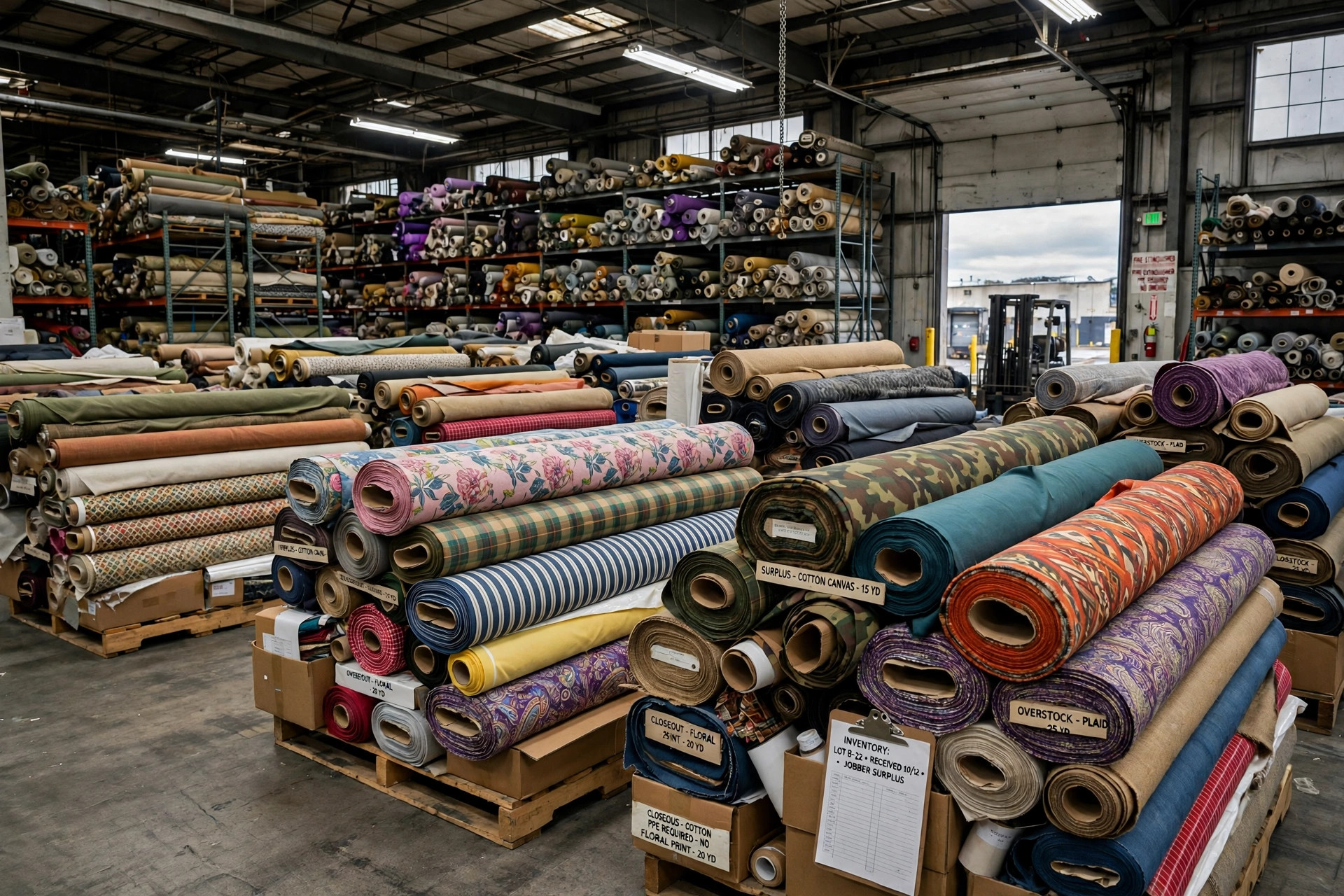
What a Jobber Actually Does
A textile jobber is a merchant in fabric that other companies have already produced. Mills overrun a color, a garment factory cancels a style, a converter is left with stock, and the jobber buys that fabric, often at a deep discount, and resells it to buyers who can use it as it stands. Unlike a mill, a jobber usually cannot weave more of what you bought. Unlike a distributor with a regular stock line, a jobber's inventory is opportunistic: it reflects what became available, not a planned range.
That model is genuinely useful. Small apparel brands, costume departments, sample rooms and independent designers can buy real production fabric in quantities far below mill minimums, sometimes in qualities they could never afford to commission. The Apparel Search Fabric Jobbers and Apparel Jobbers directory lists jobbers working in the clothing and textile industries, and it is the natural starting point for finding specialists in your region or fabric type.
Why Jobber Fabric Is Cheap, and What the Saving Costs
Jobber prices are attractive because the fabric's history carries compromises. The color may be a cancelled shade no one else wanted. The quantity may be all that will ever exist. The fabric may be first quality, or it may be seconds with flaws the buyer must cut around. None of these compromises makes the fabric bad, and for a limited run, a theatrical production or a test style, they may be entirely acceptable. The saving becomes expensive only when a buyer builds a repeatable product on fabric that cannot be repeated.
So match the purchase to the plan. If your style succeeds and you will need the same cloth next season, a jobber lot is a trap unless you buy enough for the repeat at the same time. If the design is deliberately limited, seasonal or experimental, the same lot is an opportunity. Good jobber buying is therefore a forecasting exercise as much as a price exercise: decide, before you buy, how much fabric your plans — including a possible repeat order — will actually need.
What to Verify Before You Buy a Jobber Lot
Inspect the actual rolls, not a sample from a different lot. Check several places along the roll for shading, holes, stains, creases and uneven width, because surplus fabric may have been stored, moved and re-rolled. Confirm the fiber content for yourself if labeling matters for your product, since paperwork can separate from fabric as stock changes hands. Measure the yardage claim on at least one roll. A reputable jobber expects this inspection and allows it before payment; resistance to inspection is itself information about the lot.
Ask direct questions about origin and continuity. Is more available from the same source? Is this first quality or seconds, and if seconds, what is the typical flaw? How has the fabric been stored? Straight answers, even unflattering ones, mark a good jobber. No directory can guarantee that a jobber is reliable: use it to build a shortlist of several companies, then judge each one by how it handles exactly these questions.
Finding Jobbers and Brokers
Beyond personal recommendation, which matters greatly in this trade, directories are how most buyers build a jobber list. Two useful starting points are the Apparel Search jobber directory and a TextileWeb buyers guide category for textile jobbers and brokers. A broker, in this context, connects a holder of fabric with a buyer without necessarily owning the stock, so clarify whether the company you are dealing with owns the rolls, can guarantee the quantity, and is responsible if the fabric differs from its description.
Build the relationship before you need it urgently. Visit when you are not desperate, buy a small lot and see how accurately it was described, and note which jobbers call you when fabric in your category arrives. In a trade where the best lots move quickly and are never advertised widely, being a known, prompt-paying buyer who inspects fairly and decides fast is a real competitive advantage, worth more than any single bargain roll.
Common Questions
What is the difference between a textile jobber and a fabric distributor?
A jobber trades mainly in surplus, closeout and overrun fabric bought opportunistically, so stock is limited and often cannot be reordered. A distributor more typically carries a planned stock line with steadier continuity.
Can I reorder jobber fabric if my style sells well?
Usually not in the same shade and quality, because the lot was finite when the jobber bought it. If a repeat is likely, buy enough for the expected repeat at the first purchase or choose stock-line fabric instead.
What should I inspect in a jobber lot before paying?
Inspect the actual rolls in several places for shading, flaws, stains and width, verify fiber content if labeling matters, and measure yardage. A reputable jobber expects and allows this inspection.
More to Explore
References & Further Reading
Looking for Fabric Mills and Suppliers?
Compare jobbers with the other channels in the Apparel Search fabric section and the Fabric Search hub.