Fabric Stores: Finding a Good Fabric Supplier
A good fabric store sells you the right cloth by the yard, describes it honestly and cuts it accurately. This page is about judging retail fabric sellers on those practical merits, not on their slogans.
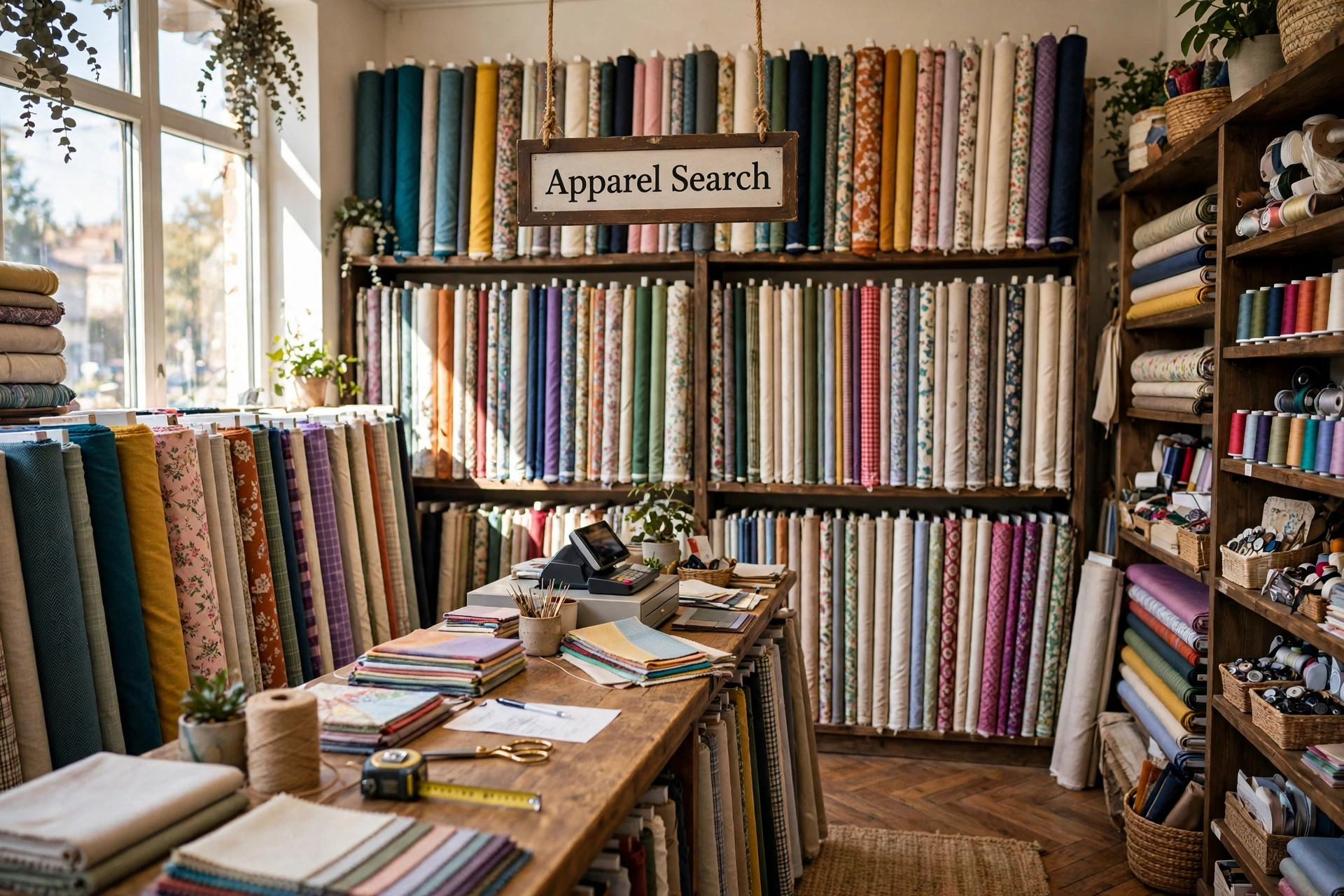
What a Fabric Store Does That a Mill Cannot
A fabric store does a different job from a mill or a wholesaler. A store buys fabric in quantity and sells it in the small amounts most people actually need: a few yards for a dress, a quilt, draperies or a slipcover. That cut-yardage service, together with the chance to see color and feel hand before buying, is why retail fabric stores remain essential for home sewers, students, costume makers and small designers testing an idea.
Because stores serve so many different projects, judge a store against your project. A shop strong in quilting cottons may be weak in suiting; a decorator fabric store may carry little apparel cloth. Look at whether the store organizes fabric by fiber, weight and use, whether listings state width and content clearly, and whether staff or product pages can tell you how a fabric drapes, washes and sews. Those answers matter more than the size of the shop.
Read Store Descriptions Skeptically, Then Test Them
When reading fabric store descriptions on fabric websites, understand that each store presents itself by saying we are the best, we are the leading, or we are number one. Some directories simply change "we" to "they," which makes a store's own claim sound like an independent review. It is very possible that a store really is excellent, but not simply because it made that statement. You must do your own research and investigation before deciding a store is good.
For a retail purchase, that investigation is pleasantly hands-on. Order a swatch before committing to yardage for a large project. Check that the cut piece is straight, that the color matches the swatch, and that the fiber content on the bolt matches the listing. Notice how the store handles a question or a return. A good store earns repeat business in these small transactions, long before you trust it with fabric for an important garment or a whole room.
Stores and Resources to Start With
Several resources offer a good place to begin. The Apparel Search Fabric Stores directory collects retail fabric sellers in one place. Fashiondex was listed as a textile and apparel resource selling guides, books and CDs, some of which contain information about fabric stores, which is useful when you want printed sourcing references rather than a single shop.
Fabric.com is a leading online fabric store and a useful starting point if you sew. Its history began with Phoenix Textiles Group, Inc., founded in 1993 by Stephen Friedman as a wholesale distributor of apparel fabrics. In 1999 Phoenix Textiles went online to test selling cut-yardage fabrics directly to consumers, and that online business became known as Fabric.com. That path, from wholesale distribution to consumer cut yardage, explains the breadth an online store can offer a home sewer.
Buying Retail Fabric Well
Buy a little more than the pattern demands when the fabric is on sale or close to selling out, because reordering the same dye lot later is never guaranteed. Record the fiber content, width and care instructions at the moment of purchase, ideally on a note pinned to the fabric, since bolts and listings disappear once the cloth is in your stash. Pre-wash washable fabrics the way the finished item will be washed, so shrinkage happens before cutting rather than in the finished garment.
Finally, keep perspective on scale. A store purchase is the lowest-risk way to buy fabric: you can inspect, sample and return in ways a mill order never allows. Use that advantage. The good fabric store for you is the one whose descriptions prove accurate across several ordinary purchases, whose cuts are generous and straight, and whose fabric performs in sewing and washing the way its listing led you to expect.
Fabric Store in This Directory
Fabric.com is listed below, with a short summary of its history and what it sells.
Fabric.com
A leading online fabric store and the place to go if you sew. It began as Phoenix Textiles Group, founded in 1993 as a wholesale distributor, and went online in 1999 to sell cut-yardage fabrics directly to consumers.
Common Questions
How do I judge whether a fabric store is actually good?
Test it with ordinary purchases: order a swatch, check that cuts are straight, color and fiber content match the listing, and see how questions or returns are handled. Ignore best and leading claims, which are the store's own advertising.
What is the advantage of buying from a fabric store instead of a mill?
Stores sell small cut-yardage amounts and let you see and feel fabric, or order a swatch, before committing. That makes retail buying the lowest-risk way to source fabric for home sewing and small projects.
Where did Fabric.com come from?
Phoenix Textiles Group, Inc. was founded in 1993 by Stephen Friedman as a wholesale distributor of apparel fabrics, went online in 1999 to sell cut yardage directly to consumers, and became Fabric.com.
More to Explore
References & Further Reading
Looking for Fabric Mills and Suppliers?
For more retail and trade options, explore the Apparel Search fabric section and the Fabric Search hub.