Fabric Links
A short page with a long purpose: pointing you to the fabric and textile resources worth your time. This guide explains how to use fabric links well, what kinds of textile resources exist, and how this site's own fabric sections fit together.
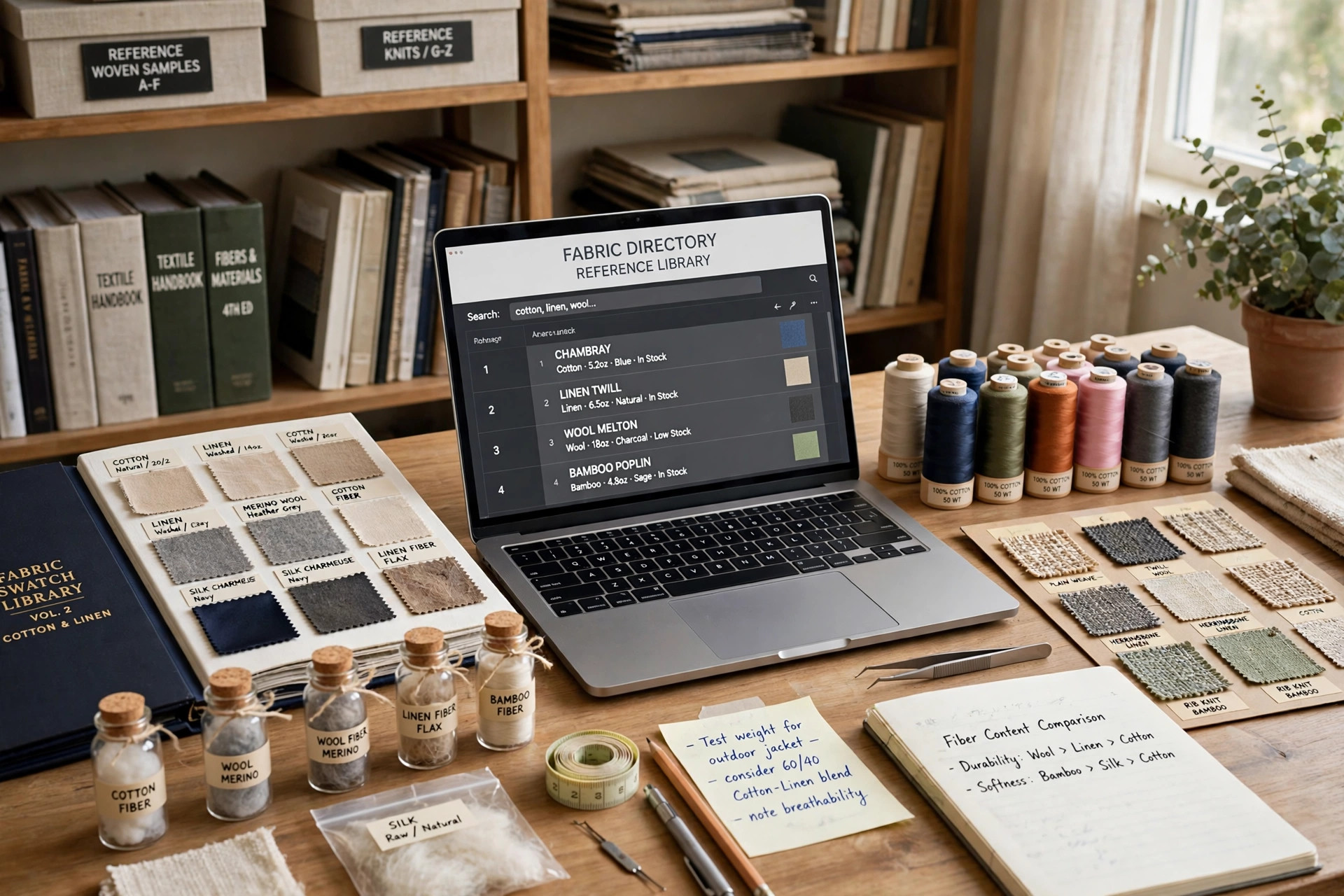
Why a Links Page Still Earns Its Place
Fabric research is scattered. A definition lives in a glossary, a price in a market report, a supplier in a directory, and a technique in a book, and no single site holds all of it. A links page is the map room for that scattered library: a curated set of starting points, gathered by someone who works in the field, so a student, designer or buyer does not have to begin from a blank search box and a hundred million results.
Fabric and fashion are directly connected: women's fashion uses a great deal of fabric. That explains the shape of Apparel Search itself: fabric pages sit inside a fashion industry directory because cloth decisions and garment decisions are the same conversation viewed from two ends, the bolt and the finished piece.
Kinds of Textile Resources Worth Following
Definitions and glossaries come first for anyone learning the trade. Textile vocabulary is precise, and the difference between a weave, a finish and a fiber decides whether a specification is right or expensively wrong. Industry directories come next, listing mills, distributors, stores and jobbers by fabric and by role, followed by trade publications and news sources that track fiber prices, mill openings and fashion direction, all of which affect what fabric costs and what can be bought at all.
Educational resources complete the set: textile science references, museum and university material on fabric history and construction, and books that go deeper than any webpage. When you follow a link from a page like this one, note what kind of resource you have landed on. A supplier's own page describes what it sells; an independent reference describes what things are. Research goes best when both kinds are used, each for what it is actually good at.
How the Good Fabric Supplier Sections Fit Together
This links page belongs to a small family of pages about finding good fabric suppliers, and the family works as a set. The mills page covers the producers of cloth. The distributors page covers wholesalers and explains, honestly, how to judge whether one is good rather than simply listed. The stores page covers retail buying for smaller quantities, and the textile jobbers page covers the traders who move surplus and job lots through the market at prices the regular channels rarely match.
Read together, those pages describe the whole supply chain a fabric passes through, and this links page is their shared doorway to the wider web. If you arrived here looking for a specific fabric rather than a kind of supplier, the fabric sections elsewhere in Fabric Search, organized by cloth such as flannel, corduroy and cotton, will serve you better than a general links collection, and the hub below leads to all of them.
Using Links Well, and Helping Them Improve
A few habits make link collections more valuable. Follow a link with a question in mind rather than browsing at random, and you will judge quickly whether the resource answers it. Bookmark the two or three sources that match your work instead of fifty you will never reopen. And when a link disappoints, because the site has closed or changed, treat that as information too: the textile trade online is younger and more changeable than the trade itself, and directories are maintained by use.
That is also why this section repeatedly invites suggestions. If you know a fabric or textile resource that has genuinely helped your work, or you spot a gap where a link should exist, telling the directory's editors is how collections like this one stay worth visiting. The aim, here as across Fabric Search, is not the longest list but the most useful one: links of interest regarding fabrics and textiles, kept with a working buyer's judgment.
Common Questions
What kinds of fabric resources should I bookmark?
A glossary for definitions, a directory for mills and suppliers, a trade source for prices and industry news, and one or two educational references for construction and care. A small set matched to your work beats a long list you never reopen.
How is a links page different from a directory?
A directory lists companies by category, with descriptions, so you can choose suppliers. A links page points onward to resources of many kinds, including references, education and news, acting as a curated starting point for research.
Can I suggest a fabric link for this page?
Yes. Suggestions are welcome for resources that genuinely help fabric research. Useful, working links in the textile field are exactly what a collection like this exists to share.
Looking for Fabric Mills and Suppliers?
Start broader research from the Apparel Search fabric directory, or return to the Fabric Search hub to choose a fabric section.