Jacquard Fabric Guide
This hub opens the whole jacquard section: a short orientation to pattern woven into cloth, then direct routes to the mills that weave it, the wholesalers who stock it and the stores that sell it by the yard.
Start Here: What This Guide Covers
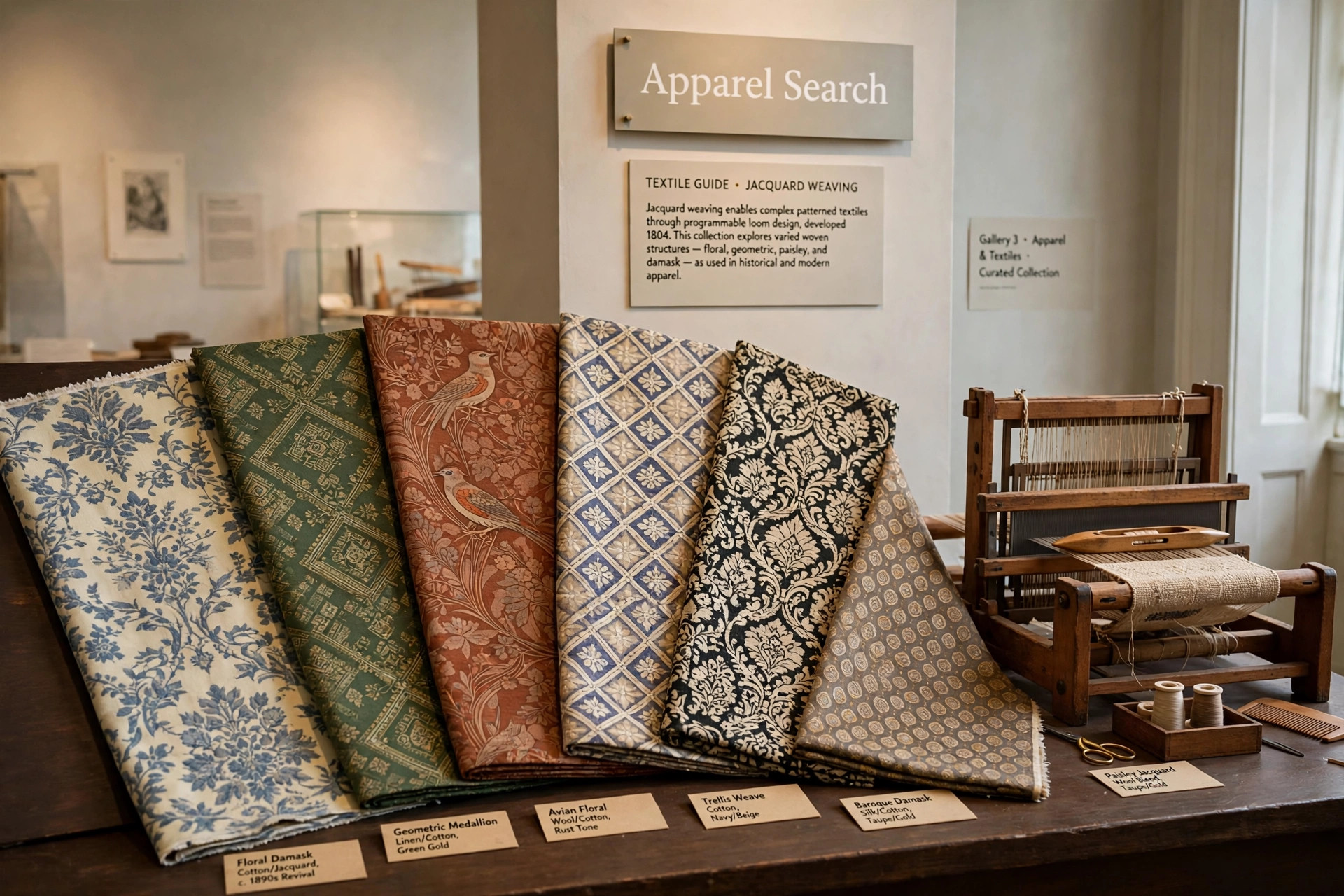
This textile guide was designed to help members of the textile and fashion industries, and anyone else with a project in mind, learn more about jacquard fabric and find the resources relevant to it. Jacquard fabric is made using a mechanical loom known as a jacquard loom. On that loom, the design is incorporated into the weave, so intricate patterns or figures are created all over the fabric as it forms, rather than being printed, embroidered or applied afterward. Almost everything distinctive about jacquard, its durability, its reversible patterning and its price, follows from that single construction fact.
Use this hub according to where you are in a project. If you are still learning, read the explainer page linked below and the loom definition before spending money. If you know the fabric you want, go straight to the channel that sells in your quantity: mills for woven-to-order production, wholesalers for trade quantities from stock, and stores for cut yardage. The sections below introduce each route in that order, so you do not waste a mill's time with a three-yard request or a store's time with a container-load question.
The Loom Behind the Fabric
The jacquard loom deserves a moment of its own, because it is one of the foundational machines of modern textiles. By controlling individual warp threads, guided originally by punched cards that encoded the pattern, it let a weaver produce complex figured cloth repeatedly and accurately. The Apparel Search Jacquard Loom definition explains the mechanism in glossary form, and it is the fastest way to understand terms you will meet in mill and wholesaler descriptions, such as repeat, harness and figured weave.
That history is not trivia for a buyer. Pattern repeats exist because a loom setup repeats. Setup costs exist because preparing a jacquard design takes skilled work before the first yard is woven. Existing mill designs can be recolored cheaply because the pattern instructions already exist. When you understand the loom, supplier conversations become concrete: you can ask about repeat size, colorway changes and setup in the supplier's own language, and you can hear whether the answers describe a real weaving operation or a trading desk guessing on your behalf.
The Three Buying Routes, Mills, Wholesalers and Stores
Jacquard fabric mills weave the cloth, on jacquard and often dobby looms, with dyeing and finishing that may be in house or sent out. Choose the mills route when you need a specific construction, fiber or pattern at production quantity, or an existing mill design recolored for your line. Jacquard fabric wholesalers and distributors hold stock woven by others and sell it in trade quantities, which suits workrooms, manufacturers and retailers who need proven patterns without commissioning a weaving. Their marketplace listings require the careful checking described on the wholesalers page.
Jacquard fabric stores sell by the yard to sewers, decorators and small makers, across apparel jacquards for blouses, dresses and special occasions and heavier jacquards for upholstery, draperies, duvets and slipcovers. The stores page in this section lists retailers with their own histories and specialties, from a large online cut-yardage seller to a regional decorator specialist. Most projects use one route, but a designer's workflow often uses all three in sequence: store yardage for a sample, wholesale stock for a first run, and a mill when the style earns a weaving of its own.
Getting the Most From the Rest of Apparel Search
Jacquard is one fabric family among hundreds covered here. The wider fabric resources on Apparel Search let you compare jacquard with neighboring patterned fabrics, check unfamiliar weaving terms in the definitions, and follow textile developments through the Textile News Articles section. If a supplier uses a term you do not know, look it up before signing anything; in fabric buying, vocabulary is a form of quality control.
Finally, this guide improves when its readers report what they find. If you know a jacquard mill, wholesaler or store that belongs in these directories, or a resource that helped your own research, suggestions for making this section more informative are welcome. Begin wherever your project stands: the explainer for understanding, the loom definition for mechanism, and the mills, wholesalers and stores pages for the fabric itself, each linked from this hub and from one another throughout the section.
Looking for Fabric Mills and Suppliers?
For every other fabric family, continue to the Apparel Search fabric directory or the main Fabric Search hub.