Jacquard Fabric Wholesalers
Wholesale jacquard sits between the mill and the maker: distributors and marketplaces move woven-pattern fabric in trade quantities. This page explains that middle layer and how to buy through it carefully.
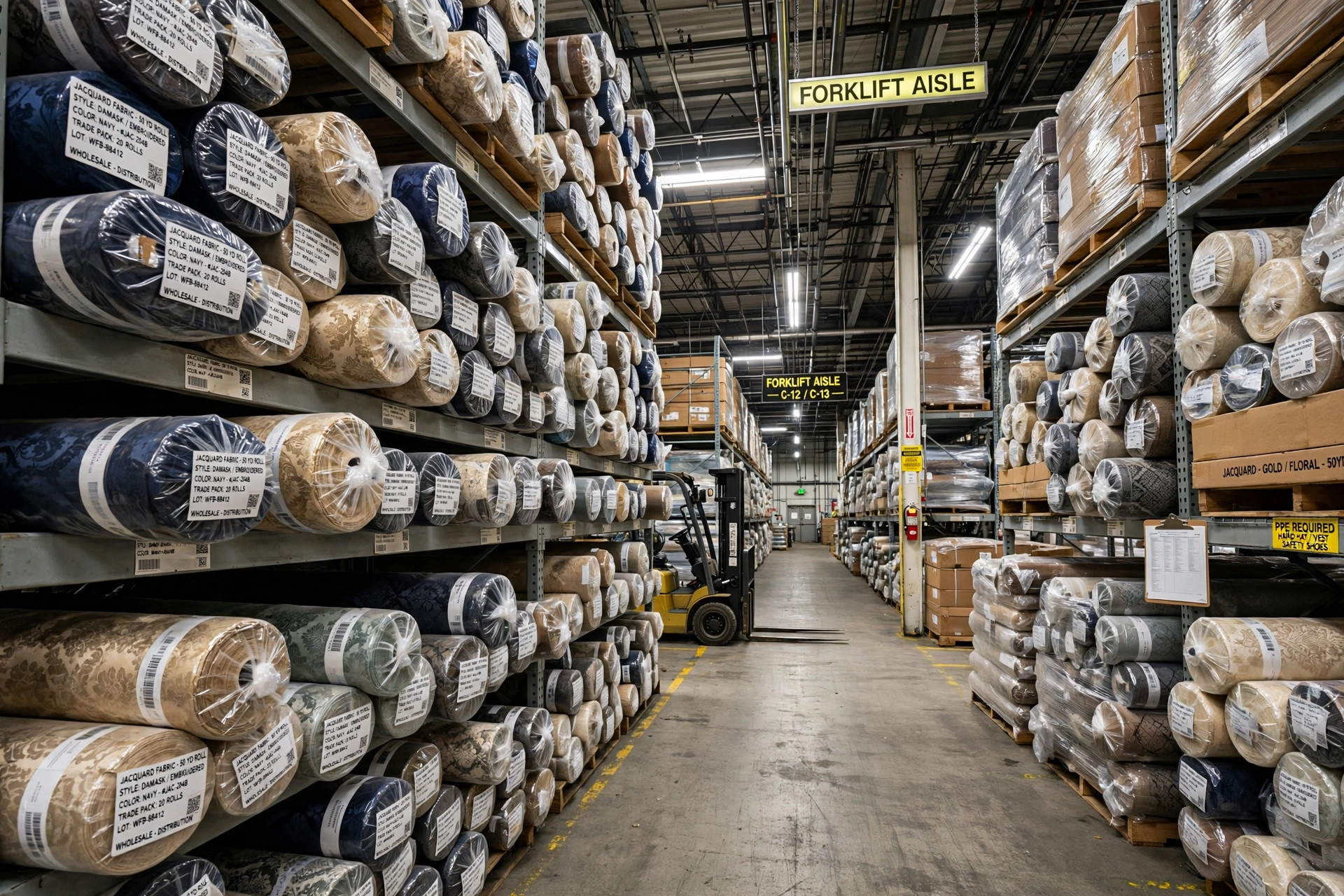
The Wholesaler's Place in the Jacquard Chain
A jacquard wholesaler or distributor does not usually weave the cloth. It buys jacquard from mills, in volume or as mill overruns and stock programs, holds it in a warehouse, and resells it in trade quantities to garment makers, furniture manufacturers, drapery workrooms and smaller retailers. That middle layer exists because most buyers cannot meet a mill's minimum for a new weaving, yet need far more than retail yardage. The wholesaler absorbs inventory risk and, in return, adds its margin to the mill price.
For wholesale jacquard, large online marketplaces are the main route, rather than individual named distributors — a sign of how much jacquard wholesale has moved onto platforms. Those marketplaces aggregate many manufacturers and suppliers, so a single search can surface woven jacquard offers from several countries at once. Treat a marketplace as a hall full of wholesalers, not as one supplier: the platform introduces you, but the company behind each listing is the party you must evaluate, sample and pay with care.
What to Verify in a Wholesale Jacquard Offer
Jacquard descriptions compress a great deal into a few words, so unpack them before pricing a garment or a furniture run. Confirm the fiber content and percentages, the finished width, the weight, and whether the pattern is truly woven jacquard or a print imitating one, a distinction that changes both cost and durability. Ask for the pattern repeat dimensions and a photograph of the back of the cloth; the back reveals the weave structure and the length of any floats, which affects snagging in upholstery use.
Then verify trade basics that marketplaces leave to you. What is the minimum order per color, is stock held or woven to order, how long does replenishment take, and will the supplier reserve a dye lot while you test? Request a cutting from the actual stock lot, not only a header sample woven earlier, and test it for shrinkage, crocking and, for upholstery, abrasion. A wholesaler who supplies lot-specific samples promptly is demonstrating the reliability you are actually buying.
Marketplaces, Countries and Comparing Offers
B2B marketplaces connect wholesale jacquard buyers with manufacturers and suppliers from all over the world, including China, the USA and Turkey, and broader wholesale platforms, while not textile-only, also carry a large apparel and fabric inventory. That geography is realistic: jacquard weaving is concentrated in several established textile regions, and the same nominal fabric, a polyester floral jacquard, say, can be woven to noticeably different densities and finishes in different places.
Compare offers on a landed, like-for-like basis. Convert every quotation to the same width, weight and currency, add freight, duty and inspection, and weigh lead time alongside price. A cheaper offer with a longer, less certain route can cost more once a production slot is missed. Keep a simple comparison sheet per fabric, supplier, lot, terms, test results and delivered sample, because wholesale jacquard buying usually involves several near-identical offers that blur together without written records.
When Wholesale Is, and Is Not, the Right Route
Wholesale suits a buyer with a defined product and a repeat in mind: a workroom re-covering chairs in the same damask, a brand building a season around one brocade, a retailer stocking proven jacquard qualities. It suits less well when you need a unique pattern woven only for you, which is mill work, or a few yards for one project, which is a store's work. Apparel Search's own wholesale fabric resources and its guide to wholesale fabrics place jacquard in that wider trade context.
Build continuity deliberately once you find a good source. Ask whether the wholesaler runs a stock program for your quality, how it notifies buyers when a pattern is being discontinued, and whether it will hold a reserve against your forecast. Jacquard patterns churn as mills refresh their books, and the wholesaler relationship, advance warning, honest stock counts and first refusal on remaining yardage, is often worth more than a small saving chased across marketplaces on every single order.
Common Questions
How is a jacquard wholesaler different from a jacquard mill?
A mill weaves the cloth, usually to order and at higher minimums. A wholesaler or distributor buys from mills, holds stock in a warehouse and resells trade quantities, so buyers can source jacquard without commissioning a weaving.
How do I check that wholesale jacquard is really woven, not printed?
Ask for a photograph or cutting showing the back of the cloth. A woven jacquard shows its pattern in the weave structure on the back, with floats where the design threads travel; a print sits only on the face.
What should I confirm before a wholesale jacquard order?
Confirm the fiber content, finished width, weight and pattern repeat; the minimum order per color; whether stock is held or woven to order; whether a dye lot can be reserved; and lot-specific test results for shrinkage and crocking.
More to Explore
References & Further Reading
Looking for Fabric Mills and Suppliers?
Place wholesale sourcing in context with the Apparel Search fabric directory and the Fabric Search hub.