Jacquard Fabric Mills
A jacquard mill does not print pattern onto cloth, it builds pattern into the weave, warp thread by warp thread. This page covers what such mills offer and profiles the mills listed below.
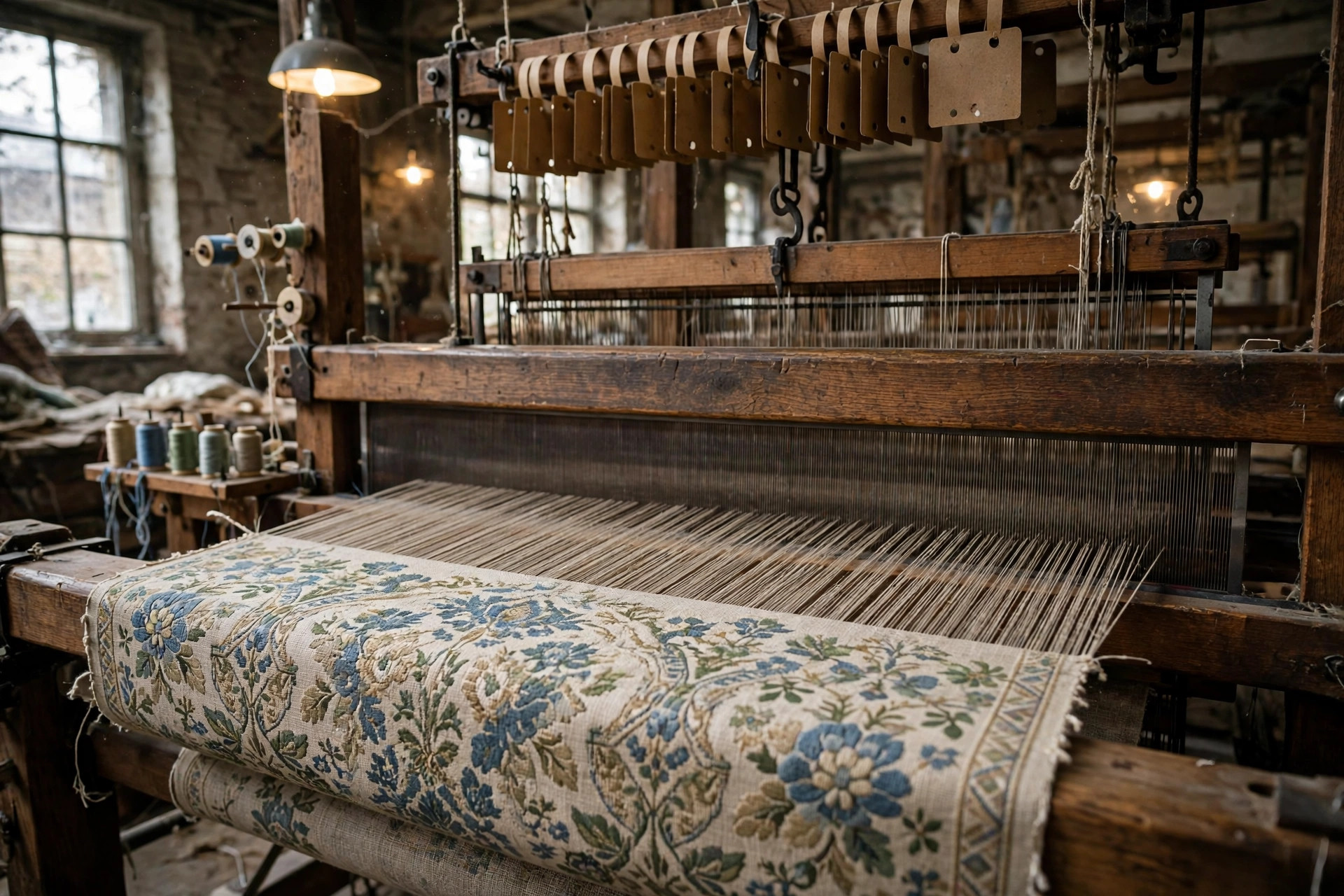
What Makes a Mill a Jacquard Mill
A jacquard fabric mill owns and runs jacquard looms, weaving machines that can control individual warp threads so intricate patterns and figures are created all over the fabric as it is woven. That capability separates a jacquard mill from a plain-weave mill: the design work happens in the loom setup, historically through punched cards and now usually through electronic control, and the mill's skill lies in translating artwork into weave structure without losing the design to distortion, float problems or weak cloth.
Learn the background before judging mills, using the Apparel Search jacquard loom definition and its general guide to looms. Then ask a prospective mill concrete questions. Which fibers does it weave most, silk, cotton, polyester, nylon or blends? What pattern repeat sizes can its looms handle? Does it weave related constructions, such as the narrow patterned goods in the Jacquard Tapes directory, or only wide apparel and furnishing widths?
Dyeing, Finishing and Packing Under One Roof
Weaving is only half of what a buyer receives. Prince Textile Mills stands out for its integration: manufacturing facilities with state-of-the-art machinery for weaving, dyeing and finishing, a unit equipped for in-house production on power looms, jacquards and dobby looms, and in-house dyeing, finishing and packing sections intended to ensure timely delivery of shipments. Each in-house step removes a subcontractor, a transport leg and a possible argument about where a fault occurred, which is why integrated mills emphasize it.
A dobby loom alongside the jacquards also matters. Dobby weaving handles smaller geometric patterns efficiently, so a mill with both can offer a range from fine dobby shirtings to elaborate jacquard designs without forcing every pattern onto the most expensive machine. When you evaluate any mill, map which of your fabrics need true jacquard control and which are dobby or plain work, then check whether the mill's loom mix matches that balance instead of assuming more machinery automatically means a better fit.
Two Mills in Detail
Prince Textile Mills runs the integrated operation described above: weaving, dyeing and finishing machinery, power looms, jacquards and dobby looms in house, and its own dyeing, finishing and packing sections. Rasik Vatika Silk Mills Pvt. Ltd, of India, was established in 1969 at Surat, Gujarat, is headed by highly qualified management with a dedicated team, and supplies quality fabric products including nylon fabric, nylon mesh fabric and nylon chiffon fabric to meet emerging market demands, supported by a developed production setup and wide market presence.
Treat these profiles as starting points, not as endorsements. Surat is a major Indian textile center, so a silk mill there sits inside a deep local supply chain for yarn, dyeing and trading, context that helps explain the range it lists. For either mill, your next step is the same: request current samples in your fiber and construction, confirm which fabrics are woven in house today, and test a small order before discussing volume.
Choosing Among Jacquard Mills
Start from the wider fabric mills directory and the dedicated Apparel Search jacquard mill listings, then narrow by end use. Upholstery jacquard demands abrasion resistance and stable, dense construction; apparel jacquard for dresses and jackets demands drape and a softer hand; silk jacquard demands careful tension control so the pattern stays crisp. A mill excellent in one of those families is not automatically excellent in the others, and its sample book will usually reveal its true specialty quickly.
Finally, discuss pattern ownership and setup honestly. Developing a jacquard design takes loom preparation time, and minimums reflect that work. Ask what setup involves, whether an existing design from the mill's library can be recolored in your yarns instead, which is often the fastest route to a distinctive fabric, and how repeats and colorways are approved before bulk weaving. Clear answers at this stage predict a smooth production relationship far better than a low first quotation.
Jacquard Mills Directory Listings
Both mills are listed below, each with a short description of what it does.
Prince Textile Mills
Has state-of-the-art machinery for weaving, dyeing and finishing, with in-house production on power looms, jacquards and dobby looms, plus in-house dyeing, finishing and packing sections to ensure timely delivery.
Rasik Vatika Silk Mills Pvt. Ltd
Established in 1969 at Surat, Gujarat, India, supplying quality fabric products including nylon fabric, nylon mesh fabric and nylon chiffon fabric, supported by a developed production setup and wide market presence.
Photos

Common Questions
What should I ask a jacquard mill before ordering?
Ask which fibers and repeat sizes it weaves most, whether dyeing and finishing are in house, what minimums and setup a new pattern requires, and whether an existing library design can be recolored in your yarns.
What is the difference between jacquard and dobby weaving at a mill?
Jacquard looms control individual warp threads for intricate, large patterns and figures. Dobby looms handle smaller geometric patterns efficiently. Mills with both, like Prince Textile Mills, can match each pattern to the suitable machine.
Where are the mills in this directory based?
Rasik Vatika Silk Mills was established in 1969 at Surat, Gujarat, in India. Prince Textile Mills is known mainly for its integrated weaving, dyeing and finishing facilities.
More to Explore
References & Further Reading
Looking for Fabric Mills and Suppliers?
Explore other weaving mills in the Apparel Search fabric directory or return to the Fabric Search hub.