Jacquard Fabric
Jacquard is not a fiber or a pattern, it is a way of weaving: the design is built into the cloth itself on a jacquard loom. Understanding that one fact explains jacquard's look, cost and staying power.
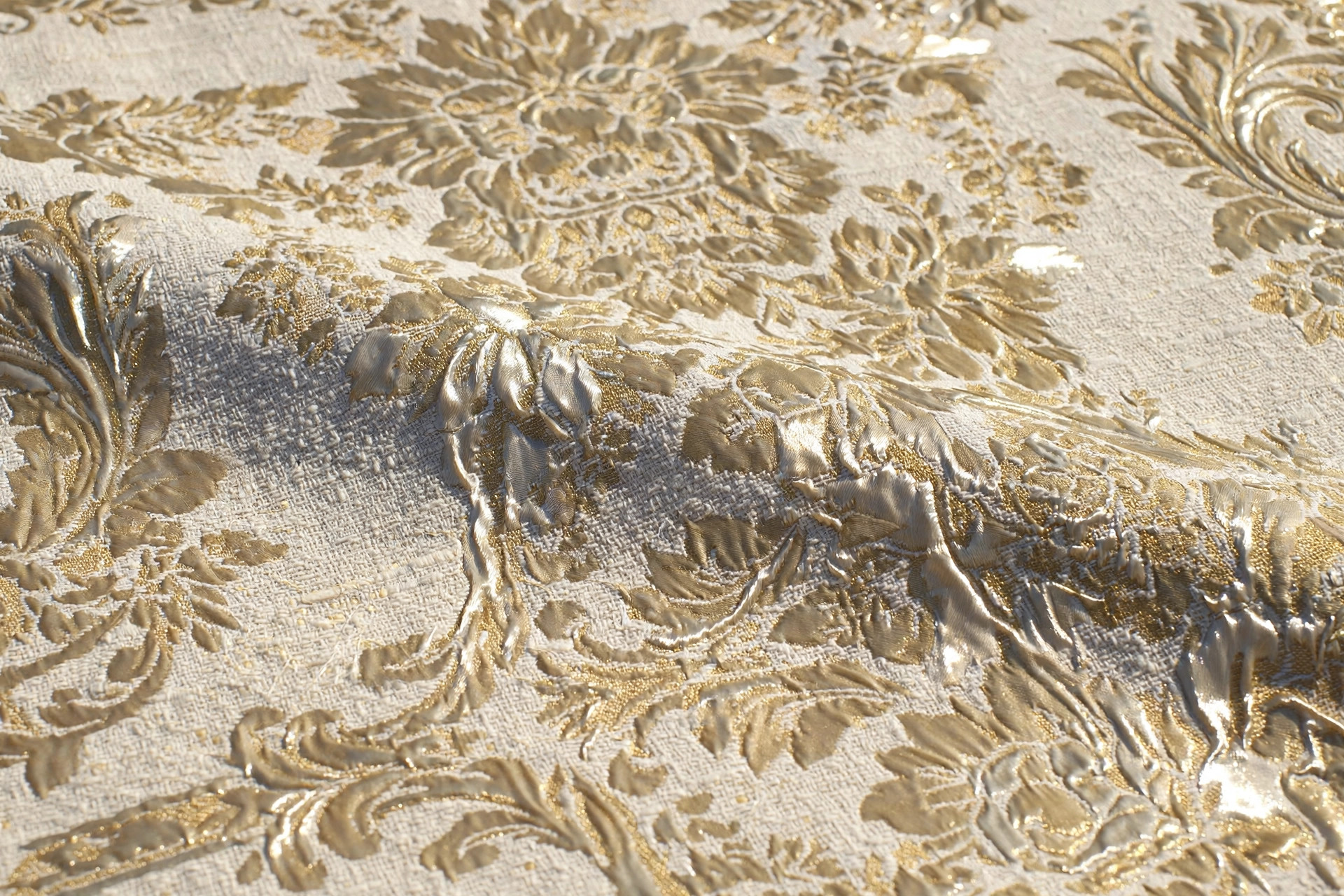
A Pattern That Is Part of the Cloth
Jacquard fabric takes its name from the jacquard loom and from Joseph Jacquard, the inventor associated with it. The loom's breakthrough was control: instead of lifting warp threads only in fixed groups, it could direct individual threads, originally through punched cards recording the pattern. That made complex, pictorial weaving practical and repeatable, and it turned pattern from a surface decoration applied after weaving into a structure created during weaving.
Hold a jacquard up to the light and the difference is physical. The design you see on the face is formed by the interlacing of warp and weft itself, often visible in reverse on the back, rather than sitting on top as ink or pigment. Florals, geometrics and damask motifs can be raised, matte against glossy, or woven in contrasting yarn colors. Because nothing is printed on, there is no print layer to crack, peel or fade independently of the cloth around it.
Damask, Brocade, Matelasse and Their Relatives
Several familiar fabrics are jacquard weaves rather than separate inventions. Damask uses contrasting luster within usually one color, so its reversible pattern appears and disappears as light moves across it, a quality that made it classic for table linen and formal furnishing. Brocade adds supplementary threads, often metallic or differently colored, to raise a rich pattern above a ground weave, and has long been associated with ceremonial and evening dress. Matelasse creates a quilted, puckered effect in a single woven cloth, with no batting inside, giving bedding and jackets texture without bulk.
These relatives share practical jacquard traits. Pattern scale is governed by the loom's repeat, floats on the back can snag if the design is loose, and cutting must respect the motif just as it would a large print. When a retailer describes a fabric simply as jacquard, ask which family it resembles, what fibers it uses, and whether the pattern is woven in one color or several, because those answers predict its hand, care and price far better than the single word jacquard does.
How Fiber and Weave Together Decide Character
Jacquard weaves vary in drape and durability depending on which fibers are used. A silk jacquard can be fluid and luminous for a blouse or evening jacket. A cotton jacquard is crisper and washable for bedding and shirts. A polyester jacquard can be dense, colorfast and hard-wearing for upholstery, draperies and slipcovers. The weave supplies the pattern and texture; the fiber supplies weight, resilience, luster and care requirements, and the two must be specified together.
That combination also explains jacquard's price range. Simple one-color jacquards in common fibers are everyday fabrics, while multi-color brocades in silk sit at the luxury end, because more yarns, slower weaving and greater setup are built into every yard. When comparing two jacquards at very different prices, compare fiber content, pattern complexity, repeat size and weight before assuming one seller is simply cheaper. Usually the cloth itself is different in ways your finished garment or room will reveal.
Using Jacquard Well, in Clothing and Rooms
In apparel, jacquard rewards simple garment shapes. A structured jacket, a straight skirt or a formal dress lets the woven pattern carry the design interest, while complicated seaming fights the motif and wastes expensive cloth in mismatched pieces. Let the scale of the pattern suit the garment: large repeats need large, calm panels to show themselves, and small geometrics behave almost like a textured solid from a few feet away. When you move from learning about jacquard to sourcing it in quantity, explore wholesale fabrics.
In interiors, jacquard's woven pattern earns its keep on surfaces that are touched and seen daily: upholstery, draperies, duvets and slipcovers. A woven design cannot rub off like a print, and tone-on-tone damasks hide the minor shading of use gracefully. Whichever setting you choose, order enough from one dye lot, plan cutting around the repeat, and keep a labeled remnant. Jacquard patterns are re-woven in new lots and colors constantly, and the exact cloth you loved is rarely identical when you return for more.
More to Explore
References & Further Reading
Looking for Fabric Mills and Suppliers?
To source this cloth, work through the Apparel Search fabric directory and the Fabric Search hub for mills, wholesalers and stores.