Jersey Fabric Wholesalers
Wholesalers sit between the jersey mill and the garment factory, holding finished knit fabric ready to ship. Here is what a good jersey distributor stocks, how ordering works, and what to check before a production cut.
The Wholesaler Between Mill and Maker
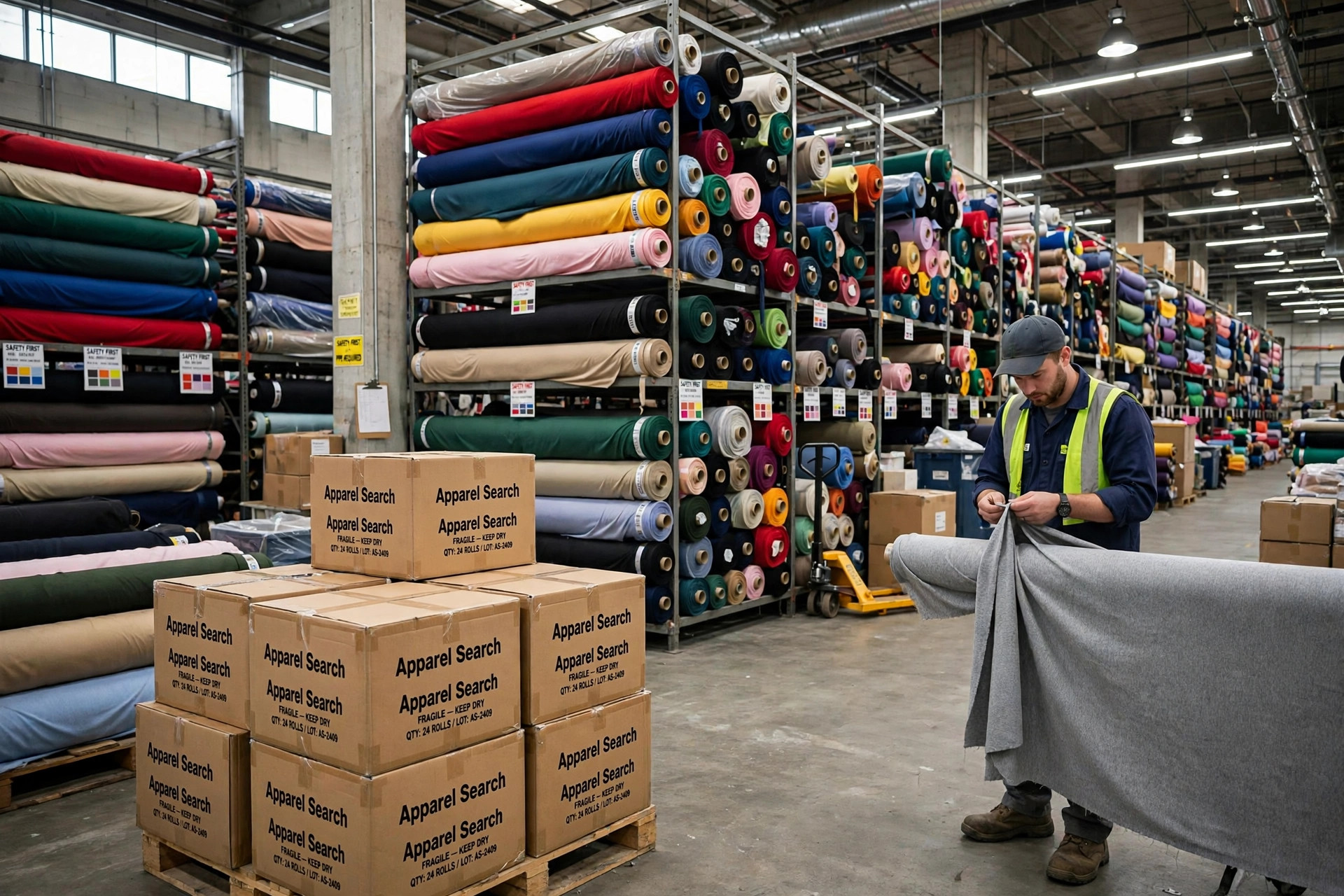
A jersey wholesaler, also called a distributor or converter in some markets, buys or commissions finished fabric and holds it in a warehouse so garment makers can order quickly and in smaller quantities than a mill would accept. That stock position is the whole value of the business: a brand developing a T-shirt line can swatch on Monday, order a few rolls of an approved cotton jersey by Friday, and cut the following week, instead of waiting for yarn to be knitted, dyed and finished to order over a full production cycle.
The trade-off is specification control. Buying from stock means accepting the weights, widths, fibers and colors the wholesaler already carries, and reorders depend on the wholesaler keeping that item running. For core colors such as black, white, navy and heather grey, established distributors usually maintain deep continuity. For a fashion shade, buy enough for the whole order plus a sensible overage at the start, because a second delivery may come from a different dye lot. For the wider category, see the Apparel Search wholesale fabric section.
What a Stock Jersey Range Looks Like
Sand Textile's inventory is a good portrait of a full knit stock range: cotton spandex, cotton jersey, baby rib, cotton rib in 1x1 and 2x1 constructions, cotton interlock, baby jersey, French terry with and without Lycra, loop terry, rayon jersey, poly-rayon jersey in plain and Lycra versions, sheer jersey, micro mesh and football mesh. Read that list as a garment program: body fabrics in the middle, rib for neckbands and cuffs, interlock for smoother double-faced garments, terry for sweatshirts, and mesh for athletic linings and team uniforms.
Other listings show different distribution models. Bartson Fabrics, in Midland Park, New Jersey, imported fine textiles from around the world for distribution across the United States and Canada, the classic importer-distributor pattern. Skytex Enterprises paired fabric supply with help building a project from the ground up, connecting customers to sewers and pattern makers through its network. Trim Fabric imported European designer fabrics, mixing jersey knits with crepes, satins and prints for design-led clients. Knowing which model a wholesaler follows tells you whether to expect commodity depth, development help, or fashion novelty.
Minimums, Rolls and Shade Lots
Wholesale jersey is normally sold by the roll or by a minimum number of yards per color, with price breaks as quantity rises. Ask exactly what a roll contains, because roll lengths vary, and whether the price is by the yard, meter, pound or kilogram, since knit fabric is traded by weight in some markets. Confirm the usable width after the edges are trimmed, not just the nominal width, and whether the fabric ships tubular or open. These details decide your marker efficiency, so they belong in the purchase order, not in a hopeful assumption.
Shade control deserves its own conversation. Request a cutting from the actual roll or dye lot you will receive, approve it against your standard under consistent lighting, and keep a labeled piece in your file. When an order spans several rolls, ask whether they share one dye lot and check each roll on arrival, because a shade shift discovered after cutting becomes a garment problem that no sewing quality can fix. Reputable distributors expect these questions and answer them with lot numbers and inspection information rather than reassurance alone.
Quality Checks Before the Production Cut
Inspect jersey as it comes off the roll under good light. Look for needle lines running lengthwise, holes, oil spots, dye streaks and barre, the subtle horizontal banding that can appear in knitted fabric. Measure width in several places, weigh a cut square to verify the fabric weight matches the order, and stretch a sample to confirm recovery matches the approved swatch. Wash and dry a measured piece to check shrinkage in both directions, because a garment cut to size from fabric that later shrinks will fail your customer no matter how well it was sewn.
Build the relationship deliberately once a wholesaler performs well. Share your season calendar, forecast core colors, and consolidate orders where you can, because distributors prioritize customers whose demand they can plan around. Keep your own library of approved swatches with the supplier name, item number, weight and date, so a reorder placed by phone or email reproduces the fabric you approved rather than a near neighbor from the same shelf. In jersey, where small differences in yarn and finish change fit and feel, that paper trail is production insurance.
Jersey Fabric Wholesalers in This Directory
Four wholesalers are listed below, each with a short description of what it stocks and how it sells.
Bartson Fabrics
Importer and distributor in Midland Park, New Jersey, importing fine textiles from around the world for distribution throughout the United States and Canada.
Sand Textile Inc.
In business since 1996 under the same name and management, stocking a wide wholesale knit range including cotton jersey, baby rib, interlock, French terry, rayon jersey and meshes.
Skytex Enterprises
Fabric supplier emphasizing quality fabric at affordable prices and long-term customer relationships, with help connecting customers to sewers, pattern makers and photographers.
Trim Fabric
Importer of European designer fabrics, offering jersey knit alongside crepes, satins, bold prints and cottons for designers and craft customers.
Common Questions
What minimum order should I expect from a jersey wholesaler?
It varies by company, from a single roll or a set number of yards per color upward. The advantage over a mill is that minimums are lower and the fabric is already finished and stocked, so confirm the per-color minimum before sampling widely.
Why does dye lot matter so much for jersey?
Garment panels cut from different dye lots can show a visible shade difference once sewn together, especially in large plain areas like a T-shirt body. Buying the full quantity from one lot, and approving a cutting from it, prevents the problem.
What should I check when a wholesale jersey delivery arrives?
Check shade against your approved cutting roll by roll, verify width and weight, look for needle lines, holes and dye faults, and wash-test a measured piece for shrinkage before the fabric goes to the cutting table.
More to Explore
Looking for Fabric Mills and Suppliers?
Compare distributors across all fabric types in the Apparel Search fabric directory, or return to the Fabric Search hub for mills, stores and fabric guides.