Jersey Fabric
Jersey is the soft, stretchy single-knit fabric most people meet first as a T-shirt. This guide explains how that one cloth is made, how its weights and fibers change the feel, and where jersey works best.
Shop Jersey Fabric Now
Shop Jersey Fabric on Amazon Shop Jersey Fabric on eBayThese links open the Apparel Search shopping guides for Amazon and eBay, where the product links are kept in one place.
What Jersey Fabric Is
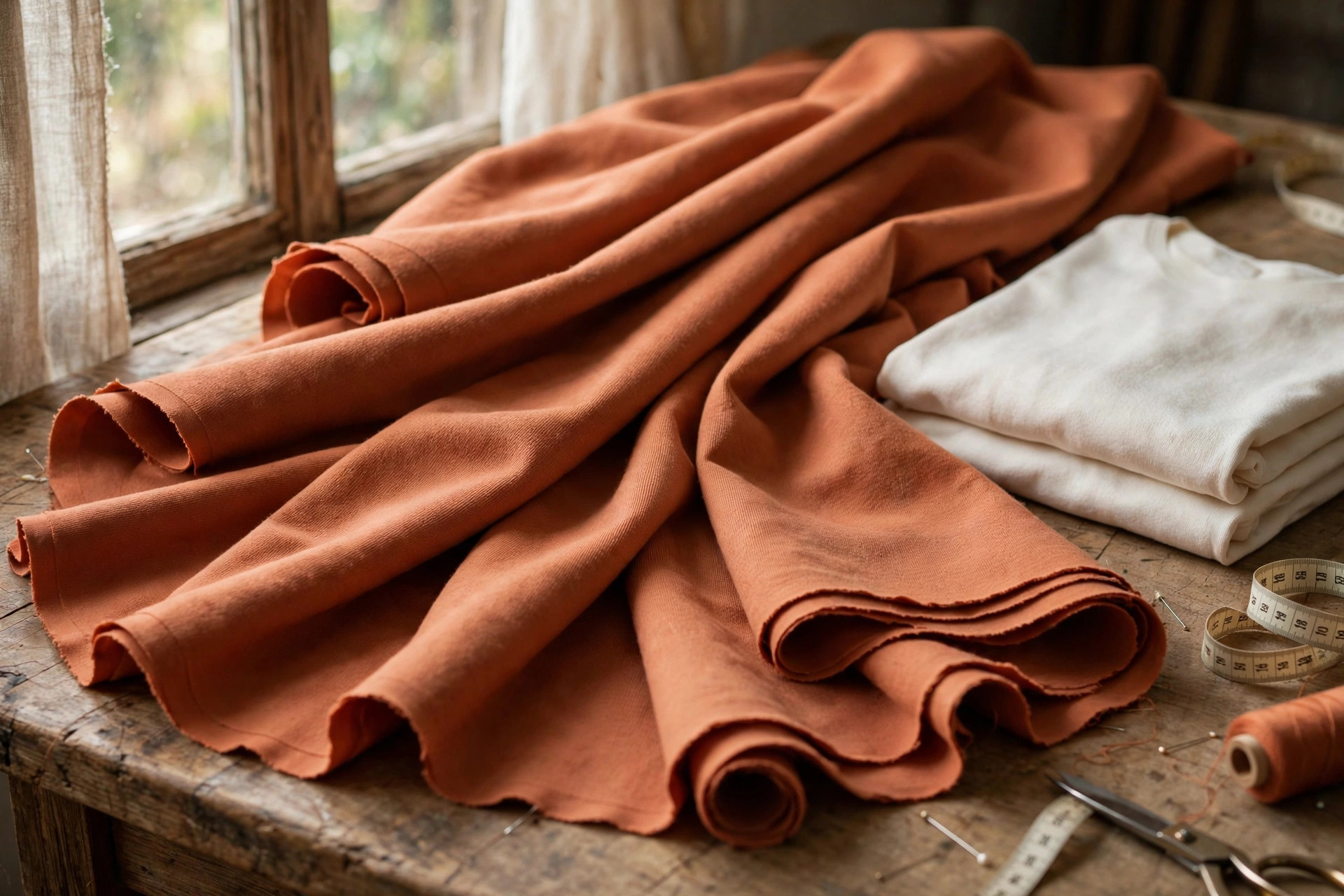
Jersey is a weft-knitted fabric made with a single set of needles, so it is often called single jersey. The face of the cloth shows fine vertical rows of plain stitches, while the back shows purl stitches, which is an easy way to tell the right side from the wrong side on an unprinted piece. Because only one yarn system builds the loops, jersey is light, flexible and naturally stretchy across its width, even when it contains no elastic fiber at all. If you want the underlying process first, the knitting definition on Apparel Search explains how looped yarn becomes cloth.
The name comes from the island of Jersey, where knitted wool cloth was long used for fishermen sweaters and hard-wearing work garments. Modern jersey is a very different, much broader family: the same basic stitch now appears in featherweight dress linings, everyday cotton tees, brushed winter tops and sleek athletic shirts. What unites them is the single-knit construction and its familiar hand: smooth on the face, soft against the skin, fluid in drape, and prone to curling toward the face at cut edges, a signature quirk that pattern layout and hemming have to allow for.
Weights, Fibers and Stretch
Jersey is sold by weight as much as by name, and weight decides the job. Lightweight jersey drapes and can turn slightly sheer in pale colors, suiting flowing dresses, scarves and layered tops. Midweight jersey is the T-shirt standard, opaque enough for single-layer tees, polo-style tops and casual dresses. Heavier jersey holds more shape and warmth, working for structured dresses, light jackets and cooler-weather tops. Always judge a swatch held up to the light and stretched over your hand, because two fabrics both labeled jersey can behave very differently.
Fiber content steers the personality further. Cotton jersey breathes, feels dry and matte, and is the classic choice for tees and underwear. Rayon and modal jerseys drape more and feel cooler and silkier, but can grow in length if hung wet. Polyester jersey manages moisture and holds color and shape for sportswear. A small percentage of spandex, often listed as Lycra or elastane, adds recovery so knees, elbows and waistbands snap back instead of bagging. Wool jersey, once the original form, still appears in quality tops and dresses where natural warmth matters.
What Jersey Is Used For
The T-shirt made jersey famous, and tees remain its biggest use, from basic crew necks to fashion tops. The same comfort carries into dresses and skirts that skim rather than cling, polo shirts, pajamas and loungewear, underwear, baby clothes where softness against skin is essential, and linings that need to move with a garment. In activewear, jersey in polyester or nylon blends forms training shirts, team tops and warm-up pieces, because the knit stretches with the body and the smooth face takes printing and team graphics cleanly.
Jersey also works quietly outside apparel. Its stretch makes it useful for fitted sheets, pillow covers and soft furnishings that must pull over a shape, and crafters use stable jersey offcuts for applique, soft toys and quilt backings. The deciding question is always stability: a slinky rayon jersey that makes a beautiful evening dress will frustrate a beginner making a first tee, while a firm cotton-Spandex jersey forgives handling and holds a neckline. Match the specific jersey, not just the name, to the pattern before you buy.
Buying and Sewing Jersey
When buying, check four things: weight, fiber, stretch percentage and recovery. Stretch the fabric across the width and let go; good jersey returns close to its original width. Note whether the stretch runs only crosswise, which is typical, or both ways in a four-way stretch. Pre-wash cotton jersey before cutting, because knits can shrink noticeably on the first wash, and let the fabric rest flat after washing so the loop rows relax back to their natural length and width before your pattern pieces go on.
Sewing jersey rewards a few adjustments. Use a ballpoint or stretch needle so the point parts the loops instead of piercing yarn, choose a narrow zigzag or a stretch stitch so seams can move with the cloth, and support shoulder seams with clear elastic or tape so they do not grow. Cut with a rotary cutter where possible, since scissors lifting a curling edge can distort the piece. Finish hems with a twin needle or coverstitch for that familiar T-shirt look, and test your settings on an offcut from the same roll first.
Common Questions
Is jersey the same as T-shirt fabric?
Most T-shirts are made from jersey, usually cotton or a cotton blend in a midweight single jersey, but jersey is the broader fabric name and also covers dresses, underwear, activewear and linings in many fibers and weights.
What is the difference between single jersey and double jersey?
Single jersey is knitted on one set of needles, so its two sides look different and its edges curl. Double jersey, such as interlock, uses two sets of needles, looks similar on both sides, lies flatter and feels more stable.
Does jersey fabric shrink?
Cotton jersey can shrink on its first wash, and rayon jersey can relax and grow in length if handled carelessly. Pre-washing your fabric the way the finished garment will be washed is the simplest protection.
More to Explore
- About Us
- Contact Us
- Double Jersey Knitting Machinery
- Fabric Search
- finding good fabric suppliers
- Jersey Fabric
- Jersey Fabric Mills
- Jersey Fabric Stores
- Jersey Fabric Wholesalers
- knitting definition
- Knitting Machinery Manufacturers
- Knitting Machinery Wholesalers
- Single Jersey Knitting Machinery
- USA Fabric Mills
References & Further Reading
Looking for Fabric Mills and Suppliers?
For the wider world of knitted and woven cloth, start at the Apparel Search fabric section or return to the Fabric Search hub to browse every fabric family in this guide.