Jersey Fabric Guide
This hub gathers everything Apparel Search offers on jersey in one place: what the single-knit cloth is, who knits it, who stocks it wholesale, and where to buy it by the yard for your own sewing.
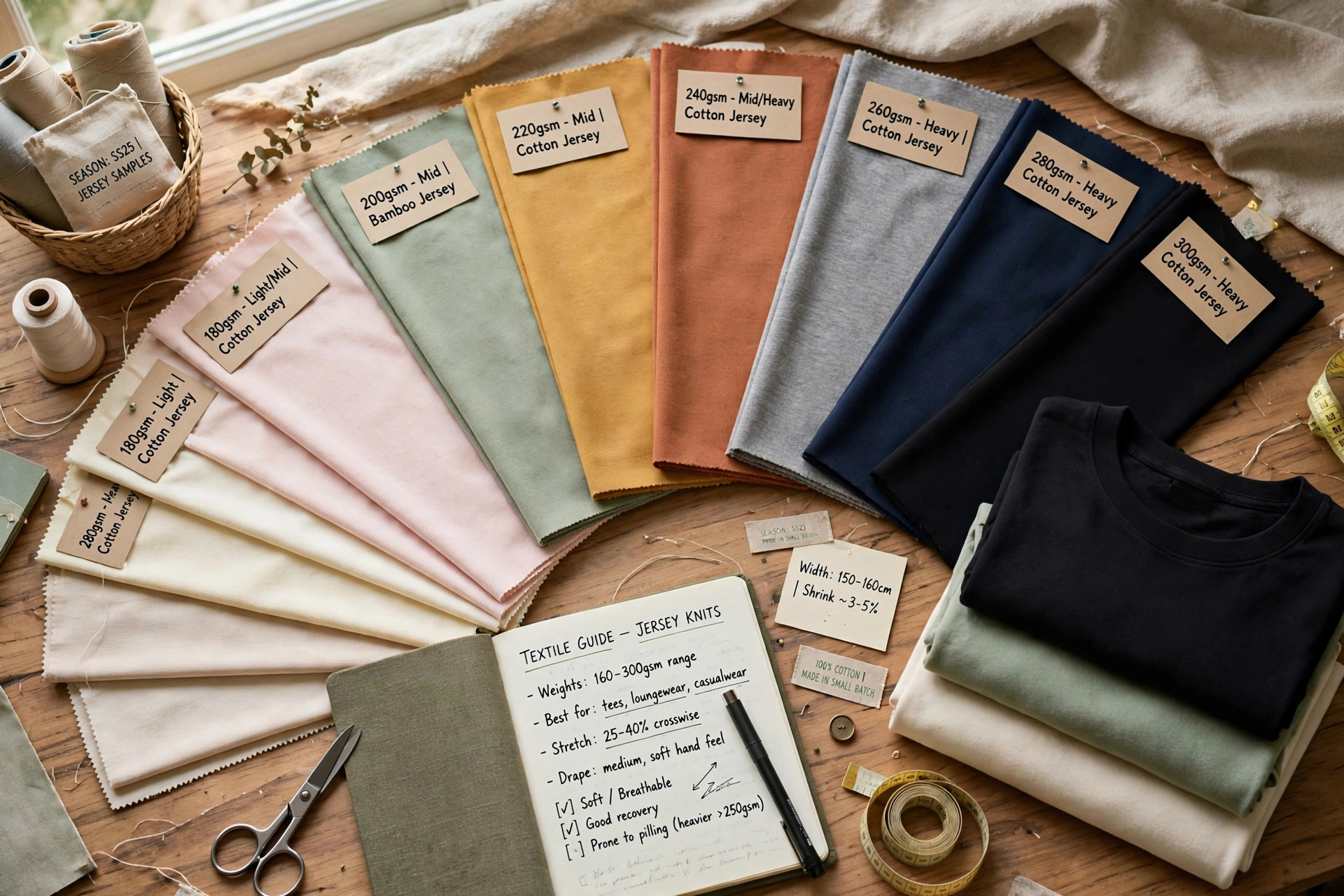
Start With the Cloth Itself
Before chasing suppliers, spend a few minutes on the fabric. Jersey is a single weft knit, smooth with plain stitches on its face and purl stitches on its back, naturally stretchy across the width and inclined to curl at the edges. Our main explainer covers how weight turns the same stitch into a sheer dress fabric, a standard T-shirt cloth or a firm ponte-like top weight, and how cotton, rayon, polyester, wool and spandex each redirect the cloth toward a different job. Knowing which jersey you mean is the difference between a supplier search that takes an afternoon and one that wanders for weeks.
That grounding matters because jersey is a family name used loosely in trade. A listing that says jersey may mean a featherweight rayon knit, a beefy cotton sweatshirt body without the fleece back, or a nylon athletic mesh-adjacent knit. When you can describe your target by fiber, weight, width, stretch and finish, every conversation in this section gets shorter and more accurate. Mills quote faster, wholesalers pull the right rolls, and stores stop showing you bolts that were never going to suit the pattern in your bag.
Then Choose Your Supply Route
This guide splits jersey sourcing into the three routes the industry actually uses. Mills knit the fabric from yarn and suit buyers who can meet production minimums, wait through dyeing and finishing, and benefit from fabric made to an exact specification. Wholesalers and distributors hold finished jersey in stock and suit brands and makers who need speed, smaller quantities and proven continuity colors. Retail stores cut yardage for individual sewers and small studios, and double as the best place to learn the fabric by hand before committing to a larger buy through either trade route.
Most real businesses use more than one route over time. A young brand might buy stock jersey from a wholesaler for its first T-shirt run, move core colors to a mill once volumes justify production minimums, and still visit retail stores to scout new qualities and test ideas in a single garment. The pages in this hub are organized so you can enter at the route that matches your current order, then step sideways when your volumes, timelines or specifications change. Each route page keeps the original directory listings Apparel Search carried for that route.
Machines, Mills and Background Reading
Jersey begins on knitting machinery, and a little machinery literacy sharpens your sourcing. Single jersey machines knit with one set of needles, while double jersey machines knit the two-faced constructions such as interlock. Apparel Search maintains background directories covering knitting machinery manufacturers, single and double jersey knitting machinery, and fabric mills in the United States, all linked from the jersey explainer page in this section. Reading them alongside the mill listings shows why two mills can both offer jersey yet produce cloth with a different fineness, width and hand.
Supplier quality is the other background worth absorbing early. The good-supplier guidance elsewhere on Apparel Search makes a point this hub endorses: directories present claims, and your job is to verify them with swatches, wash tests and small trial orders before a serious commitment. That applies equally to a mill describing its machines, a wholesaler describing its stock range and a store describing its bolts. The listings gathered here are starting points for research, preserved from the original directory pages, and the strongest sourcing decisions combine them with samples you have tested yourself.
How to Use This Hub
If you are learning, read the jersey explainer first, then browse the store listings to see how the fabric is described to sewers. If you are sourcing production, go straight to the mills page for made-to-order knitting or the wholesalers page for stocked fabric, and use the explainer vocabulary to write your enquiry: fiber, weight in grams per square meter, width, quantity per color, and the finish and shrinkage standard you need. Suppliers answer precise enquiries first, because precision signals a buyer who will approve samples and pay on schedule.
If you are somewhere between, perhaps a designer preparing a first range, work through all four pages in order and build a small comparison file as you go: one mill that could knit your core fabric, one wholesaler who stocks something close, and one store where you can buy a test length this week. That simple three-option file covers the common emergencies of garment development, from a missed delivery to a sudden reorder, and it is exactly the kind of preparation this Fabric Search section was built to support.
Looking for Fabric Mills and Suppliers?
Step back to the full Apparel Search fabric section for every fabric family, or open the Fabric Search hub to choose another cloth and repeat the same mills, wholesalers and stores route.