Jersey Fabric Mills
Jersey mills turn yarn into the single-knit cloth behind the T-shirt industry. Here is how to read what a mill actually offers, judge whether it fits your program, and approach production with the right questions.
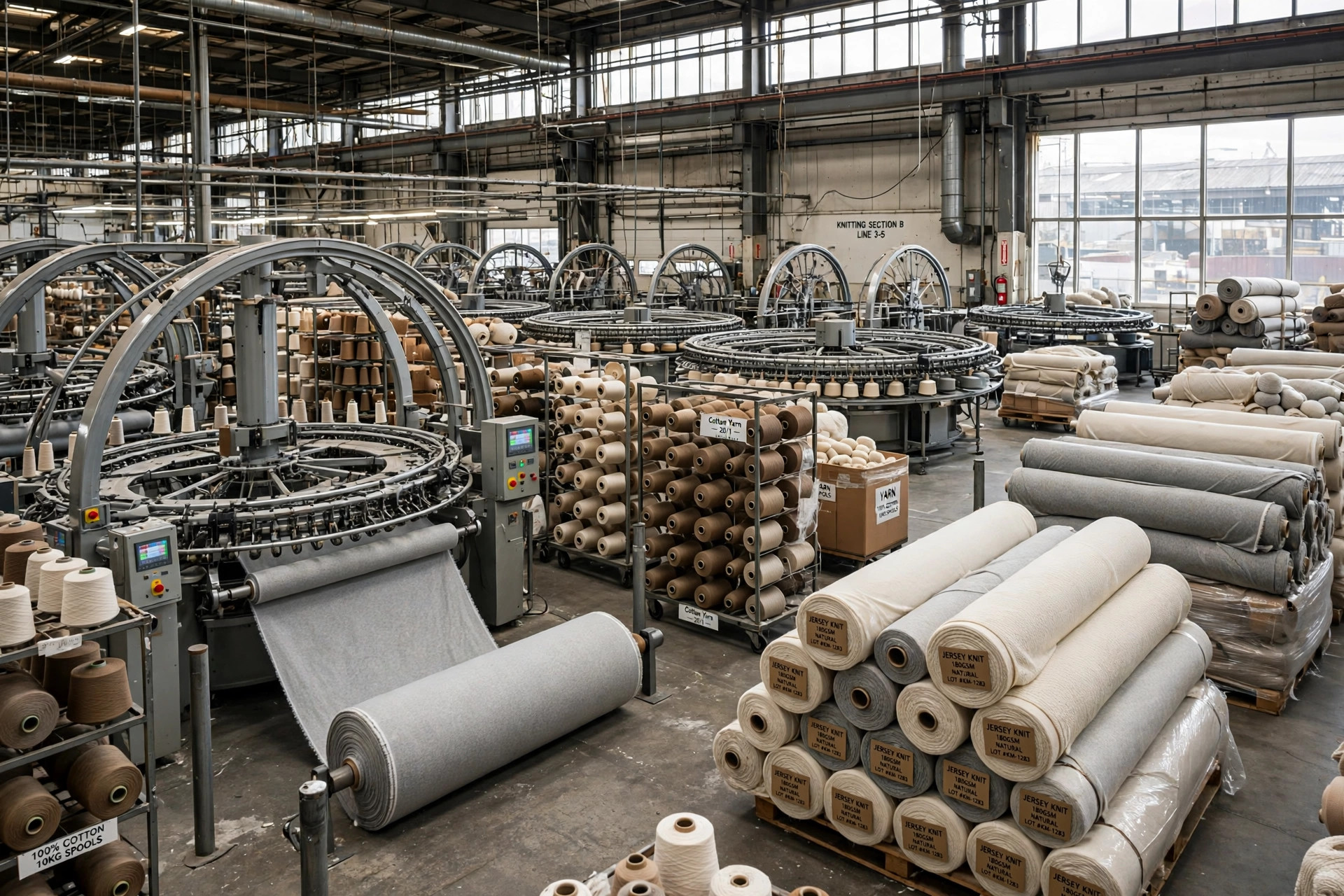
What a Jersey Mill Actually Does
A jersey mill knits greige fabric on circular knitting machines, then usually dyes, finishes and inspects it before shipping rolls to garment factories. The machine details a mill lists are not decoration: diameter decides the width of fabric the machine produces, gauge decides how fine the stitch is, and the resulting weight, usually quoted in grams per square meter, decides whether the jersey suits a sheer top or a substantial tee. A mill that states its diameters, gauges and weight range clearly is telling you exactly which programs it can run well.
The original version of this page pointed readers to the jersey section of the Apparel Search fabric mills directory, and that remains the right starting habit: begin with mills that already list jersey among their products. A mill whose range names your fabric has the machines set up for it, the yarn supply for it, and operators who run it daily. A mill that agrees to knit anything, but lists nothing specific, is asking you to fund its learning curve with your delivery schedule.
Reading a Mill Range: Single Jersey and Its Relatives
The listings preserved below show how varied a jersey range can be. Cobtex, in the original directory text, offered cotton fabrics such as single jersey, baby jersey, baby rib, interlock and French terry, in all diameters, gauges and weights, supplied grey, bleached, dyed or printed. That one sentence describes a full-service knitting program: the same mill can supply the body fabric for a tee, the rib for its neckline, and a fleece-backed terry for a sweatshirt, which simplifies color matching across a garment.
Other listings show different strengths. De Knitting Mills in Australia built its name on low-pill single jersey in 100 percent cotton for T-shirts, with stripes knitted in rather than printed on, and organic cotton jersey made to order. Premier Hosiery Mills described a knitting department of twenty Fukuhara and Ssang Yong machines producing over 100,000 kilograms of fabric per month, running around the clock. Siltex Mills, founded in Winnipeg, Canada in 1970, emphasized quality and service from design to shipping. Treat each description as a claim to verify with swatches and references, not as a promise.
Questions to Ask Before You Commit
Ask about minimum order quantities per color, not just per fabric, because dyeing minimums often decide whether a small color story is viable. Confirm which yarns the mill stocks and which it must order in, since a special yarn can add weeks before knitting even starts. Ask how the mill controls shrinkage and spirality, the twisting that can make a finished T-shirt hang crooked, and whether it can supply test results for colorfastness and weight from its own or an independent laboratory.
Also confirm the state in which fabric will arrive: tubular or open width, rolled or folded, and inspected to what standard. If you need printed jersey, ask whether printing happens in house or with a partner, and who approves the strike-off. Finally, ask for a production sample from the actual machines and yarn lot proposed for your order, then wash it the way your customers will. A small, honest trial order reveals more about a mill than any brochure, and good mills expect serious buyers to work this way.
From Greige Rolls to Finished Garments
Understanding the mill end of the chain helps garment buyers plan realistically. Yarn is knitted into greige goods, rested, dyed or bleached, finished for hand and shrinkage control, inspected, and only then cut. Each step can add days, and a delay at the yarn stage moves everything after it. Build your calendar backwards from the garment delivery date, leave room for lab dips and approvals, and keep one approved standard of each color and quality that both you and the mill hold, so disputes about shade or weight can be settled against a physical sample.
Jersey programs also reward continuity. A mill that knits your core tee fabric season after season learns your standards, holds your shades consistently, and can warn you early when a yarn price or supply change is coming. Whether you source from a large export mill or a small regional knitter like the Australian and Canadian examples in the listings, the goal is the same: a supplier whose stated range matches your fabric, whose samples survive your washing tests, and whose communication stays straight when something goes wrong.
Jersey Fabric Mills in This Directory
The listings below are the ones the original Apparel Search directory carried on this page, kept with their original descriptions in brief.
Cobtex International
Knitting mill offering cotton fabrics such as single jersey, baby jersey, baby rib, interlock and French terry in all diameters, gauges and weights, supplied grey, bleached, dyed or printed.
De Knitting Mills and Garment Manufacturer
Family-run mill established in 1988 in Preston, Melbourne, Australia, known for low-pill 100 percent cotton single jersey for T-shirts, knitted-in stripes, and organic cotton jersey made to order.
Premier Hoisery Mills
Premier Hosiery Mills described a renovated knitting department of twenty Fukuhara and Ssang Yong machines capable of producing over 100,000 kilograms of fabric per month, operating around the clock.
Siltex Mills
Founded in Winnipeg, Manitoba, Canada in 1970, Siltex built its business on quality fabric and quality service, with care taken from design through to shipping.
Common Questions
What is the difference between a jersey mill and a jersey wholesaler?
A mill knits the fabric from yarn and usually sells production quantities to order. A wholesaler buys finished fabric, holds stock, and resells it in smaller quantities with faster delivery but less control over specification.
What should a jersey mill be able to tell me about its machines?
Diameter, gauge and the weight range it knits are the useful facts, because together they decide fabric width, fineness and weight. A mill that publishes them, as several listings here do, is describing real production capability.
Can a small brand order directly from a jersey mill?
Sometimes, if the order meets the mill minimum per color and the brand can handle dyeing and finishing lead times. Otherwise a wholesaler or converter is usually the practical route for a first program.
More to Explore
References & Further Reading
Looking for Fabric Mills and Suppliers?
Browse the full Apparel Search fabric directory for mills across every fabric type, or use the Fabric Search hub to move between fabric families and supplier types.