Jersey Fabric Stores
Retail fabric stores are where most sewers meet jersey one cut length at a time. This guide shows how to judge a bolt of jersey in the shop, use samples well, and leave with the right cloth for your pattern.
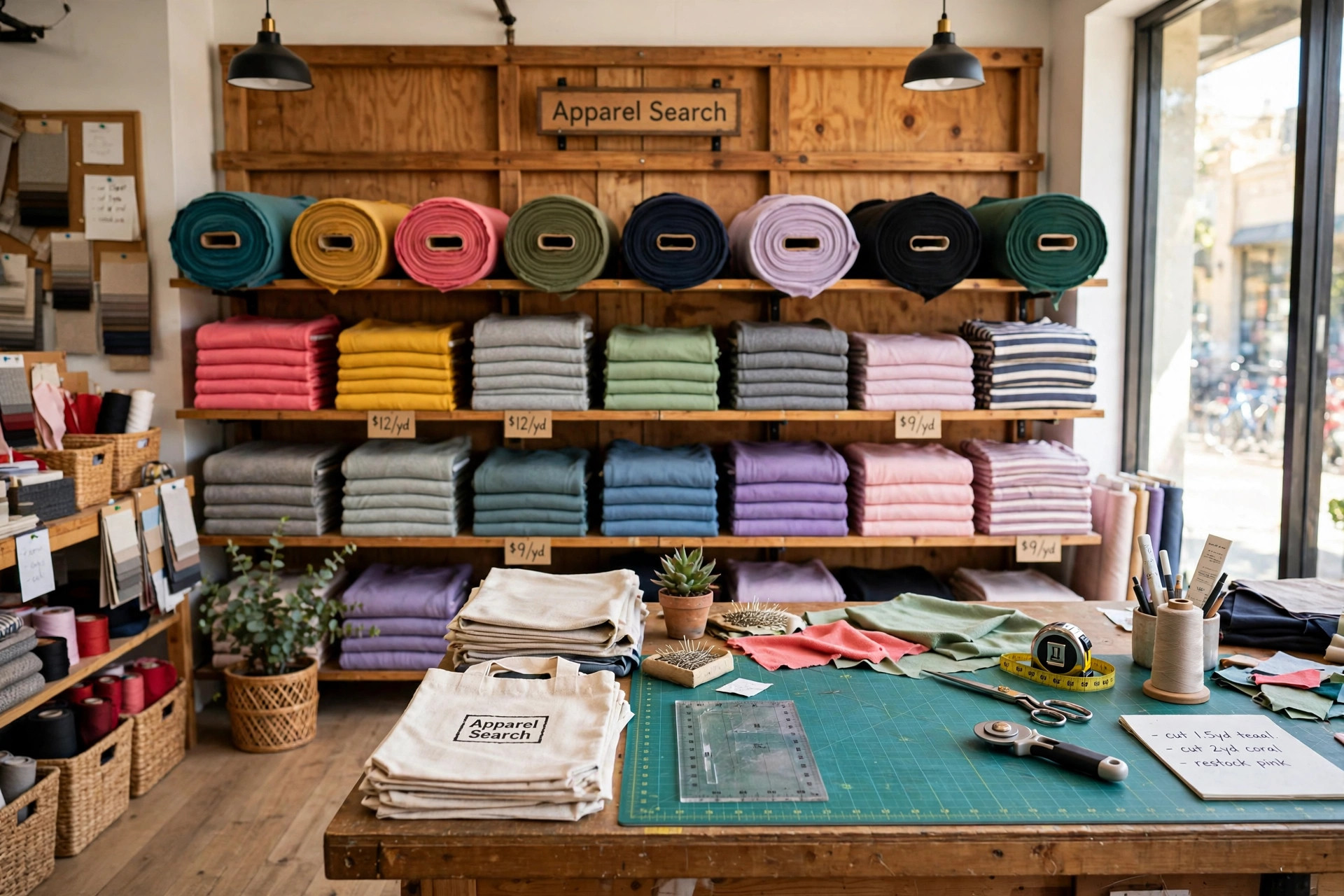
Buying Jersey One Cut at a Time
A fabric store sells jersey very differently from a mill or wholesaler. Instead of production rolls made to your specification, you choose from bolts the buyer has already selected, cut to the length your pattern needs. That makes the store the perfect place to learn the fabric with your hands: unroll a little, feel the face and back, and stretch it. Jersey is a single knit fabric with plain stitches on the right side and purl stitches on the back, so checking both sides is the fastest way to confirm what you are holding.
The retailers listed below span the main store types you will meet. Croft Mill in the United Kingdom built its reputation on sourcing interesting, quality fabrics over more than forty years. Lee Mill Fabrics in Swansea offers a very large range built over four decades of trading to dressmakers, professionals, hobbyists and students. Dalston Mill Fabrics is an online shop strong in knit jersey alongside bridal and dance fabrics, with free samples. Each model has strengths: depth of range, local advice, or the convenience of sampling by post before committing to a full length.
Judging Weight, Stretch and Fiber in the Shop
Start with the pattern envelope, which usually names the fabric and the stretch it assumes. Then test the bolt against it. Hold a single layer up: if you can see your hand clearly through a pale jersey, plan on lining it or choosing a darker color. Stretch a ten-centimeter section across the width and note how far it extends and whether it springs straight back. A jersey that stays slightly stretched out will grow baggy at elbows, knees and seats in wear, however pretty the color is.
Read the bolt end information and ask when it is missing. Fiber content tells you how the fabric will wash and feel: cotton for breathable everyday wear, rayon for fluid drape, polyester for hard-wearing sportswear, and a touch of spandex when recovery matters. Width matters too, because jersey often comes wider than woven dress fabrics, which can reduce the yardage a pattern needs, but only if the layout still fits once the fabric is folded evenly and the grain of the loop columns runs straight down each piece.
Samples, Remnants and Sensible Quantities
Samples exist to prevent expensive mistakes, so use them properly. Wash the sample the way the garment will be washed, then check it for shrinkage, color loss, pilling and whether the cut edges curl so much that sewing will fight you. Stretch and release it twenty times. Drape it over your hand and over a hanger to see whether it falls in soft folds or stands away stiffly. A store offering free or cheap samples, as Dalston Mill Fabrics does, is inviting exactly this homework, and patterns bought against a tested sample rarely disappoint.
Buy a little generously. Jersey is forgiving in fit but unforgiving of a cutting mistake, because a replacement length may come from a different dye lot with a slightly different shade. An extra quarter yard covers a recut sleeve and gives you matching fabric for test seams and a practice neckband. Check remnant bins too: short jersey lengths are ideal for childrens tees, underwear, doll clothes, binding strips and the contrast cuffs and neckbands that make a plain garment look finished.
Matching the Store Jersey to the Project
For a first jersey project, choose a firm midweight cotton or cotton-Spandex jersey in a medium color. It feeds evenly, shows stitches clearly, hides small imperfections, and does not slide around under the presser foot the way a slinky rayon jersey can. Save the featherweight and high-shine jerseys for when your machine settings, needle choice and seam finishes are proven. Ask store staff what local sewers buy for the same pattern; experienced fabric retailers hear back about which bolts sewed beautifully and which ones frustrated everyone.
Finally, think beyond the garment. The same store visit can supply the ribbing for neckbands, clear elastic for stabilizing shoulders, ballpoint needles and a twin needle for hems, so the project does not stall for want of a notion. If you were actually looking for clothing from the state rather than the cloth, note that Apparel Search also covers apparel retailers in New Jersey. For everyone else, a well-chosen length of jersey from a good store is where most handmade knit wardrobes begin.
Jersey Fabric Stores in This Directory
Four stores are listed below, each with a short description of its range.
Croft Mill
United Kingdom fabric retailer with over forty years of sourcing experience, offering a jersey fabrics collection chosen for interest, quality and value.
Lee Mill Fabrics
Swansea fabric store trading for over forty years to dressmakers, professionals, hobbyists and students, describing a range of over 10,000 fabrics at low prices.
Dalston Mill Fabrics
Online fabric shop listing knit jersey among its bridal, silk, denim, dance and drapery fabrics, with free samples offered.
Fabric.com Jersey Knit
Online fabric store whose jersey knit section describes jersey as a single knit with plain stitches on the right side and purl stitches on the back, for comfortable, flattering apparel.
Common Questions
How much jersey should I buy for a T-shirt?
Follow the pattern yardage for your size and fabric width, then add a small allowance for shrinkage and a possible recut. Pre-washing matters more than the extra length, because cotton jersey can shrink on its first wash.
How can I tell the right side of a plain jersey in the store?
The right side shows fine vertical rows of plain stitches and the wrong side shows purl stitches. The cut edges of single jersey also tend to curl toward the right side, which is a handy confirmation.
Is it worth ordering a sample before buying jersey online?
Yes. A washed, stretched and draped sample reveals shrinkage, recovery, sheerness and curl before you commit to a full length that may come from a dye lot you cannot exchange.
More to Explore
References & Further Reading
Looking for Fabric Mills and Suppliers?
For more retail and wholesale fabric sources across every cloth type, explore the Apparel Search fabric section and the Fabric Search hub.