Yarn-Dyed Fabric
Yarn-dyed fabric is woven from yarns that were coloured before they ever reached the loom. That one change in sequence gives stripes, checks and plaids their depth and colourfastness, and this guide explains how the process works and where yarn-dyed cloth is used.
Shop Yarn-Dyed Fabric Now
Shop Yarn-Dyed Fabric on Amazon Shop Yarn-Dyed Fabric on eBayThese links open the Apparel Search shopping guides for Amazon and eBay, where the product links are kept in one place.
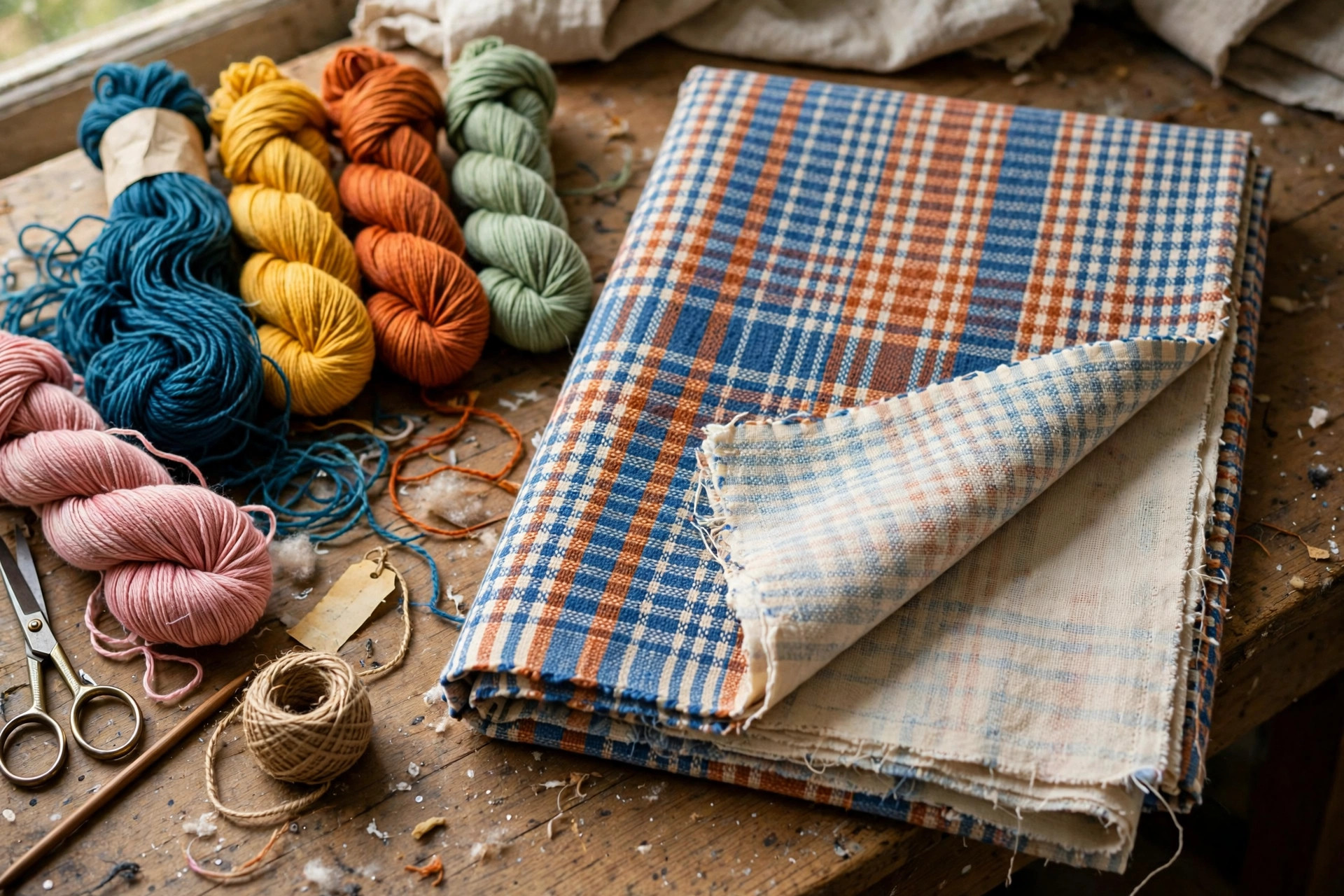
Colour Before the Cloth Exists
Yarn dyeing is essentially yarn which has been dyed prior to the weaving of the fabric. The dyeing of the yarn takes place following the spinning of the yarn, and it can be done either by total immersion of the yarn or by partial immersion, depending on the effect required. Only after the coloured yarns are ready are they set up on a loom, with the warp and weft arranged so that the finished weaving shows the intended pattern of stripes, checks, plaids or figured designs.
This is fundamentally different from dyeing and finishing fabric after it is woven. In piece dyeing, a greige cloth is coloured as a whole, usually in a single shade. In yarn dyeing, the colour decisions happen a stage earlier and are built into the structure of the cloth itself. A woven check in yarn-dyed fabric is not printed or dyed onto the surface; it is the visible result of one colour of warp yarn crossing another colour of weft yarn, repeated across the width and length of the piece.
How Yarn Is Dyed
Yarn is dyed in several forms. Hank or skein dyeing immerses loose hanks of yarn in a dye bath, giving soft, even colour well suited to wool and textured yarns. Package dyeing winds yarn onto perforated cones or packages and forces dye liquor through them under pressure, which is efficient and consistent for large lots of the same shade. Warp yarns for denim and similar cloth may be rope dyed or beam dyed, colouring the warp as a sheet while the weft is left undyed, which is exactly why classic denim is blue on the face and pale on the back.
Each method must balance level colour against yarn strength and handle. Yarn that will be woven is under tension on the loom, so dyeing should not weaken it, and shades must match from package to package or the cloth will show bands. Dyed yarn is also commonly checked for colourfastness to washing, rubbing and light before weaving, because once several colours are interlaced in one fabric, a bleeding shade cannot be corrected. Careful dyehouses test and approve lab dips and bulk lots against a standard before production weaving begins.
What Yarn-Dyed Fabric Looks and Feels Like
The easiest way to recognise a yarn-dyed woven is to turn it over. Because the pattern is woven in, it shows on both faces of the cloth, often with the colours reversed or slightly softened on the back, whereas a printed pattern sits on one face and a piece-dyed cloth is a single flat colour throughout. Yarn-dyed stripes keep a crisp edge where colours meet, checks such as gingham are formed by equal stripes in warp and weft, and plaids and madras layer transparent colour crossings that printing struggles to reproduce convincingly.
Colourfastness is the other practical advantage. The dye has penetrated individual yarns before weaving, and there is no surface print layer to crack or fade unevenly, so well-made yarn-dyed shirtings, seersuckers and oxford cloths keep their pattern through repeated washing. The trade-off is cost and planning: every colour in a design is a separate dyed yarn that must be prepared in advance, patterns are fixed once the warp is made, and changing a colourway means dyeing and warping again rather than simply dyeing the next piece of cloth a different shade.
Where Yarn-Dyed Fabric Is Used
Shirting is the classic home of yarn-dyed fabric: oxford cloth, poplin stripes, gingham checks and madras plaids for shirts depend on woven colour, and the same construction serves dresses, skirts and lightweight jackets. Seersucker is yarn-dyed too, its puckered stripes formed in weaving. Beyond apparel, yarn-dyed cloth appears in table linen, tea towels, curtains and upholstery where a pattern that survives hard use and laundering, and shows properly on both sides, is worth more than a printed imitation.
From this page you can continue to the yarn-dyed fabric mills that weave this cloth, the wholesalers and distributors who stock it, and the fabric stores that sell it by the cut length. Knowing the process helps at every one of those steps: a buyer can ask how the yarn was dyed, whether shades are vat or reactive dyed, and what fastness results the mill guarantees, and a retail customer can check the reverse side of a bolt and know at once whether the check in front of them is genuinely woven in.
Common Questions
What is the difference between yarn-dyed and piece-dyed fabric?
Yarn-dyed fabric is woven from yarns dyed before weaving, so patterns like stripes and checks are built into the cloth and show on both sides. Piece-dyed fabric is woven first in an undyed state and coloured afterwards, usually in one solid shade.
How can I tell if a check fabric is really yarn-dyed?
Turn the cloth over. A woven check appears on the back as well, often slightly reversed or muted, because coloured warp and weft yarns form it. A printed check sits on the face only and the back looks much paler.
Why does yarn-dyed fabric cost more than printed fabric?
Every colour must be dyed as a separate yarn lot before weaving, patterns need careful warping, and colourways cannot be changed once weaving starts. The extra dyeing, preparation and planning add cost, repaid in pattern sharpness and colourfastness.
More to Explore
References & Further Reading
Looking for Fabric Mills and Suppliers?
For dyeing and finishing more broadly, and for other fabric constructions, explore the fabric section on Apparel Search or return to the Fabric Search hub.