Yarn-Dyed Fabric Stores
Retail is where yarn-dyed fabric meets shirtmakers, dressmakers and quilters buying by the metre or yard. This guide explains how to shop for genuine woven stripes and checks in a fabric store, and introduces the retailers listed in this section.
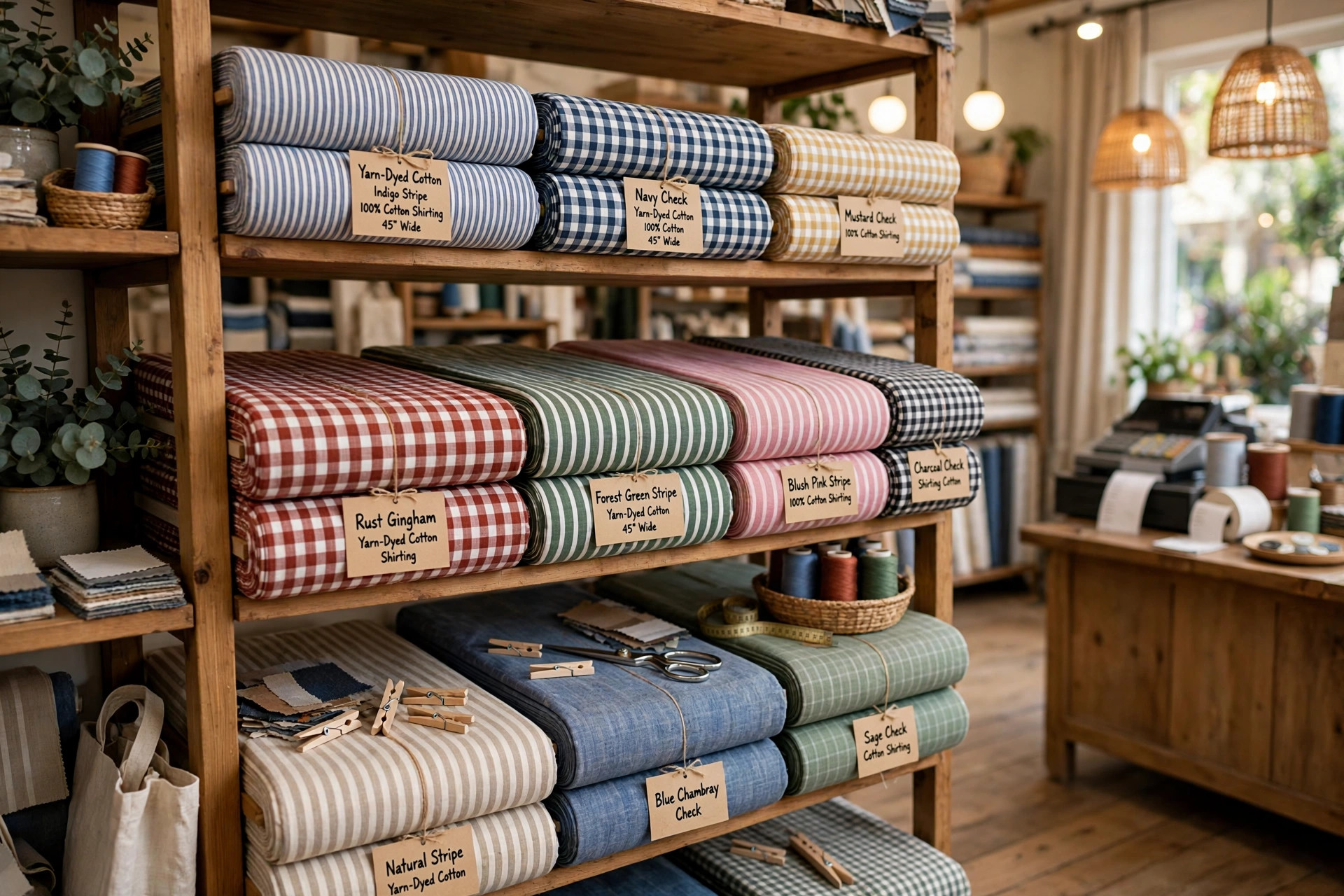
Shopping for a Woven Pattern
The first skill in buying yarn-dyed fabric at retail is telling a woven pattern from a printed one. Unroll a little of the bolt and look at the back: a yarn-dyed stripe, check or plaid shows clearly on the reverse, because coloured warp and weft yarns form the pattern through the whole thickness of the cloth. A print, by contrast, sits on the surface of one face, and its reverse looks washed out. Stores that specialise in apparel fabric expect customers to make this check, and staff can usually say how a given cloth was coloured.
Next, check the pattern itself. Stripes should run straight along the warp without wavering, checks should be even where warp and weft stripes cross, and any repeat should be consistent across the width. Hold the fabric up to the light to spot thin places or broken coloured threads, and give it a gentle stretch and recovery test if it contains spandex. Because the colours are part of the structure, a yarn-dyed cloth that looks right on the bolt will keep its pattern through cutting, sewing and washing in a way a surface print may not.
Choosing Yarn-Dyed Fabric by Project
For shirts and blouses, the retail staples are yarn-dyed cotton poplin, oxford cloth and fine stripes, which are crisp, breathable and easy to sew. Gingham, the even check formed by white and a colour in both warp and weft, suits dresses, children's wear and kitchen textiles, while madras plaids and seersucker bring lighter, more casual summer options. Heavier yarn-dyed wovens, including brushed checks and flannels, serve colder-weather shirts, skirts and soft furnishings where the pattern must survive on both faces of the cloth.
Ask about fibre content and care before the fabric is cut. Cotton yarn-dyes usually wash well but can shrink, so buying a little extra and pre-washing before cutting is a sound habit, especially when warp and weft colours differ and any shade change would be obvious. If colour matching matters, for example when a check must match an existing garment, view the bolt in daylight as well as under shop lighting, and consider a swatch first. Many fabric stores will supply samples, which is the cheapest insurance against a colour that shifts at home.
What Good Fabric Stores Offer
A good apparel fabric store earns its place in a guide like this through range, knowledge and service rather than size alone. The retailers listed here supply woven fabrics alongside knits, stock notions and sewing supplies, and put superior customer service at the centre of the offer, helping customers search out the right fabric for a design project. Long-established independent stores bring something chains rarely match: generations of accumulated knowledge about cloth, and a stock chosen by people who sew and understand what a maker needs from a yarn-dyed shirting or check.
That guidance is particularly valuable with patterned wovens, because pattern matching at seams, cutting checks on the straight grain, and allowing enough extra fabric for matching a large plaid repeat are decisions made at the cutting counter. An experienced retailer will raise them before cutting, not after. When researching fabric retailers, it is also worth visiting the general fabric store section on Apparel Search, linked from this guide, since many stores with strong general apparel ranges carry yarn-dyed wovens within them rather than under a separate heading.
Buying Cut Lengths With Confidence
Before ordering, confirm the usable width, which on yarn-dyed shirtings is often narrower than on dress prints, and check whether the price is by the metre or the yard. Ask whether the end of the bolt is available if your project might need more later, because a second purchase may come from a different dye lot of the underlying yarns and match imperfectly. For online orders from a listed store, order a swatch when the exact shade of a stripe matters, and keep the bolt details and fibre content with your project notes.
Finally, treat the store visit as research for future projects. Note which yarn-dyed qualities the store reorders regularly, since a reordered line is one other makers trust, and ask what new colourways are expected, because yarn-dyed ranges change seasonally as mills release new patterns. A retailer who knows your projects can set aside a new check or stripe worth seeing. That relationship, built over a few honest purchases, is the real advantage of the specialist fabric store over an anonymous listing of bolts.
Yarn-Dyed Fabric Retail Stores
Retail fabric stores from the original directory whose ranges include woven and yarn-dyed fabrics.
RTC Fabrics
Fabric store specialising in fabrics and notions for active lifestyles, from famous manufacturers as well as its own exclusive fabric line, supplying woven fabrics as well as knit fabrics with a focus on customer service.
Stonemountain & Daughter Fabrics
Berkeley fabric store owned by Bob and Suzan Steinberg, a father-and-daughter team representing the third and fourth generations of their family in the California fabric industry, with a well-stocked store built on decades of independent tradition.
Common Questions
How do I check in a store whether a check is yarn-dyed?
Look at the back of the cloth. A yarn-dyed check shows on both faces because coloured warp and weft yarns form it, while a printed check appears on one face only and looks much paler from behind.
Should I pre-wash yarn-dyed cotton before cutting?
Yes, as a rule. Cotton yarn-dyed fabrics can shrink, and pre-washing the same way the garment will be laundered means the finished piece keeps its intended size and fit.
Why buy extra fabric for a plaid or large check?
Pattern matching at seams and keeping checks straight on the grain uses more cloth than a plain fabric. Extra length for matching the repeat is part of the real fabric requirement for these designs.
More to Explore
References & Further Reading
Looking for Fabric Mills and Suppliers?
For cut-length fabric more generally, continue to the Apparel Search fabric section, and find mills and wholesalers for this category from the Fabric Search hub.