Quiksilver
Apparel industry financial guide — Wholesale Company Stocks.
Quiksilver is the surf brand founded in Torquay, Australia in 1969 by Alan Green and John Law to make a better boardshort, and built in the United States from 1976 by Jeff Hakman and Bob McKnight into Quiksilver, Inc. — for decades the world's largest surfwear company, owner of Roxy and DC Shoes, and a New York Stock Exchange listing under the symbol ZQK. Over-expansion and the Rossignol ski acquisition loaded the company with debt; it filed for Chapter 11 in September 2015, emerged in 2016 majority-owned by Oaktree Capital, renamed its parent Boardriders, Inc. in 2017, bought rival Billabong in 2018, and was itself acquired by Authentic Brands Group in 2023. The brand continues under licence, most recently through new operating partners after its U.S. licensee Liberated Brands failed in 2025.
Company Snapshot
Status: Acquired — Quiksilver, Inc. filed for Chapter 11 in September 2015 and emerged in 2016 under Oaktree Capital ownership, renamed Boardriders, Inc.; Authentic Brands Group acquired Boardriders in 2023
Type: Private — an Authentic Brands Group brand (was NYSE: ZQK)
Headquarters: Huntington Beach, California, United States (the U.S. company)
Founded: 1969, in Torquay, Victoria, Australia, by Alan Green and John Law
Visit the Official Quiksilver Website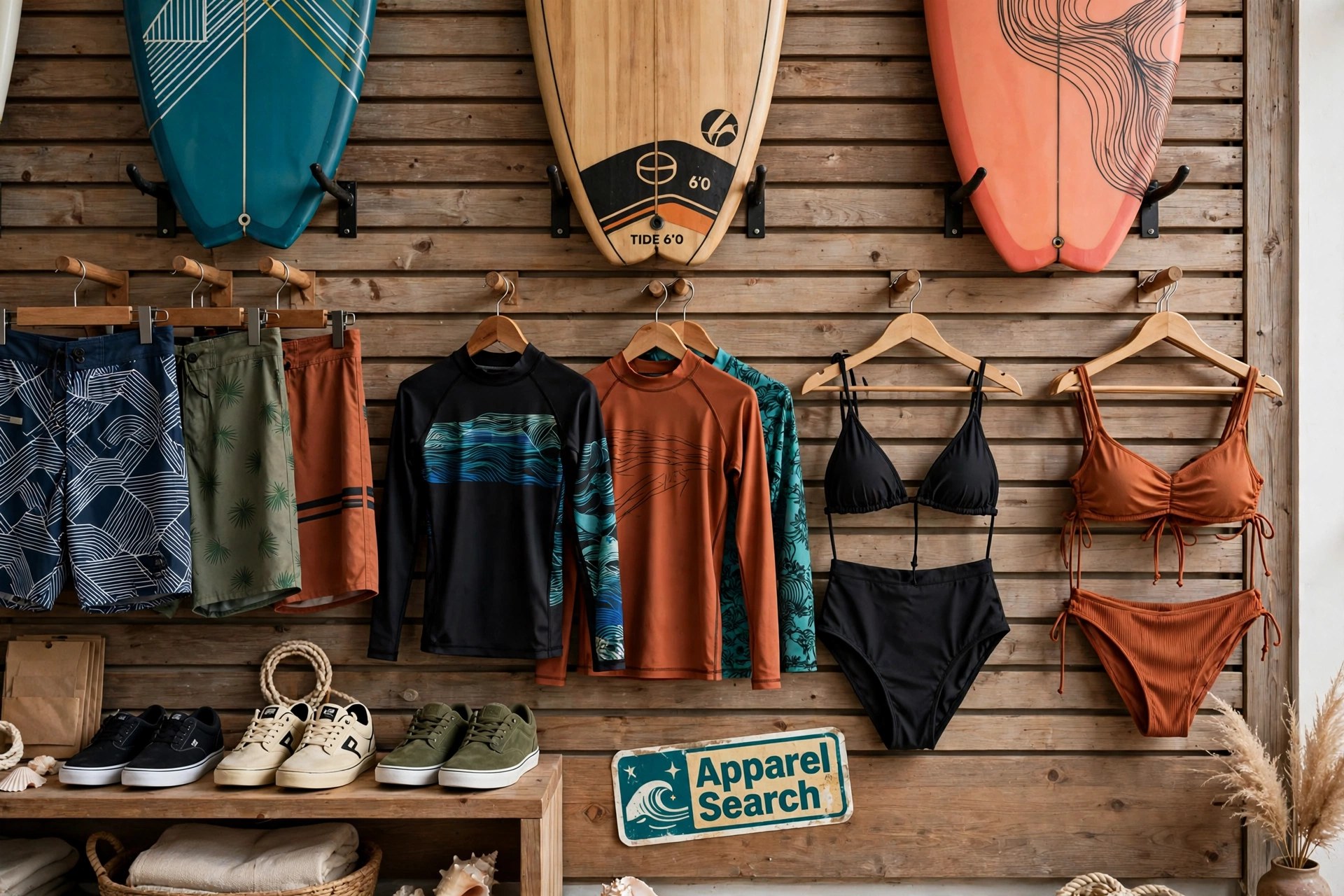
Company Profile
The wholesale structure in the record is the action-sports model at its peak: three brands — Quiksilver for men, Roxy for women, DC for skate — each with apparel, footwear and accessories, sold through surf and skate shops, department stores and hundreds of company stores, with sponsored surfers and snowboarders as the marketing core. Few wholesale businesses were ever so dependent on a subculture's continued growth.
The 2015 bankruptcy was therefore a cultural as much as a financial event: the company that had turned surfing into a listed industry could no longer service the debts of having done so. The brand's survival through three owners since — Oaktree, Boardriders' consolidation, Authentic's licensing model — shows the name outlasting every corporate structure built around it.
The range behind the name is surf, skate and snow apparel, footwear and accessories under Quiksilver, Roxy and DC Shoes. Its customers are surf and skate shops, department stores and the brands' own channels, through regional licensees. That combination — what is sold, and to whom — is the simplest way to place Quiksilver in the industry: it explains the company's costs, its competitors and the kind of news that moved its shares when it had them. A change in either half of the combination, a new product category or a new customer, is usually the first sign that the business described in the older summaries is turning into something different.
Scale should be read from the dated summaries with their dates attached. Store counts, sales descriptions and market positions quoted there were the company's own account of itself in that year, and they are the right basis for comparing Quiksilver with the other companies in this section — a component supplier against a retailer, or a catalogue house against a mall chain — as long as each figure is compared with figures from roughly the same period.
For current dealings, the snapshot at the top of this page is the place to start: it gives the company's present status — Acquired — Quiksilver, Inc. filed for Chapter 11 in September 2015 and emerged in 2016 under Oaktree Capital ownership, renamed Boardriders, Inc.; Authentic Brands Group acquired Boardriders in 2023 — and links to the official website, which is where current product ranges, store information and investor or corporate contacts are maintained. Anything in the dated summaries that conflicts with the snapshot should be read as the older position: summaries describe the year they are dated, and the snapshot describes the company as it stands now.
For anyone researching the fashion industry's public-company era, Quiksilver is a useful case: the boardshort maker that turned surfing into a listed industry and outlived its own bankruptcy. The summaries in this section were compiled while the story was still unfolding, which is exactly what makes them worth keeping — they preserve what the company said about itself at the time, before the outcome was known.
History in Brief
The October 2013 summary describes the listed company near its peak structure: Quiksilver, Inc. designing, developing, marketing and distributing branded apparel, footwear and accessories for the boardriding sports through its Quiksilver, Roxy and DC brands, headquartered at 15202 Graham Street, Huntington Beach, California. That single dated summary is the whole of its record here and is folded into this page.
Common Questions
Is Quiksilver a public company?
No. Quiksilver, Inc. filed for Chapter 11 in 2015 and emerged as a private company; Authentic Brands Group acquired its parent Boardriders in 2023.
When was Quiksilver founded?
In 1969, in Torquay, Australia, by Alan Green and John Law; the U.S. business was built from 1976 by Jeff Hakman and Bob McKnight.
Who owns Quiksilver now?
Authentic Brands Group owns the brand; regional licensees design, make and sell the products.
References & Further Reading
- Quiksilver Profile
- Apparel Industry Financial
- Clothing Wholesaler Company Stocks
- Wholesale Clothing Directory
- Quiksilver Definition
- Jobs at Quicksilver
- Quicksilver News
- Quiksilver
- Quiksilver news
- Quiksilver T-shirts
- Quiksilver for Men
- Quiksilver for Women
- Quiksilver for Children
- http://www.quiksilver.com
- fashion industry public companies
Company details such as leadership, ownership, store counts and web addresses can change. For the most current information, check the company's official website: https://www.quiksilver.com/.