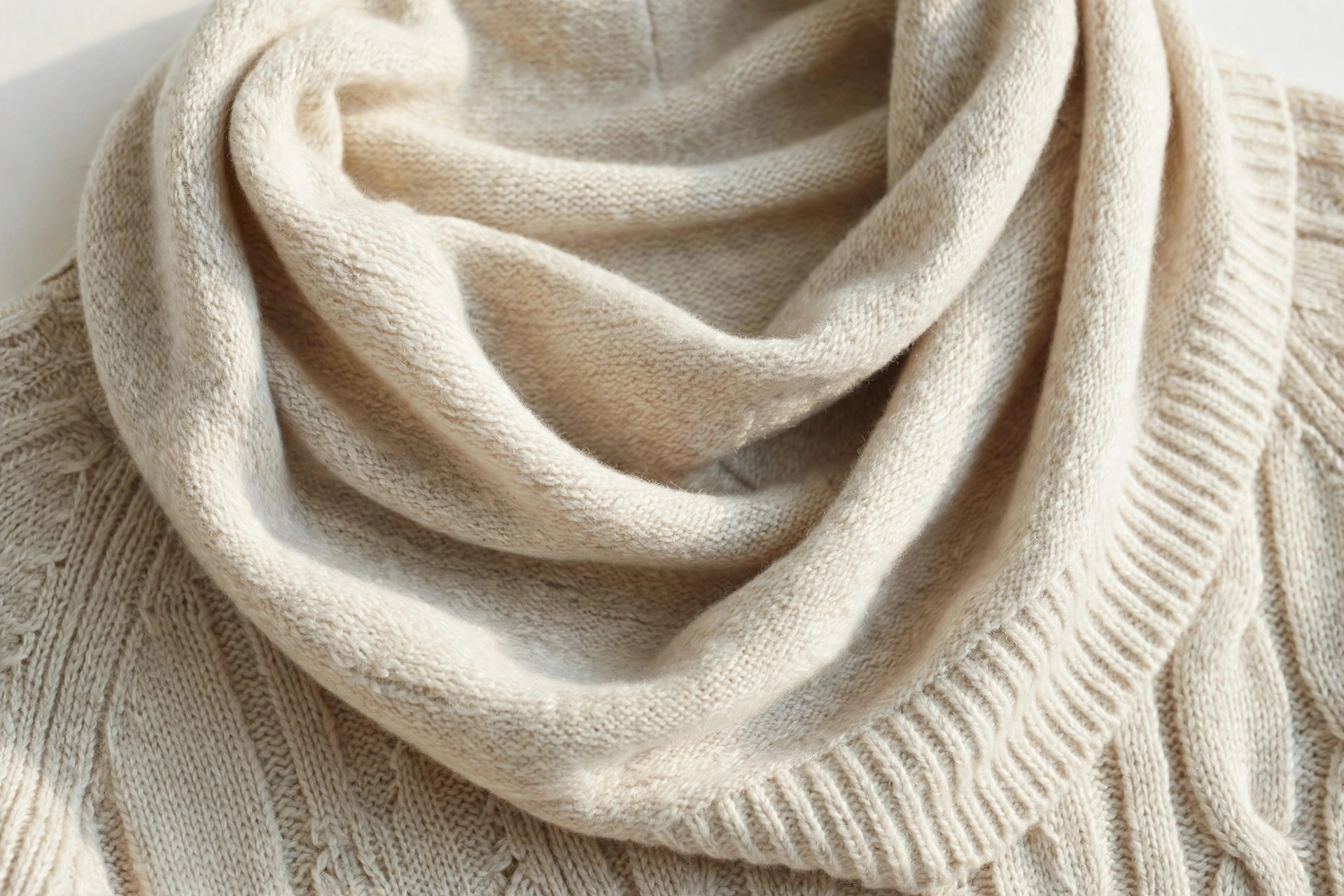
A cowl neckline is a neckline formed by an extra, loosely hanging panel of fabric that falls in soft folds at the front (occasionally the back) of a garment. The drape is created by cutting the neck section wide and on the bias so the cloth collapses into natural, sculptural curves. Cowl necks appear on sweaters, dresses, blouses, and tops, in sizes from a shallow ripple to a deep, dramatic cascade.
How the Drape Is Created
A cowl is geometry, not gathering. The pattern adds length and width at the neck and cuts it on the bias — at 45 degrees to the grain — so the fabric's own weight pulls it into even, hanging folds. A shallow cowl uses a small extra wedge of cloth; a deep cowl may be cut as a full extra panel anchored at the shoulders. Knits drape into soft, rolling folds; woven fabrics must be fluid — crepe, charmeuse, jersey-like wovens — to fall properly.
The word 'cowl' originally means a monk's hood, and the draped excess at the neck of medieval hooded garments is the ancestor of the fashion cowl.
Cowl Necks in the Wardrobe
- Cowl-neck sweaters — a loose, rolled-looking drape that replaces a collar and keeps the neck warm.
- Dresses and evening tops — a deep front cowl in satin or crepe is a classic 1930s-bias-cut revival detail.
- Back cowls — the drape moved to the back, often on evening gowns with a plain front.
FAQs
- What is the difference between a cowl neck and a turtleneck?
- A turtleneck (roll neck) is a fitted band of fabric standing around the neck. A cowl is loose and draped — the extra fabric hangs in folds rather than hugging the neck.
- Why are cowl necklines cut on the bias?
- Bias-cut fabric stretches and flows diagonally, so it falls into the smooth, even folds a cowl needs. Cut on the straight grain, the same shape would stick out stiffly.
- Can a cowl neckline be worn with a necklace?
- Usually the drape is the decoration and necklaces tangle in it; earrings are the easier pairing.
Detailed Guides: see Cowl Neckline in the glossary A–Z listing of the Apparel Search fashion glossary for related terms.