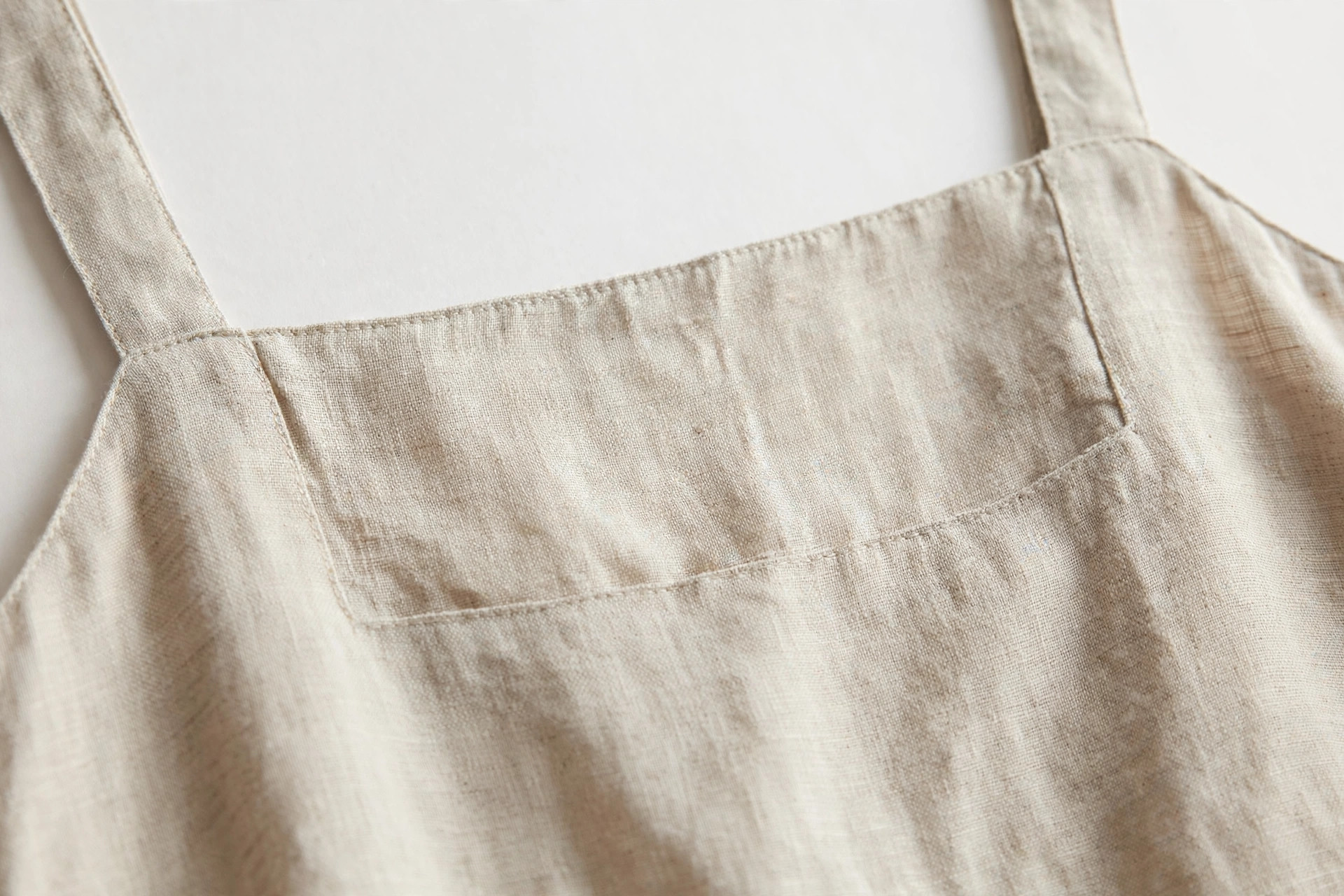
A square neckline is a neckline cut in straight lines: a horizontal edge across the chest — high or low — that turns at right angles into two vertical edges running up to the shoulders. The geometric, architectural shape exposes the collarbones while framing them with structure, and it has cycled through fashion from Renaissance portraits to the regency revival and modern summer dresses.
A Neckline With a Long Portrait History
Square necklines dominate historical dress: the wide square openings of Tudor and Renaissance gowns (usually filled with a partlet or chemise), the low square necklines of Regency dresses around 1800, and the dirndl bodices of Alpine folk dress. Each era adjusts the depth and width — the width between the straps changes the effect most: narrow squares read prim and structured, wide squares read open and romantic.
Because the edges are straight, a square neckline shows construction honestly — any unevenness in the horizontal edge is immediately visible, so the top edge is usually finished with a facing, binding, or a band of the garment fabric.
Wearing a Square Neckline
- It frames necklaces beautifully — the straight edge acts like a shelf line under a pendant.
- Wide-set straps balance broad shoulders; narrow-set straps lengthen the look of the neck.
- The shape pairs naturally with puff, cap, and fitted sleeves on dresses and tops, and with structured bodices.
FAQs
- What body shape suits a square neckline?
- It is widely flattering: it shows the collarbones, balances a full bust with its straight edge, and its width can be adjusted to balance shoulder width.
- What is the difference between a square and a scoop neckline?
- Geometry. A square neckline is made of straight lines meeting at corners; a scoop neckline is one continuous deep curve.
- Are square necklines modest?
- They can be — a high square neckline covers the chest while keeping the crisp framed shape; low versions are a classic evening and summer choice.
Detailed Guides: see Square Neckline in the glossary A–Z listing of the Apparel Search fashion glossary for related terms.