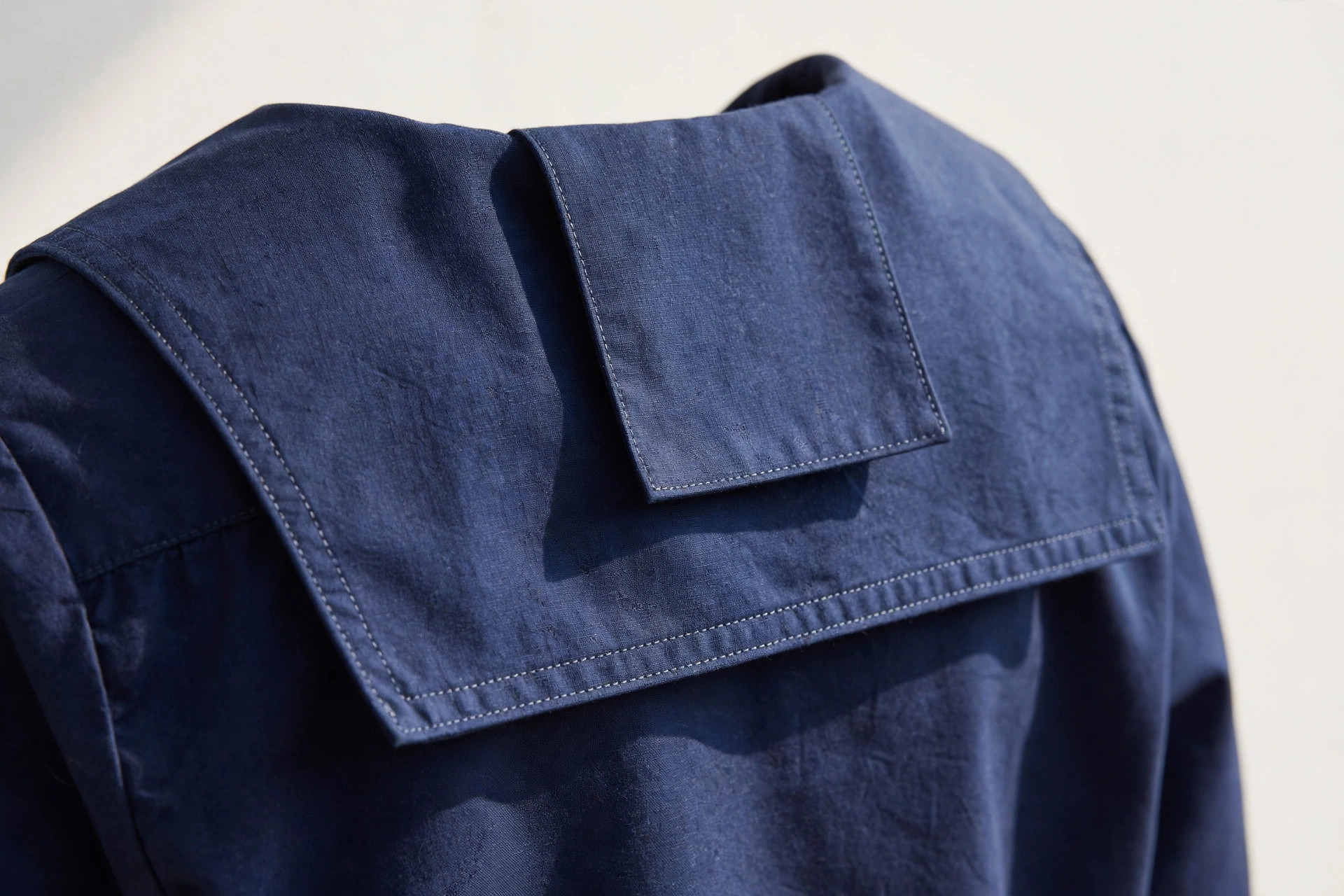
A sailor collar is a broad collar that lies flat across the shoulders, forming a square flap down the back and tapering to a V at the front, usually worn with a neckerchief or tie threaded beneath it. It comes directly from the uniform of nineteenth-century sailors and remains one of the most recognizable collar shapes in the world.
From Naval Deck to Classroom
Naval collars were practical before they were decorative: the square back panel protected the uniform from the tarred pigtails sailors once wore, and the loose shape could be grabbed as a handle in a man-overboard rescue, according to longstanding naval lore. Navies standardized the look in the 1800s, and children's clothing copied it almost immediately — the sailor suit became the default 'best' outfit for generations of children.
Its most famous afterlife is the Japanese school uniform, the sailor fuku, where the collar, scarf, and pleated skirt make up an iconic silhouette recognized worldwide.
The Sailor Collar in Fashion
- Classic on middy blouses, children's dresses, and nautical summer styles.
- Often trimmed with contrasting braid stripes along the edge — two or three white lines on navy is the traditional scheme.
- Designers periodically revive it at full scale for dresses and tops with a retro, graphic quality.
FAQs
- What is a middy blouse?
- A loose blouse with a sailor collar, named for the midshipmen whose uniform inspired it. The sailor collar is its defining feature.
- Why is the sailor collar square at the back?
- The square panel descends from naval uniform design and gives the collar its unmistakable shape; fashion versions have kept the geometry ever since.
- What do you wear under a sailor collar?
- Traditionally a neckerchief or silk scarf tied at the V in front — on school uniforms, a ribbon or tie fixed under the collar.
Detailed Guides: see Sailor Collar in the glossary A–Z listing of the Apparel Search fashion glossary for related terms.