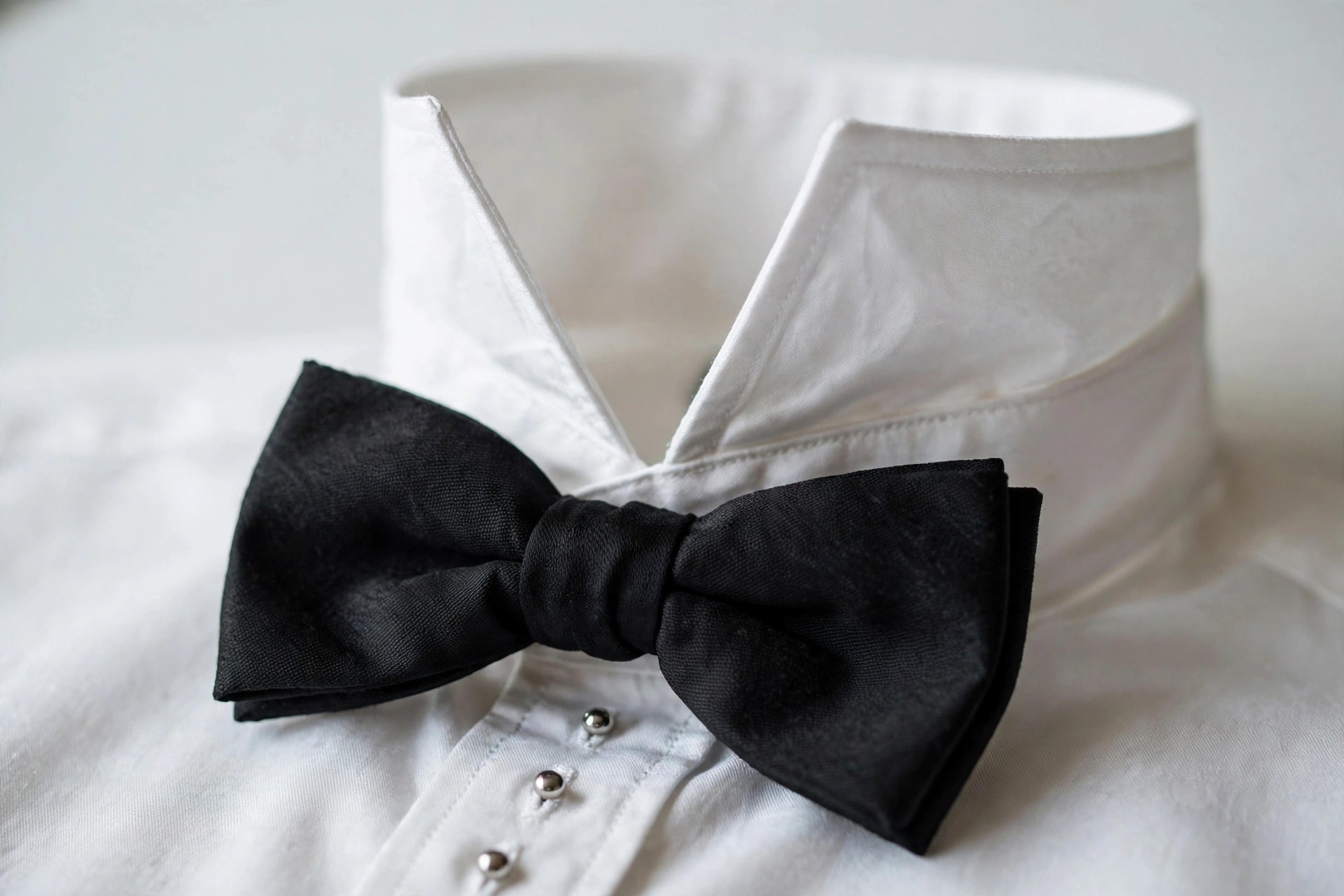
A wing collar is a stiff, upright collar whose front points are folded down to form two small triangular 'wings' that stand in front of the bow tie. It is the most formal collar in menswear: the required partner of white tie, and a traditional choice with black tie. The wings frame the tie knot and leave the bow fully visible, which is the entire point of the design.
A Relic of the Detachable Collar Era
Wing collars descend from the detachable starched collars of the nineteenth and early twentieth centuries, when a gentleman's shirt body could be laundered less often than its collar and cuffs. The tall, stiff band with folded tips was the evening standard, and it never really left formal dress even after detachable collars disappeared.
Today's wing collars are attached to the shirt and are usually shorter than their Victorian ancestors — a concession to comfort — but the construction is unchanged: a stand collar, tips folded forward, worn with the tie band passing behind the wings.
When to Wear a Wing Collar
- White tie — mandatory in strict dress codes, with a stiff-fronted shirt.
- Black tie — traditional and accepted, though the softer turndown collar is now more common.
- Morning dress and formal uniforms — a standard pairing with a cravat or tie in some traditions.
Never with a long necktie in formal settings: the wing collar is built for a bow tie.
FAQs
- Should the bow tie go in front of or behind the wings?
- The band of the bow tie passes behind the wings, so the bow sits in front and the collar tips stand visible on either side of the knot.
- Is a wing collar more formal than a turndown collar?
- Yes. The wing collar is the most formal shirt collar and is required for correct white tie.
- Can you wear a wing collar with a regular suit?
- It reads as formal evening dress and looks out of place with daytime business clothing; a turndown collar is the right choice there.
Detailed Guides: see Wing Collar in the glossary A–Z listing of the Apparel Search fashion glossary for related terms.