Sukajan Jacket
Fashion Influence — how style shapes, and is shaped by, the people who wear it
A sukajan is a Japanese satin jacket featuring contrasting colors and intricate embroidery, which originated as a United States military souvenir after World War II. The name abbreviates Yokosuka Jumper, after the city of Yokosuka where soldiers were stationed: suka from Yokosuka and jan, meaning jacket or jumper. Servicemen bought the jackets as souvenirs before traveling home, and typical embroidered designs include koi fish, dragons, tigers, cranes and other traditional Asian symbols. This guide covers the jacket's origin, the satin weave it is made from, and its popularity in streetwear culture.
This is a garment from Japan that was a jacket that originated as a U.S. military souvenir. It is a Japanese satin jacket featuring contrasting colors and intricate embroidery.
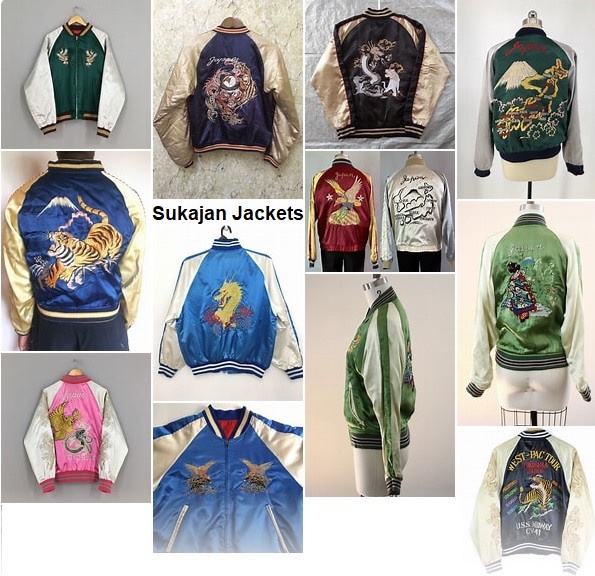
From handmade new creations to vintage treasures you will find that Sukajan jackets offer a unique style if you are looking for creative fashion. The word "sukajan" is an abbreviation of Yukosuka Jumper which is the name give to a particular style of satin jackets that became popular after World War II. Soldiers were stationed in Yokosuka, and this is apparently where the jacket gets it’s name. “Suka” from Yokosuka and “Jan”, which means jacket or jumper.
The Sukajan Jackets are often referred to as souvenir jackets. GI's in Japan purchased these jackets as souvenirs at the end of the war before traveling home. A souvenir is a memento, keepsake, or token of remembrance. It is an object a person acquires for the memories the owner associates with it. A souvenir can be any object that can be collected or purchased and transported home by the traveler as a memento of a visit. The object itself may have intrinsic value, or be a symbol of experience.
Typical designs can be embroidered koi fish, dragon, tiger, crane, and other traditional Asia symbols. Sukajan jackets are popular among streetwear culture, bringing Japanese fabric arts and crafts flavor to the streets.
Satin is a smooth, glossy fabric produced by a weave in which the threads of the warp are caught and looped by the weft only at certain intervals. A satin weave is a type of fabric weave that produces a characteristically glossy, smooth or lustrous material, typically with a glossy top surface and a dull back. It is one of three fundamental types of textile weaves alongside plain weave and twill weave.
Sukajan Jacket video explanation.
Do you know the difference between a jacket & coat?
Note: In regard to GI's purchasing this type of jacket at the end of World War II. G.I. are initials used to describe the soldiers of the United States Army and airmen of the United States Air Forces and general items of their equipment. The term G.I. has been used as an initialism of "Government Issue," "General Issue," or "Ground Infantry," but it originally referred to "galvanized iron," as used by the logistics services of the United States Armed Forces.
Fashion Products Fashion Products S-Z Fashion Products S
The Embroidered Souvenir Jacket
Embroidery is the sukajan's defining craft. The motifs are traditional Asian symbols worked in thread on the satin ground: koi fish, dragons, tigers and cranes are the classic subjects, often paired across the back panel with contrasting colors on the body and sleeves. Because the work is thread on a glossy weave, the design catches light differently from the fabric around it, which is much of the jacket's visual effect. Jackets range from handmade new creations to vintage treasures, and the vintage end of the market is where the post-war souvenir pieces survive.
In streetwear culture the sukajan brings Japanese fabric arts and crafts flavor to the streets, worn as a statement jacket over plain clothing. Shoppers weighing a sukajan against plainer jackets should note the care the combination implies: satin shows wear, and dense embroidery is the part of the garment that cannot be replaced. The jacket-versus-coat distinction linked from this page is also worth a look, since the sukajan sits firmly on the jacket side, a hip-length souvenir garment rather than an overcoat.
Common Questions
What does sukajan mean?
It is an abbreviation of Yokosuka Jumper, the name given to a style of satin jacket that became popular after World War II. Suka comes from Yokosuka, the city where the soldiers were stationed, and jan means jacket or jumper.
Why are sukajan also called souvenir jackets?
GIs in Japan purchased these jackets as souvenirs at the end of the war before traveling home, as mementos of their visit. A souvenir is an object acquired for the memories its owner associates with it.
What is satin, the sukajan's fabric?
Satin is a smooth, glossy fabric produced by a weave in which the warp threads are caught and looped by the weft only at certain intervals. The satin weave produces a glossy top surface and a dull back, and is one of the three fundamental textile weaves alongside plain weave and twill.