Onyx Bracelets
Polished black chalcedony, in beads, cabochons and inlay
Onyx is the banded form of chalcedony quartz, and the solid black variety used in jewelry is one of the most popular dark gemstones: polished black onyx beads anchor men's and unisex bead bracelets, cabochons and inlay give gold and silver bracelets their black contrast, and carved onyx appears in signet-style pieces. This guide covers what onyx is and how black onyx is produced, the main bracelet styles from bead strands to inlay motifs, wearing black stones with metals, and care.
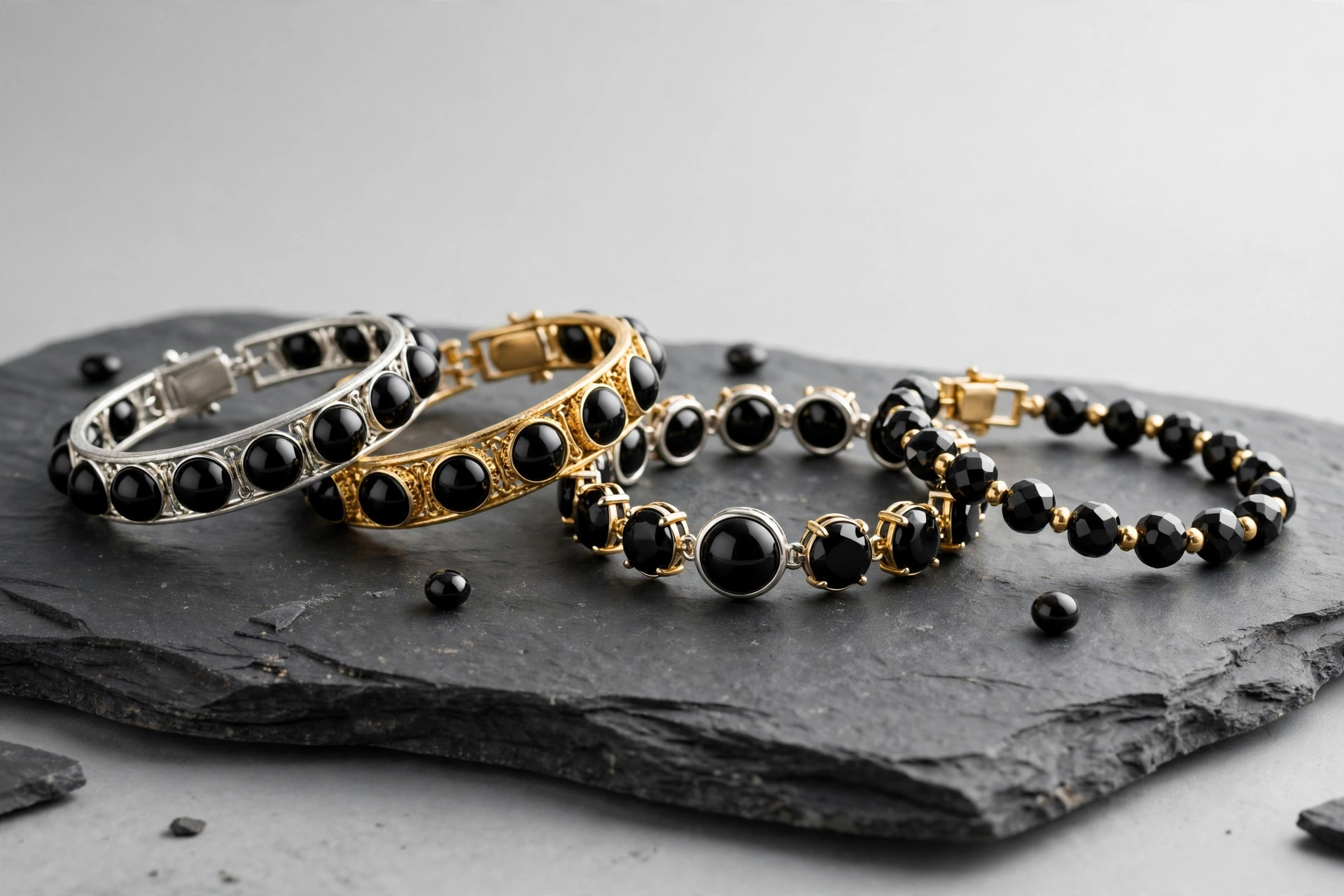
The Elegance and Symbolism of Onyx Bracelets
Onyx bracelets have long been admired for their timeless beauty and meaningful symbolism. Crafted from the captivating gemstone onyx, these bracelets exude an air of sophistication and carry a rich history of significance. In this detailed description, we will explore the meaning of onyx, its geographical origins, the popularity and symbolism of onyx bracelets, the exquisite beauty of onyx jewelry, where consumers can find fine quality onyx bracelets, and how to evaluate their quality.
Understanding Onyx:
Onyx is a semiprecious gemstone known for its deep black color and striking bands of white or other contrasting colors. Its name is derived from the Greek word "onux," which means "claw" or "fingernail," possibly due to the resemblance of its bands to human nails. Onyx is composed of microscopic layers of chalcedony, a form of quartz, and is known for its fine texture and high polish.
Geographical Origins:
Onyx is found in various parts of the world, including:
Brazil: Known for its rich black onyx with striking white bands.
India: Produces black, green, and sardonyx varieties.
Mexico: Renowned for its banded onyx with vibrant colors.
Pakistan: Known for high-quality black onyx.
United States: Onyx is found in several states, including Arizona and California.
Popularity and Symbolism:
Onyx bracelets have gained popularity for several reasons:
Timeless Elegance: Onyx's deep black color, often contrasted with white bands, lends a timeless and sophisticated appearance to bracelets.
Versatility: Onyx's neutral tones make it suitable for both casual and formal occasions, making it a versatile choice for jewelry enthusiasts.
Symbolism: Onyx carries significant symbolism. It is believed to enhance self-control, discipline, and inner strength. Many wear onyx bracelets as a symbol of protection and balance.
The Beauty of Onyx Jewelry:
Jewelry made from onyx showcases its natural beauty:
Deep Black Hue: Onyx's rich black color is often associated with elegance and sophistication, making it a striking choice for bracelets.
Contrasting Bands: The contrasting bands or stripes of white, brown, or other colors add visual interest and uniqueness to each piece of onyx jewelry.
Polish and Luster: Onyx's fine texture allows it to be polished to a high shine, enhancing its luster and appeal.
Finding Fine Quality Onyx Bracelets:
Consumers seeking high-quality onyx bracelets can explore various sources:
-
Jewelry Stores: Local and online jewelry stores often carry a range of onyx bracelets in different styles and designs.
-
Artisan Marketplaces: Platforms like Etsy feature independent artisans who craft unique and handmade onyx bracelets.
-
Specialty Jewelers: Some jewelers specialize in gemstone jewelry, offering a curated selection of onyx pieces.
-
Designer Boutiques: Luxury designers often incorporate onyx into their high-end jewelry collections.
Evaluating Onyx Bracelet Quality:
To ensure the quality of an onyx bracelet, consider the following factors:
-
Color: Look for a deep, consistent black color with well-defined contrasting bands.
-
Translucency: High-quality onyx may exhibit translucency when held up to light.
-
Luster: A well-polished surface should have a captivating luster.
-
Cut: Pay attention to the craftsmanship, ensuring the stone is cut evenly and set securely.
-
Origin: Certain origins, such as Brazilian or Pakistani onyx, are known for their quality.
The use of onyx in jewelry dates back thousands of years, and its rich history is intertwined with various civilizations, cultures, and regions. Here's a detailed history of onyx's use in jewelry:
Ancient Egypt (c. 3100-332 BC): Onyx was highly valued in ancient Egypt, where it was used to create jewelry and amulets. The Egyptians believed that onyx had protective qualities and could ward off evil spirits. It was also associated with the goddess Hathor, who represented love, motherhood, and fertility.
Ancient Greece (c. 9th-6th centuries BC): In ancient Greece, onyx was often used for carving intricate designs and cameos. These cameos featured portraits, mythological scenes, and other artistic motifs. The contrast between the black background and white layers of onyx made it a popular choice for such carvings.
Ancient Rome (c. 753 BC - 476 AD): The Romans continued the tradition of using onyx in cameos and intaglios, which are engraved gemstones. Onyx was also used for making seals and signet rings, which were used for stamping wax seals on documents and letters.
Medieval Europe (5th-15th centuries): During the Middle Ages, onyx was used in ecclesiastical jewelry, such as crosses, reliquaries, and religious ornaments. It was often set in gold or silver and adorned with gemstones.
Islamic Art (7th-19th centuries): Onyx was a favored gemstone in Islamic art and jewelry. The intricate designs and calligraphy of Arabic scripts were often engraved onto onyx gemstones, creating stunning pieces of jewelry and artifacts. These pieces often had spiritual and decorative significance.
Victorian Era (19th century): Onyx saw a resurgence in popularity during the Victorian era, with jewelry designers incorporating it into mourning jewelry. Its dark color was symbolic of mourning and remembrance, and it was often paired with other gemstones and materials.
Art Deco Period (1920s-1930s): The geometric shapes and bold designs of the Art Deco movement found onyx to be a suitable gemstone for creating striking and visually appealing jewelry. Onyx was frequently paired with diamonds and other colored gemstones to create high-contrast, elegant pieces.
Modern Era (20th century-present): Onyx remains a popular choice in contemporary jewelry design. Its versatility allows it to be used in a wide range of styles, from classic and traditional to modern and minimalist. Onyx bracelets, rings, necklaces, and earrings continue to be sought-after pieces by jewelry enthusiasts around the world.
Throughout history, onyx has held various meanings and significance, including protection, strength, mourning, and artistic expression. Today, it is appreciated for its striking appearance, durability, and ability to complement a variety of jewelry styles. Whether used in traditional or contemporary settings, onyx continues to be a beloved gemstone in the world of jewelry.
Onyx bracelets are a testament to the enduring allure of this remarkable gemstone. Their rich symbolism, striking appearance, and versatility make them a cherished addition to any jewelry collection. By understanding the origins, symbolism, and quality factors associated with onyx, consumers can confidently choose fine quality onyx bracelets that resonate with their style and values.
You may also want to learn about onyx earrings, onyx rings and onyx necklaces.
Black, the Bracelet Neutral
Every bracelet wardrobe has a neutral that does the quiet work, and in gemstones that neutral is black onyx. It is the stone that lets a stack include color without clashing, the inlay that makes a gold clover or heart motif read at a glance, and the bead that makes a single metal accent bead look deliberate. The mother of pearl bracelets guide covers its white counterpart, and the two materials appear together in inlay bracelets throughout this section.
Banded onyx deserves a mention beyond the black variety: sardonyx, with its straight white and brown-red bands, was the classical cameo and seal stone, and beads and cabochons of banded material give a bracelet pattern that solid stones cannot. Whether banded or black, onyx's combination of polish, hardness and price explains its unbroken run in bracelets from antiquity to the current men's bead market.
Common Questions
What is onyx?
Onyx is chalcedony, a quartz-family gemstone that forms in parallel bands. Sardonyx shows straight bands of white, brown and red, while the familiar solid black onyx is usually grey chalcedony dyed black, a treatment used since ancient times, stable and universally accepted in the trade when the stone is sold as black onyx.
Why is onyx so popular in men's bracelets?
Polished black beads are neutral, matte or glossy according to finish, and pair with everything, which makes onyx the default dark stone in men's beaded bracelets, often combined with lava stone, hematite or a single metal bead. The same qualities make onyx a unisex stacking staple.
How should onyx bracelets be cared for?
Onyx is quartz, so it is hard enough for daily bracelet wear and cleans with warm soapy water and a soft cloth. Dyed black onyx should be kept out of strong solvents and prolonged ultrasonic cleaning is unnecessary; store bead strands separately so stones do not knock together.