Aquamarine Rings
The pale blue beryl of March
Aquamarine is the blue variety of beryl, the same mineral family as emerald and morganite, colored by trace iron and named from the Latin for seawater. Its color runs from near-colorless pale blue through the clear sky blue most buyers want to deeper, greener blue, and the finest saturated material has traditionally come from Brazil. At 7.5 to 8 on the Mohs scale it is hard enough for a ring worn daily, and because large, eye-clean crystals are common, aquamarine is one of the few gemstones that can be bought big and clean without a punishing price per carat. Most aquamarine is heat-treated to remove green tones, a stable and standard practice. This guide covers color and clarity expectations, cuts that suit the stone, treatment disclosure, settings in white and yellow metals, and the simple care aquamarine needs.
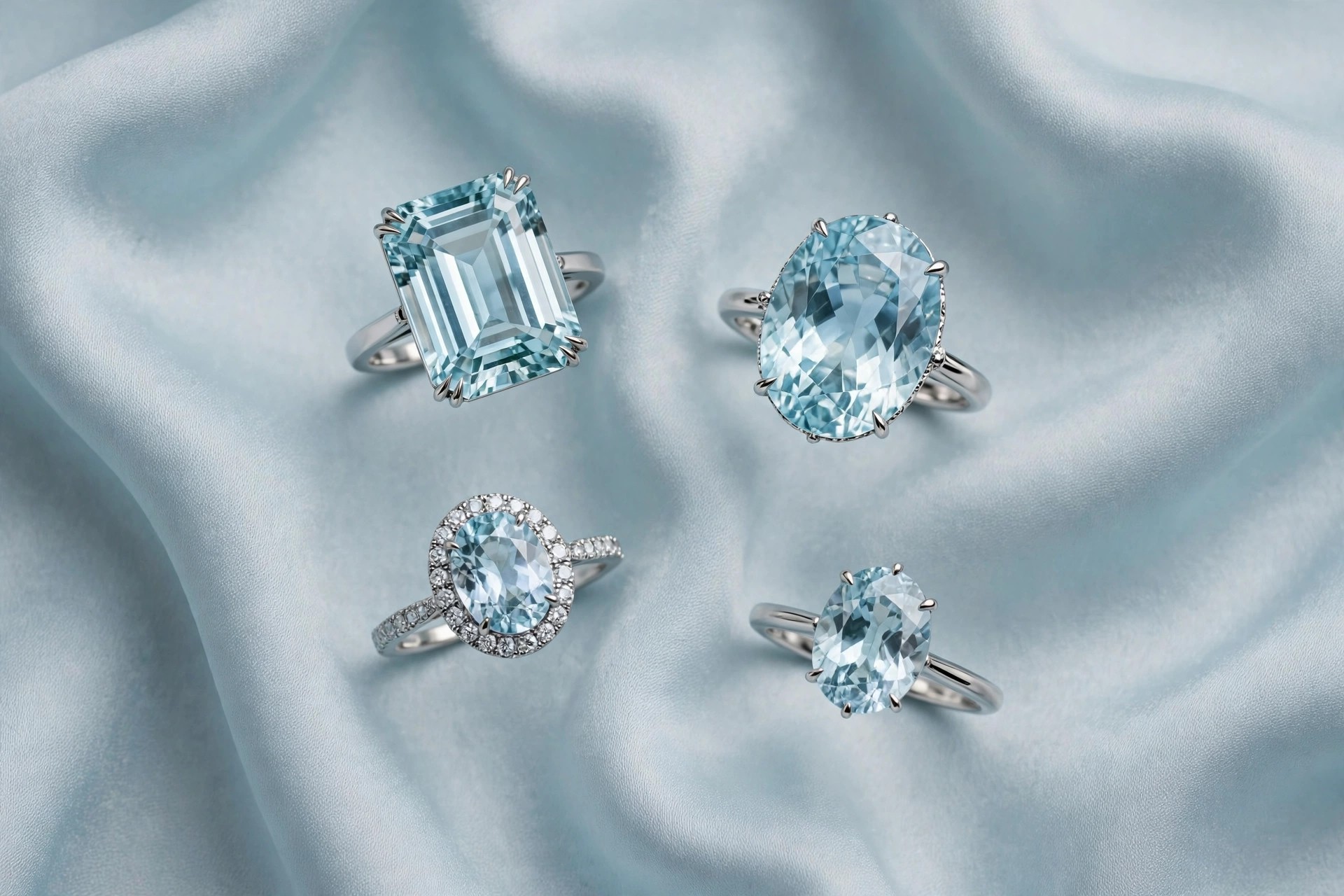
Aquamarine Rings: Captivating Beauty of the Sea
Aquamarine Gemstone:
Aquamarine is a mesmerizing blue to greenish-blue gemstone belonging to the beryl family, which also includes emeralds and morganites. Its name is derived from Latin, meaning "water of the sea," aptly reflecting its stunning hues. Aquamarine's colors vary from light to deep blue, resembling the clear waters of the ocean. The gemstone owes its color to trace amounts of iron within its crystal structure.
Utilization in Ring Designs:
Aquamarine is a popular choice for rings due to its appealing color and excellent hardness (7.5-8 on the Mohs scale), making it suitable for everyday wear. Ring designers often utilize aquamarine in various styles, from classic solitaires to intricate vintage or contemporary designs. Its soothing and calming color complements various metals, including white gold, yellow gold, rose gold, and platinum.
Designers often pair aquamarines with accent stones like diamonds or other colored gemstones to enhance their beauty and create unique, eye-catching pieces. The gemstone's versatility allows for a wide array of ring designs, making it a favorite among jewelry enthusiasts.
History of Aquamarine Jewelry:
Ancient Beliefs and Lore: Aquamarine has been treasured for millennia, believed to bring protection, tranquility, and harmony to its wearer. In ancient times, it was thought to protect sailors and ensure a safe voyage across the seas.
Ancient Egyptian and Roman Eras: Aquamarine was used in jewelry by ancient Egyptians and Romans, often carved into amulets and talismans. They believed it brought courage, foresight, and happiness.
Renaissance Period: During the Renaissance, aquamarine was used extensively in jewelry for the nobility and clergy. It was believed to have healing properties and enhance marital harmony.
20th Century Revival: Aquamarine experienced a resurgence in popularity during the Art Deco era in the 1920s and 1930s. Its clean, geometric lines and compatibility with platinum made it a favored gemstone during this period.
Famous Aquamarine Rings:
The Dom Pedro Aquamarine: Named after Brazil's first two emperors, Dom Pedro I and his son Dom Pedro II, this aquamarine is a remarkable obelisk-shaped gem weighing approximately 10,363 carats. It is known for its exceptional size and exquisite blue-green color.
The Aquamarine Tiara of Queen Elizabeth II: This stunning tiara, a part of the British royal collection, features aquamarines and diamonds. It was a gift from the people of Brazil to Queen Elizabeth II on her coronation in 1953.
The Aquamarine and Diamond Ring of Princess Diana: Princess Diana often wore a captivating aquamarine and diamond ring, a timeless piece that showcased her elegant style.
Aquamarine continues to be a highly desired gemstone for its beauty, historical significance, and symbolic meanings, making it a cherished choice for rings and other jewelry pieces.
Learn about aquamarine necklaces, aquamarine bracelets and aquamarine earrings.
Cutting and Setting a Pale Stone
Because clean rough is plentiful in large sizes, aquamarine is a cutter's stone: emerald cuts and long ovals show its clarity like water in a glass, while brilliant cuts add sparkle to paler material. The long, fantasy cuts associated with famous Brazilian stones show what the material allows, but for a ring, proportion and a protected girdle matter more than novelty. Pale color is also why settings lean cool: white gold and platinum keep the blue clean, yellow gold warms it toward green, and diamond accents frame the stone without competing, since aquamarine's sparkle is quieter than a diamond's.
Care is simple. Warm soapy water and a soft brush are safe for routine cleaning, and ultrasonic cleaners are generally acceptable for sound, untreated-fracture-free stones, though steam is best avoided on any ring with a delicate setting. Prolonged strong sunlight is not a practical concern for aquamarine's stable color. What the stone dislikes is being treated as colorless: check it in the light you live in before buying, because the ring you keep is the paler evening version as much as the bright daylight one.
Common Questions
Is aquamarine durable enough for an everyday ring?
Yes, with ordinary care. At 7.5 to 8 Mohs it resists scratching from household dust and daily contact well, and it has no cleavage plane that makes it prone to splitting the way topaz can. It is still a gemstone, not armor: remove it for heavy manual work and gardening, store it apart from diamonds, which can scratch it, and have the setting checked yearly.
Is heat-treated aquamarine less valuable or less genuine?
Heat treatment is standard for aquamarine: most stones are gently heated to shift a greenish blue to a purer blue, and the change is permanent and stable. It does not make the stone synthetic or lower its standing in the trade, and treated and untreated stones of the same color sell alike. Sellers should still disclose treatment, and a natural, unheated stone of fine blue color may carry a collector premium.
Why do aquamarines look pale in some lights and bluer in others?
Aquamarine is pleochroic, showing slightly different color along different crystal directions, and cutters orient the stone so the best blue faces up. Its pale tones are also honest about light: the stone takes color from its surroundings, looking bluest in daylight and greyer under warm indoor lamps. A deeper-toned stone holds its color in more lights, which is one reason stronger saturation costs more.