Sapphire Necklaces
Blue corundum, and every other color too
Sapphire is corundum in every color except red: the classic saturated blue, and fancy sapphires in pink, yellow, green, purple, orange and the pink-orange padparadscha. At hardness 9 with excellent toughness, sapphire is the most practical colored stone for necklaces of every format, from a solitaire pendant to line necklaces and bead strands, and it is the September birthstone. Historic sources include Kashmir, Myanmar and Sri Lanka, with Australia, Thailand, Madagascar and Montana supplying much of today's market. Most sapphires are heat treated to improve color and clarity. This guide covers blue judgment, fancy colors, treatments and disclosure, necklace formats, and straightforward care.
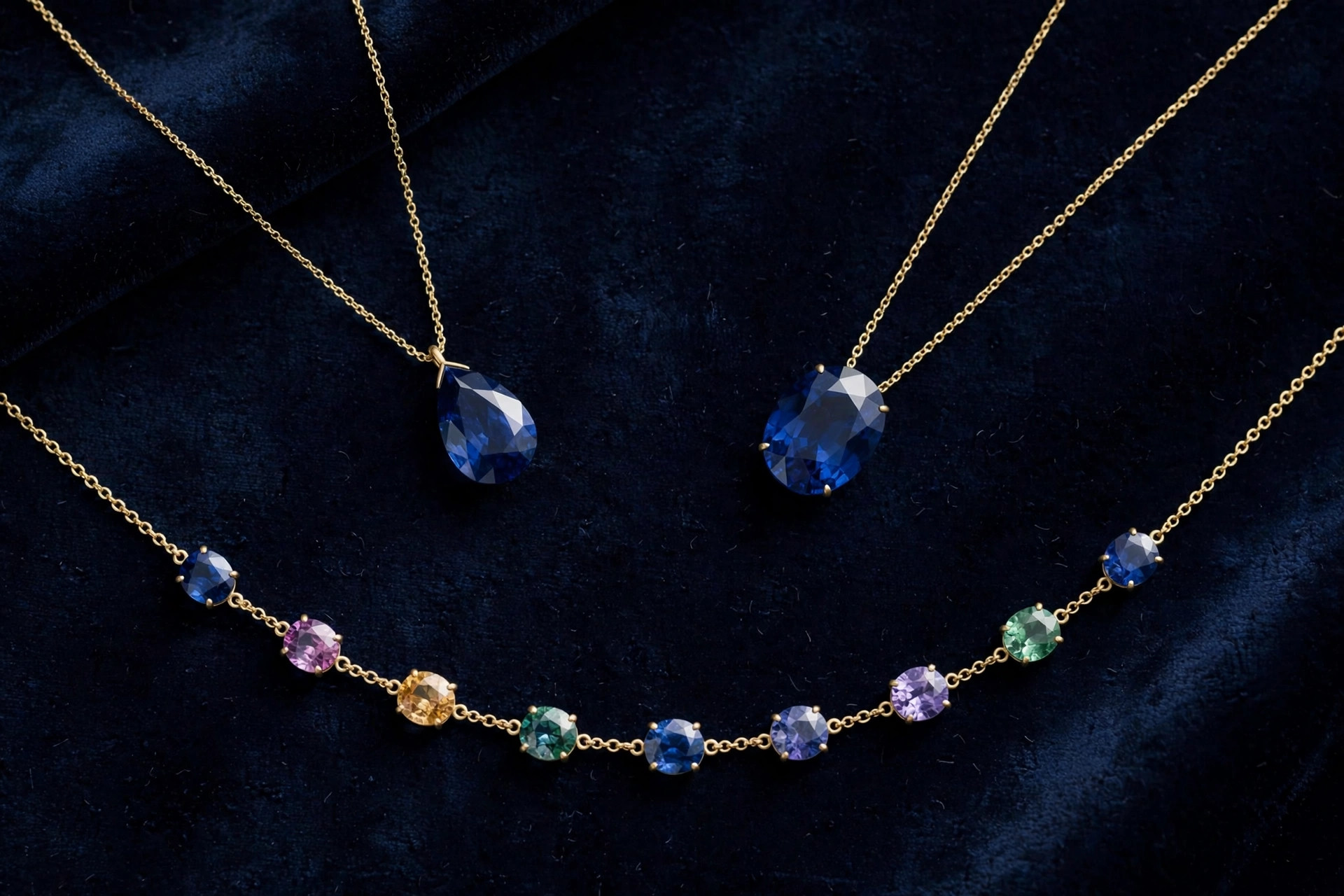
Sapphire Necklaces: Exquisite Beauty in Blue
Sapphire necklaces are exceptional pieces of jewelry featuring sapphires, a gemstone known for its enchanting blue hues. From deep royal blues to lighter shades, sapphires have been cherished for centuries for their beauty, durability, and versatility.
Sapphire Gemstone:
Chemical Composition: Sapphires are a variety of the mineral corundum,
composed mainly of aluminum oxide. The presence of trace elements like iron
and titanium gives them their characteristic blue color.
Hardness and
Durability: Sapphires are one of the hardest gemstones, ranking 9 on the
Mohs scale. Their durability makes them suitable for everyday wear.
- Learn about gemstones for
jewelry.
Historical Significance:
Ancient Beliefs: Throughout history, sapphires were associated with protection, wisdom, and spiritual enlightenment in various cultures. Ancient Greeks and Romans believed that sapphires protected against envy and harm.
Royalty and Nobility: Sapphires have adorned the crowns and jewelry of royals and nobles for centuries. They symbolize purity, wisdom, and nobility.
Popular Colors:
Sapphires are best known for their blue color, but they actually come in a range of hues. Blue sapphires vary from pale blue to deep navy blue. Other colors include pink (often called pink sapphire), yellow, green, purple, and even a rare orange variety (known as Padparadscha).
Sapphire Necklace Designs:
Solitaire Pendants: A single sapphire gemstone set in a pendant, often in a classic round or oval cut, suspended from a chain. This design allows the sapphire to be the centerpiece of the necklace.
Sapphire Strand Necklaces: Strands of sapphire beads or faceted sapphire gemstones arranged in a continuous or graduated pattern, often accompanied by gold or silver spacers.
Sapphire and Diamond Necklaces: Sapphires paired with diamonds, where the diamonds complement the vibrant blue of the sapphires, creating a striking contrast and enhancing the overall beauty of the necklace.
Statement Necklaces: Elaborate and intricate designs incorporating multiple sapphires in various cuts, sizes, and settings, making a bold fashion statement.
Appeal to Consumers:
Elegant Aesthetics: The timeless beauty and elegance of sapphires make them a popular choice for those seeking sophistication and refinement in their jewelry.
Symbolism: Sapphires are associated with qualities like wisdom, loyalty, nobility, and faithfulness, making them meaningful and sentimental gifts for loved ones.
Versatility: The wide range of blue hues and other color options allow consumers to find a sapphire necklace that complements their personal style and preferences.
Shopping for Sapphire Necklaces:
Reputable jewelry stores, both in physical retail outlets and online platforms, offer a variety of sapphire necklaces. Look for jewelers known for their quality and authenticity, and consider requesting certifications for the sapphires.
Sapphire necklaces continue to be cherished for their timeless allure, vibrant blue hues, and rich historical significance. Whether worn for special occasions or as everyday adornments, sapphire necklaces exemplify beauty and elegance in the world of gemstone jewelry.
You may want to also research sapphire earrings, sapphire rings and sapphire bracelets.
The Durable Colored Stone
Sapphire's toughness is what lets necklace design relax: sapphires can be set in fine prongs, channels and bezels, strung as beads, and worn daily without the cautions emerald and opal demand. Blue sapphire pendants framed by diamond halos are a formal standard; line necklaces of matched blue stones and graduated sapphire strands carry the color around the whole neck; and fancy sapphire station necklaces mix pink, yellow and blue stations for a lighter modern effect.
Metal choice tunes the blue: white gold and platinum keep it cool and bright, while yellow gold warms it and suits yellow and green fancy stones. Judge a sapphire necklace by color evenness in daylight, ask plainly about heat, diffusion and origin, and expect a well-cut stone to return color from every facet rather than sitting glassy. On those terms sapphire is the colored gem a buyer can choose with the least specialist knowledge and the fewest regrets.
Common Questions
What shade of blue sapphire is most valued?
A medium-dark, vivid blue with strong saturation and no grey or green modifier, sometimes described as cornflower or royal blue depending on depth, evenly distributed through the stone. Very dark sapphires that go black at the neck and very pale ones cost less. Because a pendant is viewed against skin and clothing, evenness matters: a stone with a pale window in its center will show it every time it is worn.
Are fancy color sapphires real sapphires?
Yes. Pink, yellow, green, purple, orange and white sapphires are all corundum, graded by the same standards as blue, and padparadscha, the delicate pink-orange, is among the rarest colors. Fancy sapphires make necklaces that read as individual rather than classic, and pink and yellow stones often cost less than fine blue of the same size and quality, though top padparadscha is an exception.
What treatments do sapphire necklaces contain?
Heat treatment is standard for most sapphires and is permanent and accepted. Diffusion treatment, which adds color in a surface layer, and glass filling are commercial-grade treatments that must be disclosed, cost far less and need gentler care. Lab created sapphire is chemically identical and widely used in necklaces. As with ruby, the listing should state treatment and whether stones are natural or created.