Men's Earrings
Studs, small hoops and plain metals, worn simply
Men's earrings are a compact category built around a few durable forms: single or paired studs, small plain or diamond studs, small hoops and huggies, and barbells and other piercing jewelry for cartilage and multiple piercings. Styling tends toward plain metals, black finishes, wood, and small stones rather than drops or decoration, and a single earring, traditionally in one ear, remains common alongside matched pairs. Materials favour hard-wearing choices such as stainless steel, titanium, sterling silver and gold. This guide covers the main men's styles, metals and finishes, gauge and piercing basics in general terms, sizing for studs and hoops, single versus paired wearing, and wearing earrings with work and formal dress.
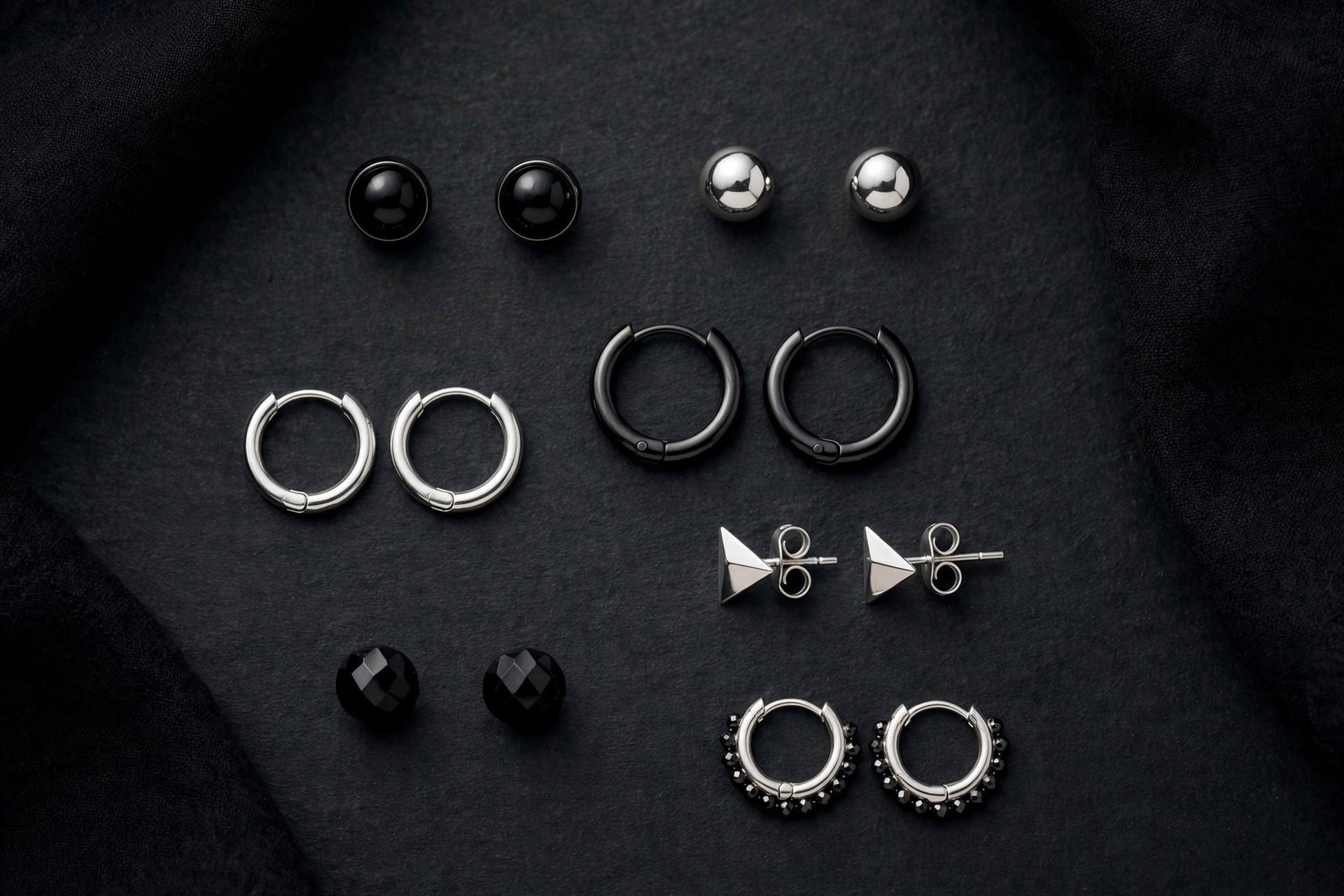
Yes, men & women can wear the same earrings.
Men's Earrings: A Stylish and Diverse Accessory
Earrings have been worn by men for centuries across various cultures and time periods. In contemporary fashion, men's earrings have seen a resurgence in popularity, serving as a versatile accessory that allows individuals to express their personal style and add flair to their look. Let's delve into the world of men's earrings, exploring their history, styles, and significance in modern fashion.
Historical Context:
Ancient Civilizations: Men wearing earrings is not a new phenomenon. Historically, in cultures such as ancient Egypt, Rome, and Persia, earrings were worn by men as a symbol of status, wealth, and even spiritual significance.
Pirates and Rebels: During the Golden Age of Piracy in the 17th and 18th centuries, earrings became a symbol of rebellion and piracy. Sailors and pirates would often wear earrings, which they believed could provide protection against poor eyesight and bad luck at sea.
Rock and Pop Icons: In the 20th century, iconic musicians and rock stars like David Bowie and Prince played a pivotal role in popularizing men's earrings as a symbol of self-expression and individuality.
Styles of Men's Earrings:
Studs: Stud earrings are a popular choice for men due to their understated and versatile design. They come in various materials and can range from simple, classic studs to more intricate and decorative styles.
Hoop Earrings: Hoop earrings are circular in shape and come in various sizes and thicknesses. They can be minimalistic or bold, depending on the wearer's preference. Hoop earrings offer a touch of edginess to a look.
Dangle Earrings: Dangle earrings feature a design that hangs below the earlobe. They come in diverse styles, from minimalist chains to elaborate and artistic designs. Dangle earrings can make a bold fashion statement.
Cuff and Huggie Earrings: These earrings wrap around the earlobe, providing a unique and contemporary look. Cuff earrings don't require a piercing and are an excellent choice for those who want the appearance of an earring without the commitment of a piercing.
Ear Stud Sets: Some men choose to wear multiple stud earrings in a single ear, creating a distinctive and asymmetrical look.
Materials:
Metals: Men's earrings are often made from metals like stainless steel, sterling silver, gold, or platinum. These materials offer durability and a range of style options.
Gemstones: Some men's earrings incorporate gemstones like diamonds, black onyx, or other colored gemstones for added sophistication and character.
Wood and Organic Materials: For those seeking a more natural and rustic look, wood, bone, or other organic materials can be used to craft unique and earthy earrings.
Wearing Men's Earrings:
Professional Settings: In professional and corporate environments, subtle and understated earring styles like studs are generally more acceptable. It's important to adhere to workplace dress codes and norms.
Casual and Streetwear: In casual and streetwear fashion, men's earrings can be bolder and more expressive. Dangle earrings, hoops, and unconventional designs are often embraced.
Personal Expression: Men's earrings serve as a means of self-expression and can reflect individuality, cultural affiliations, or personal beliefs.
Caring for Men's Earrings:
-
Clean them regularly with a soft, lint-free cloth to remove dirt and oils.
-
Store them in a jewelry box or pouch to prevent scratching and tangling.
-
Avoid exposing them to harsh chemicals, perfumes, or excessive moisture.
The perception of men wearing earrings has evolved significantly over the years, reflecting changes in societal attitudes, fashion trends, and cultural norms. Here is an overview of how this perception has shifted, with historical references:
1. Ancient Times:
Historical Reference: In ancient civilizations such as Egypt, Mesopotamia, and Persia, men wearing earrings was a symbol of status, wealth, and even spiritual significance. Earrings were considered an essential accessory for both men and women in these cultures.
2. Middle Ages to Early Modern Era:
Historical Reference: During the Middle Ages, European men commonly wore earrings, especially among the nobility and pirates. Earrings were sometimes associated with masculinity and were seen as a symbol of courage among sailors and pirates. However, as fashion evolved, this practice declined in some regions.
3. 20th Century:
Historical Reference: The 20th century saw a resurgence of men wearing earrings, often led by influential figures in music and entertainment. For instance, rock icons like David Bowie and Mick Jagger sported earrings as a symbol of rebellion and self-expression. This era marked the beginning of a cultural shift in which earrings became a form of personal style and statement.
4. Late 20th Century and Beyond:
Historical Reference: The late 20th century witnessed a broader acceptance of men wearing earrings across different subcultures, including punk, hip-hop, and LGBT communities. Musicians, actors, and athletes started wearing earrings as a fashion statement and a means of expressing their unique identities.
5. Contemporary Times:
Historical Reference: In contemporary times, the perception of men wearing earrings has evolved to the point where it is widely accepted across various cultures and lifestyles. Many men now wear earrings as a fashion choice, and the style options have expanded to include a wide range of designs, from studs to hoops, dangles, and more.
Factors Influencing the Change:
Fashion Trends: Changing fashion trends have played a significant role in the acceptance of men's earrings. As fashion evolved to embrace individuality and self-expression, the boundaries of traditional gender-specific clothing and accessories blurred.
Cultural Influence: Icons from music, sports, and entertainment have had a profound impact on shaping public perception. Celebrities who proudly wore earrings helped break down gender norms and paved the way for wider acceptance.
Increased Diversity: As societies became more diverse and inclusive, perceptions of what constitutes masculine or feminine attire and accessories have shifted. Gender fluidity and personal expression have become important themes in contemporary culture.
Generational Shifts: Younger generations, in particular, tend to be more accepting of diverse fashion choices, including men's earrings. This generational shift has influenced societal norms and attitudes.
The perception of men wearing earrings has evolved from being tied to cultural symbols of status and courage to becoming a symbol of self-expression and personal style. Over the years, fashion, influential figures, and changing cultural attitudes have played pivotal roles in shaping the acceptance of men's earrings as a fashionable and socially acceptable accessory.
Men's earrings have a rich history and offer a diverse range of styles and materials for contemporary fashion. They allow individuals to express their style, personality, and creativity, making them a versatile and fashionable accessory for men in today's fashion landscape.
You may also want to learn about men's bracelets and men's necklaces.
Metal Choice Does Most of the Work
Because men's earring designs are deliberately plain, the metal and finish carry the whole effect: polished silver and steel read clean and cool, yellow gold reads warmer and more traditional, and black-coated steel, titanium and ion-plated finishes give the contemporary matte look. For new or sensitive piercings, nickel sensitivity is the practical issue, and titanium and surgical-grade stainless steel are commonly chosen for everyday studs worn continuously. Coated black finishes can wear at contact points over time, so a solid dark metal or a quality coating is worth choosing for a piece worn daily.
Sizing is the second decision. Stud diameter and hoop diameter are judged against the ear itself, and most men's ranges stay small, with the hoop hugging the lobe rather than hanging below it. A single well-sized stud needs no further styling, pairs should match exactly, and mixing one hoop with one stud is a deliberate asymmetric look rather than a default. Kept clean and sized plainly, men's earrings ask very little maintenance beyond checking backs, hoop catches and post straightness during regular cleaning.
Common Questions
What earring styles do men wear most often?
Studs are the most common, plain metal, black or with a small diamond or cubic zirconia, followed by small hoops and huggie hoops that sit close to the lobe. Barbell and ring styles appear in cartilage and additional piercings. Drops and chandeliers are rare in men's ranges, which favour compact, close-fitting designs.
What do gauge sizes mean for earrings?
Gauge describes the thickness of the post or wire, measured on a scale where a higher gauge number means a thinner wire. Standard earring posts for ordinary pierced ears are a fine gauge, while body-piercing jewelry is thicker and stretching to larger gauges is a separate, gradual practice. In general terms, earrings should match the gauge the piercing was made and healed at, and a professional piercer is the right source of individual advice.
Can men wear earrings in professional settings?
It depends on the workplace's own dress code, which varies widely by industry and employer. Where earrings are accepted, small plain studs or a small hoop in a neutral metal read as the most understated choice. Conservative settings may require removing earrings at work, so checking the actual policy matters more than general fashion opinion.