Clover Shape Rings
The four-leaf motif, worn for luck
Clover shape rings carry a four-leaf or three-leaf clover as their central motif, a design also called the shamrock ring. Each leaf of the four-leaf form is traditionally read as hope, faith, love and luck, and because four-leaf clovers are rare in nature the motif also stands for uniqueness and good fortune found unexpectedly. In Celtic folklore clover was credited with protection, which helped the design endure as both a decorative shape and a personal emblem. Rings range from a single clover centerpiece to repeating clovers around an eternity band, made in yellow, white and rose gold, enamel, mother of pearl and gem-set versions. Three-leaf shamrock versions lean toward Irish heritage, while four-leaf versions read as a general good-luck emblem worn by anyone. This guide covers the symbolism, materials, ring forms and the occasions clover rings suit best.
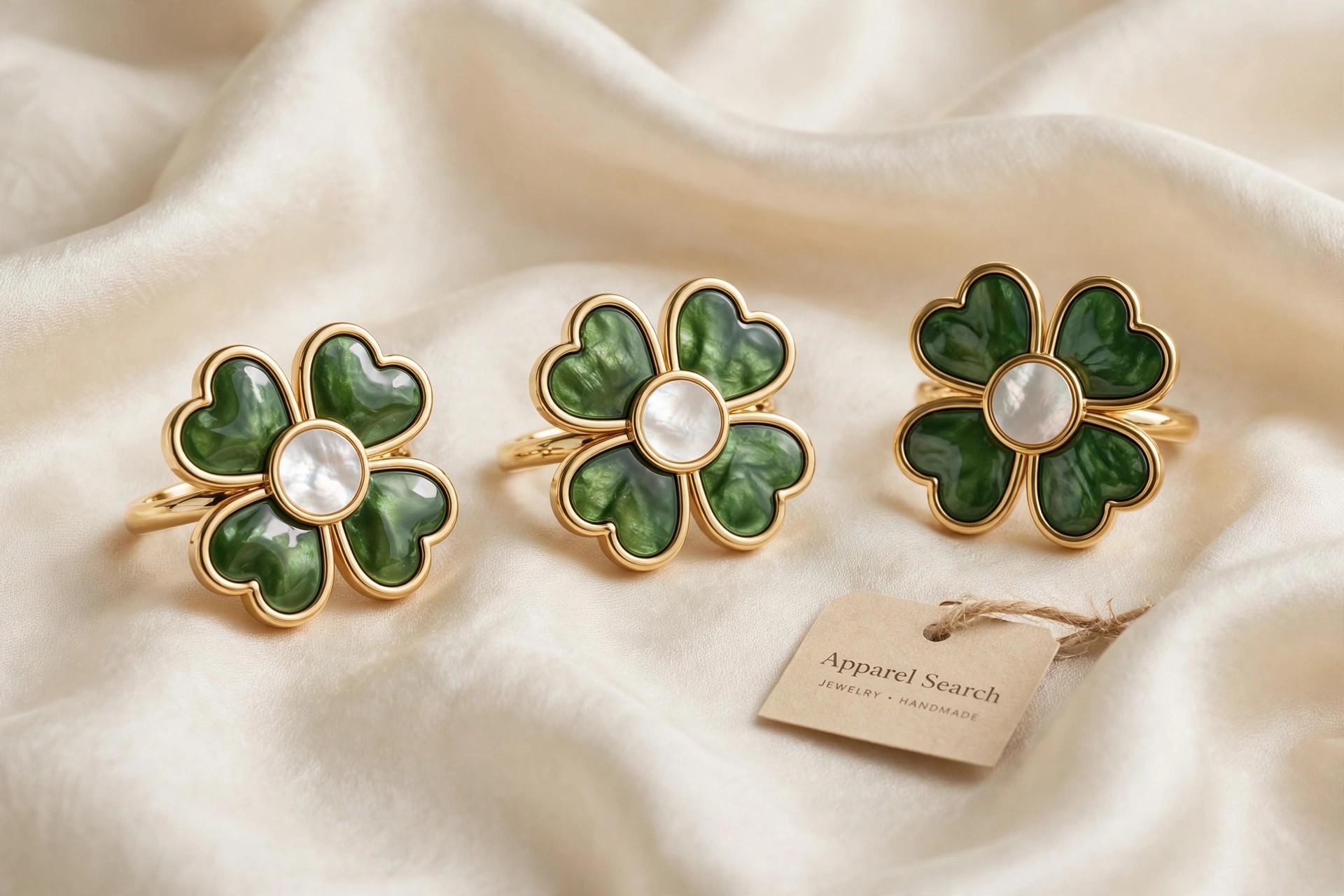
Clover Design Rings: Symbolism and Style
Clover design rings, also known as shamrock rings, are a distinctive and meaningful category of jewelry known for their iconic three-leaf or four-leaf clover motifs. These rings are cherished for their rich symbolism, historical significance, and timeless style.
Symbolism:
The clover, particularly the four-leaf variety, holds significant symbolism:
Good Luck: The most well-known symbolism of the four-leaf clover is good luck. Each leaf is said to represent a different facet of good fortune: hope, faith, love, and luck.
Rare and Unique: Four-leaf clovers are relatively rare in nature, making them a symbol of uniqueness and the discovery of hidden treasures.
Protection: In Celtic folklore, clovers were believed to ward off evil spirits, bringing protection and blessings to the wearer.
Styles of Clover Design Rings:
Clover design rings come in various styles to suit different tastes and occasions:
Classic Solitaire: These rings feature a single clover-shaped centerpiece adorned with gemstones, often a central diamond or colored gemstone. They exude elegance and can be worn daily or on special occasions.
Halo Setting: Halo clover rings surround the central clover motif with a circle of smaller gemstones, enhancing its brilliance and making it a stunning choice for engagement rings.
Eternity Band: Clover motifs can be incorporated into eternity bands, creating a continuous pattern of clovers encrusted with gemstones. These rings symbolize everlasting love and commitment.
Vintage and Artisanal: Vintage or artisanal clover rings often feature intricate, handcrafted designs with detailed clover leaf patterns, adding a touch of nostalgia and artistry to the piece.
Occasions and Meaning:
Clover design rings are suitable for various occasions and can hold different meanings:
Engagement: A clover engagement ring can symbolize the uniqueness and good fortune of the couple's love, making it a meaningful choice for those seeking something distinctive.
Gifts: Clover rings are popular gifts for birthdays, graduations, or other significant life events to convey good wishes and blessings.
Self-Expression: Many individuals choose clover rings as a personal symbol of luck, protection, or individuality. They wear these rings as a reflection of their beliefs and values.
Materials and Gemstones:
Clover design rings are crafted from a variety of materials, including precious metals like gold (yellow, white, or rose gold) and platinum. Gemstones such as diamonds, emeralds, sapphires, or colored stones may be used to add color and brilliance to the design.
Clover design rings are more than just jewelry; they are symbols of luck, protection, and the uniqueness of love and life's journey. Whether as engagement rings, special gifts, or personal expressions, these rings encapsulate the beauty of meaning and style.
You may also want to learn about clover shape earrings, clover design necklaces and clover design bracelets.
Learn about St. Patrick's Day jewelry designs.
Choosing a Clover Ring Form
A single bold clover makes a clear statement ring and keeps the motif legible at a glance, while small repeating clovers around a band read as pattern first and symbol second, suiting everyday wear and stacking. Halo versions, surrounding the clover with small stones, dress the motif up for gifts and celebrations, and vintage-style rings add milgrain edges, engraving and hand-finished leaves. Scale matters: heart-shaped leaves need enough size to keep their outline, so very fine bands usually simplify the motif to four rounded lobes.
As gifts, clover rings suit birthdays, graduations, new jobs and other fresh starts, where a wish for luck is the message, and they are a natural St. Patrick's Day and Irish heritage gift in the three-leaf shamrock form. Enamel and mother-of-pearl leaves should be kept from hard knocks and harsh chemicals, since both materials sit softer than metal or diamond; a closed, smooth setting protects the inlay edges and keeps a clover ring looking crisp with daily wear.
Common Questions
What does a clover ring symbolize?
A four-leaf clover ring symbolizes good luck, with its four leaves traditionally standing for hope, faith, love and luck. The motif also suggests rarity and uniqueness, since four-leaf clovers are uncommon in nature, and in Celtic tradition clover offered protection. Wearers choose it as a wish for fortune, a personal emblem, or simply for its balanced, recognizable shape.
What is the difference between a clover ring and a shamrock ring?
The terms overlap. A shamrock is the three-leaf clover closely tied to Ireland and St. Patrick's Day, while clover shape rings more often use the symmetrical four-leaf form, with four rounded or heart-shaped leaves around a center. Three-leaf designs read as Irish heritage pieces; four-leaf designs read as general luck motifs and appear in fine, fashion and gift jewelry alike.
What materials are clover rings made from?
Gold in yellow, white and rose is the classic base, with leaves formed in polished metal, green enamel, mother of pearl, malachite or pavé diamonds and colored stones. Enamel and mother-of-pearl leaves give the strongest color contrast and a smooth, flat surface; gem-set leaves add sparkle but need prong checks. Silver and gold-plated fashion versions cover lower price points.